Overview
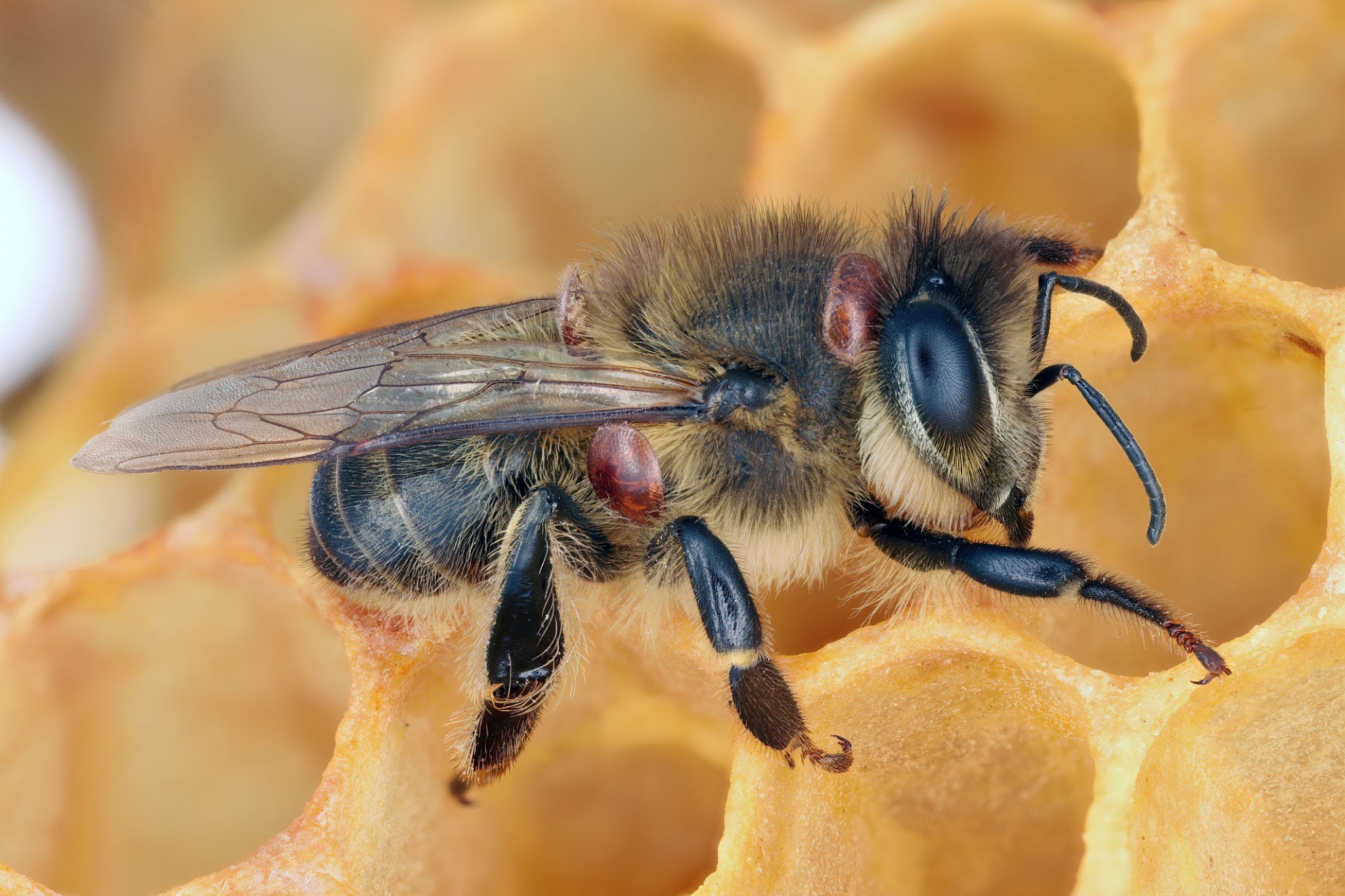
Varroa Mites (Varroa destructor) are external parasitic mites that attack honey bees and are widely regarded as the most destructive pest affecting managed honey bee colonies worldwide. These tiny arachnids feed on both developing brood and adult bees, weakening individuals and spreading numerous viral diseases throughout the colony.
Since their spread across much of the globe, Varroa mites have become one of the leading causes of honey bee colony losses. Their ability to reproduce within capped brood cells, evade detection, and transmit deadly pathogens makes them one of the most challenging pests faced by modern beekeepers.
Without active management, heavily infested colonies frequently experience severe population declines, reduced honey production, weakened overwintering success, and eventual colony collapse.
Taxonomy and Classification
Varroa mites belong to the class Arachnida, making them relatives of spiders, ticks, and other mites. They are obligate parasites that depend entirely on honey bee colonies for survival and reproduction.
- Kingdom: Animalia
- Phylum: Arthropoda
- Class: Arachnida
- Subclass: Acari
- Order: Mesostigmata
- Family: Varroidae
- Species: Varroa destructor
Originally associated with the Asian honey bee (Apis cerana), Varroa mites successfully shifted hosts to the Western honey bee (Apis mellifera and have since become a global threat to commercial and backyard beekeeping.
Physical Description
Adult female Varroa mites are small but visible to the naked eye. They possess flattened bodies that allow them to hide between the segments of a honey bee’s abdomen.
- Size: Approximately 1.0 to 1.8 millimeters wide
- Shape: Oval, flattened, disc-like body
- Color: Dark reddish-brown
- Mobility: Crawls across adult bees and brood
- Visibility: Easily seen on bees during heavy infestations
Male mites are smaller, pale cream-colored, and remain inside brood cells throughout their lives. Only female mites survive long enough to leave brood cells and infest additional bees.
Distribution and Habitat
Varroa mites occur nearly everywhere Western honey bees are maintained. Their spread has closely followed the movement of managed bee colonies and commercial pollination operations.
They are found in:
- Commercial apiaries
- Backyard beehives
- Pollination operations
- Research colonies
- Feral honey bee populations
Their habitat exists entirely within honey bee colonies. Adult females spend time attached to adult bees during the phoretic stage and reproduce inside capped brood cells where developing bee larvae provide food and shelter.
Life Cycle
The life cycle of Varroa mites is closely synchronized with honey bee development.
Phoretic Stage
Adult female mites attach to adult bees and feed on fat body tissues. During this stage they move throughout the colony and spread between bees.
Brood Cell Invasion
Prior to cell capping, female mites enter brood cells containing developing larvae.
Reproduction
Once the brood cell is sealed, the female begins laying eggs. The first egg typically develops into a male, while subsequent eggs become females.
Maturation
Young mites mature within the sealed cell while feeding on the developing bee.
Emergence
When the adult bee emerges, mature female mites exit with it and begin seeking new hosts.
Drone brood is particularly attractive because its longer development time allows more mite offspring to mature successfully.
Damage and Conflict
The damage caused by Varroa mites extends far beyond simple feeding injury.
Direct Feeding Damage
Varroa mites feed on honey bee fat body tissues, which are essential for immune function, energy storage, detoxification, and overall health.
Infested bees often exhibit:
- Reduced body weight
- Shortened lifespan
- Weakened immune systems
- Reduced flight performance
- Poor overwinter survival
Virus Transmission
The most devastating aspect of Varroa infestations is their role as disease vectors.
Varroa mites transmit numerous viruses including:
- Deformed Wing Virus (DWV)
- Acute Bee Paralysis Virus
- Israeli Acute Paralysis Virus
- Chronic Bee Paralysis Virus
Deformed Wing Virus is particularly destructive. Infected bees emerge with shriveled, twisted wings and are unable to fly or perform normal colony duties.
Colony Collapse
Heavy infestations can trigger rapid population declines known among beekeepers as “mite bombs.” Colonies may appear healthy during summer but collapse suddenly during autumn or winter when virus levels become overwhelming.
Signs of Infestation
Common symptoms include:
- Visible mites on adult bees
- Mites present in brood cells
- Deformed wings on emerging bees
- Patchy brood patterns
- Declining adult populations
- Reduced honey production
- Poor winter survival
- Sudden colony collapse
Because many symptoms appear only after infestations become severe, regular monitoring is essential.
Management and Control (IPM)
Successful Varroa management requires continuous monitoring and integrated control strategies.
Monitoring
Regular mite counts help determine infestation levels and treatment needs.
Common monitoring methods include:
- Sugar shake tests
- Alcohol washes
- Sticky boards
- Drone brood inspections
Chemical Control
Several miticides are available for controlling Varroa populations.
- Oxalic acid
- Formic acid
- Thymol-based products
- Synthetic acaricides
Treatments should be rotated when appropriate to reduce resistance development.
Cultural Controls
- Drone brood removal: Eliminates preferred reproductive sites.
- Brood interruption: Temporarily halts mite reproduction.
- Screened bottom boards: Reduce mite survival.
- Maintaining strong colonies: Improves resilience.
Genetic Resistance
Selective breeding programs have produced honey bee stocks with enhanced resistance to Varroa mites.
Examples include:
- Varroa Sensitive Hygiene (VSH) bees
- Russian honey bees
- Grooming-resistant strains
These bees are better able to detect and remove infested brood, naturally suppressing mite populations.
Economic Importance
Varroa mites represent one of the greatest economic threats to global agriculture because of their impact on pollination services.
Losses associated with Varroa infestations include:
- Reduced honey production
- Increased management costs
- Colony replacement expenses
- Lower pollination efficiency
- Crop production impacts
Many commercial beekeeping operations devote significant resources each year to monitoring and controlling Varroa populations.
Research and Conservation
Research into Varroa mites remains one of the highest priorities in apiculture. Scientists continue investigating new treatment methods, biological controls, genetic resistance, and improved monitoring systems.
Current efforts focus on reducing chemical dependence while improving honey bee resilience and long-term colony survival.
Conclusion
Varroa Mites are the most significant pest affecting honey bee colonies worldwide. Through direct feeding and the transmission of destructive viruses such as Deformed Wing Virus, these parasites can rapidly weaken and destroy entire colonies. Successful management depends on consistent monitoring, integrated treatment strategies, resistant bee stock, and ongoing research. Protecting honey bees from Varroa mites remains essential for sustainable beekeeping, crop pollination, and agricultural productivity.