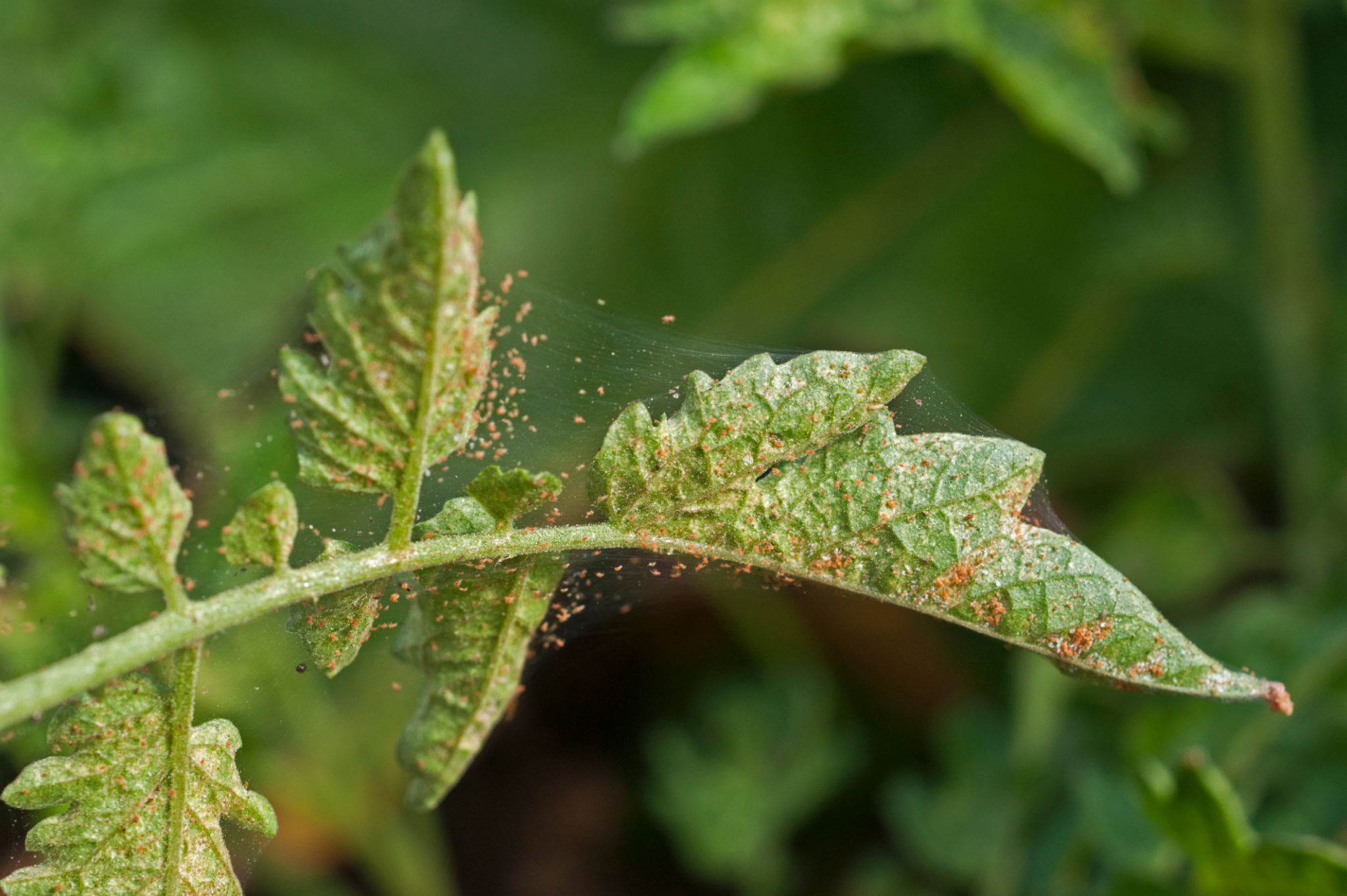
Tomato Russet Mites (Aculops lycopersici) are microscopic plant-feeding mites that rank among the most destructive pests of tomatoes worldwide. These tiny eriophyid mites primarily attack tomatoes but can also infest peppers, eggplants, petunias, and various weeds in the nightshade family. Despite their extremely small size, Tomato Russet Mites can cause devastating crop losses by feeding on stems, leaves, flowers, and fruit. Their feeding produces a distinctive bronzed or rusty appearance on plant tissues, often leading to severe defoliation, reduced yields, fruit damage, and even complete plant collapse. Because they are invisible to the naked eye and do not produce webbing like spider mites, infestations frequently go unnoticed until significant damage has already occurred.
Taxonomy and Classification
Tomato Russet Mites belong to the class Arachnida and the family Eriophyidae, a group of highly specialized microscopic mites that feed on plants.
- Class: Arachnida
- Subclass: Acari
- Family: Eriophyidae
- Genus: Aculops
- Species: Aculops lycopersici
Unlike spider mites, which possess eight legs as adults, eriophyid mites have only four legs located near the front of their bodies. Their unusual body structure and microscopic size make identification difficult without magnification.
Identification
Tomato Russet Mites are among the smallest plant pests encountered in agriculture.
Adult Mites
- Size: Approximately 0.15–0.20 mm long.
- Color: Pale yellow, cream-colored, or translucent.
- Shape: Elongated, cigar-shaped, or wedge-shaped.
- Visibility: Invisible as individuals without magnification.
- Movement: Slow-moving along stems and leaf surfaces.
Because the mites are nearly impossible to see without a microscope or strong hand lens, diagnosis typically relies on symptoms rather than direct observation.
Key Symptoms
- Bronzed Stems: Lower stems develop a rusty brown coloration.
- Leaf Curling: Leaves curl upward and become distorted.
- Leaf Drying: Foliage becomes brittle and desiccated.
- Defoliation: Leaves drop prematurely.
- Fruit Russeting: Fruit develops rough, brown, sandpaper-like skin.
- Plant Collapse: Severe infestations may kill entire plants.
Distribution and Habitat
Tomato Russet Mites occur worldwide wherever tomatoes are cultivated.
Common habitats include:
- Commercial tomato fields
- Greenhouses
- High tunnels
- Home vegetable gardens
- Nurseries
- Pepper plantings
- Eggplant crops
- Weedy nightshade hosts
Hot, dry weather strongly favors population growth. Greenhouses and protected growing environments are particularly susceptible because favorable conditions may persist year-round.
Host Plants
Although tomatoes are the preferred host, Tomato Russet Mites attack several members of the nightshade family.
Common hosts include:
- Tomatoes
- Peppers
- Eggplants
- Petunias
- Tomatillos
- Black Nightshade
- Jimsonweed
- Other Solanaceous Weeds
These alternate hosts can serve as reservoirs that allow mites to survive between crop cycles.
Life Cycle
Tomato Russet Mites reproduce extremely rapidly under favorable conditions.
- Egg Stage: Tiny eggs are deposited on plant surfaces.
- Larval Stage: Newly hatched larvae begin feeding immediately.
- Nymph Stage: Additional development occurs through immature stages.
- Adult Stage: Mature mites reproduce and establish new colonies.
Under warm temperatures, the entire life cycle may be completed in less than a week. This rapid development allows populations to explode in a very short period.
Damage and Economic Importance
Tomato Russet Mites feed by piercing plant epidermal cells and extracting their contents.
Their feeding initially affects lower stems and foliage before spreading upward throughout the plant.
Early Symptoms
- Silvery foliage appearance.
- Dull or faded leaf color.
- Slight leaf curling.
- Glossy or greasy-looking stems.
Advanced Symptoms
- Bronzed stems.
- Brown, brittle foliage.
- Severe leaf drop.
- Reduced flowering.
- Smaller fruit.
- Poor fruit quality.
- Whole-plant decline.
Infestations often progress from the bottom of the plant upward, creating a characteristic pattern of lower stem bronzing and defoliation.
Fruit Damage
When Tomato Russet Mites infest developing fruit, they can significantly reduce marketability.
Common fruit symptoms include:
- Russeting: Rough brown skin texture.
- Scarring: Surface blemishes.
- Reduced Quality: Lower commercial value.
- Sunscald Vulnerability: Loss of leaf cover exposes fruit to sunlight.
Although affected fruit may remain edible, cosmetic damage often makes it unsuitable for fresh-market sales.
Behavior and Conflict
Several biological traits make Tomato Russet Mites particularly difficult to manage.
- Microscopic Size: Infestations remain hidden during early stages.
- No Webbing: Unlike spider mites, there is no obvious silk production.
- Rapid Reproduction: Populations increase quickly.
- Easy Spread: Wind, tools, clothing, and plant material distribute mites.
- Misdiagnosis: Symptoms resemble drought, nutrient deficiencies, or disease.
By the time bronzing becomes obvious, mite populations may already number in the millions.
Monitoring and Detection
Early detection is critical because heavily infested plants are difficult to save.
- Inspect lower stems regularly.
- Watch for bronzing near the soil line.
- Look for upward leaf curling.
- Use a 20x–40x hand lens when possible.
- Monitor transplants before planting.
- Check plants during hot, dry weather.
Routine scouting should focus on lower foliage and stems where infestations typically begin.
Management and Prevention
An Integrated Pest Management (IPM) program offers the most effective long-term control.
Sanitation
- Remove infested plant material.
- Clean tools and equipment.
- Eliminate volunteer tomato plants.
- Control nightshade weeds.
Cultural Controls
- Start with clean transplants.
- Avoid moving between infested and healthy plants.
- Maintain proper plant spacing.
- Reduce stress through proper irrigation and fertility.
Biological Control
- Predatory Mites: Certain beneficial mite species help suppress populations.
- Conservation of Natural Enemies: Avoid unnecessary broad-spectrum pesticides.
Biological control is generally more challenging than with larger mite pests because of the russet mite’s tiny size.
Organic Controls
- Sulfur Products: One of the most effective organic options.
- Horticultural Oils: May suppress populations when applied thoroughly.
- Neem Oil: Provides limited suppression during early infestations.
Sulfur applications should be used carefully and according to label directions, particularly during hot weather.
Chemical Control
- Apply miticides when infestations are first detected.
- Ensure thorough stem and foliage coverage.
- Rotate active ingredients to reduce resistance risks.
- Treat early before severe bronzing develops.
Because mites often hide among plant hairs and stem surfaces, excellent spray coverage is essential.
Conservation and Research
Tomato Russet Mites continue to be a major focus of research in vegetable production systems worldwide. Scientists are investigating resistant tomato varieties, improved biological control programs, enhanced monitoring techniques, and sustainable management approaches.
Early detection, clean planting material, sanitation, and rapid intervention remain the most effective strategies for preventing severe crop losses from this highly destructive microscopic pest.