Overview
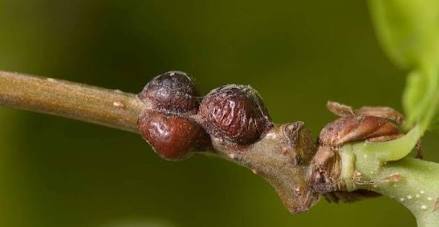
Soft Scales (Family Coccidae) are among the most destructive sap-feeding pests of ornamental trees, shrubs, and fruit crops. These insects attach themselves to stems, branches, and leaves, where they feed continuously on plant sap using specialized piercing-sucking mouthparts. Unlike armored scales, soft scales produce large quantities of sticky honeydew, which leads to the growth of black sooty mold and attracts ants, wasps, and other insects.
Soft scale infestations are common on landscape trees such as maple, magnolia, tulip poplar, oak, citrus, and numerous ornamental shrubs. Heavy populations can weaken plants, cause branch dieback, reduce flowering and fruit production, and significantly diminish landscape appearance.
Because adult females remain attached to plant surfaces and are protected by a waxy covering, infestations often go unnoticed until honeydew, sooty mold, or declining plant health become obvious.
Taxonomy and Classification
- Kingdom: Animalia
- Phylum: Arthropoda
- Class: Insecta
- Order: Hemiptera
- Suborder: Sternorrhyncha
- Superfamily: Coccoidea
- Family: Coccidae
Soft scales belong to the same general group as aphids, mealybugs, and whiteflies. They are true bugs that feed directly from the phloem, the plant tissue responsible for transporting sugars and nutrients.
Unlike armored scales, whose protective coverings can be removed from the body, the waxy coating of soft scales is integrated into the insect itself.
Physical Description
Adult soft scales typically measure between 1/8 and 1/4 inch long.
- Shape: Dome-shaped, hemispherical, oval, or helmet-like.
- Color: Brown, tan, yellow, pinkish, reddish-brown, or mottled.
- Texture: Smooth, waxy, and somewhat leathery.
- Mobility: Adults are immobile once established.
Adult Females
Adult females appear as raised bumps firmly attached to twigs and branches. Many homeowners mistake them for natural bark growths or plant galls.
Crawlers
The crawler stage is the only mobile immature stage.
Crawlers are:
- Tiny and flattened
- Yellow to orange in color
- Highly active
- Responsible for spreading infestations
Because crawlers lack the protective wax covering of adults, they are the most vulnerable life stage and the primary target for management efforts.
Distribution and Habitat
Soft scales occur worldwide and infest a wide variety of woody plants.
Common hosts include:
- Maple trees
- Magnolia trees
- Tulip poplar
- Oak trees
- Fruit trees
- Citrus trees
- Holly
- Camellia
- Euonymus
- Shade trees
- Landscape shrubs
They are most commonly found attached to:
- Young twigs
- Small branches
- Leaf undersides
- New shoots
- Fruit stems
Life Cycle
Soft scales undergo simple metamorphosis consisting of egg, crawler, nymph, and adult stages.
Egg Stage
Adult females deposit hundreds or even thousands of eggs beneath their bodies or protective coverings.
Crawler Stage
Eggs hatch into tiny crawlers that disperse across the plant in search of feeding sites.
Wind, birds, tools, and human activity can transport crawlers to nearby plants.
Nymph Stage
After settling, immature scales insert their mouthparts into plant tissue and begin feeding.
As they grow, they develop the characteristic waxy covering.
Adult Stage
Adult females remain permanently attached to feeding sites, continuously extracting plant sap.
Many species complete one generation annually, although some produce multiple generations in warm climates.
Behavior and Plant Damage
The primary damage caused by soft scales results from prolonged sap extraction and honeydew production.
Sap Depletion
Soft scales feed directly from the plant’s phloem tissue, removing sugars and nutrients needed for growth.
Heavy infestations may cause:
- Reduced vigor
- Yellowing leaves
- Stunted growth
- Premature leaf drop
- Branch dieback
- Reduced flowering
- Poor fruit production
Honeydew Production
Because phloem sap contains more sugar than the insects require, excess sugar is excreted as honeydew.
Honeydew appears as:
- Sticky residue on leaves
- Shiny coatings on branches
- Sticky patios and sidewalks
- Residue on vehicles parked beneath trees
Heavy infestations can coat everything beneath an infested tree.
Sooty Mold Development
Honeydew serves as a food source for sooty mold fungi.
These fungi form black, velvety growths on plant surfaces.
Although sooty mold does not directly infect plants, it:
- Blocks sunlight
- Reduces photosynthesis
- Creates an unsightly appearance
- Further weakens stressed plants
Relationship with Ants
One of the most fascinating aspects of soft scale biology is their mutualistic relationship with ants.
Ants actively protect soft scales because they feed on the honeydew produced by the insects.
Ants may:
- Attack predators
- Remove parasitic wasps
- Protect scale colonies
- Move crawlers to new feeding sites
This protection often makes natural biological control less effective.
Economic Importance
Soft scales are major pests in:
- Landscapes
- Nurseries
- Orchards
- Urban forests
- Greenhouses
- Commercial fruit production
Economic impacts include:
- Reduced plant growth
- Loss of ornamental value
- Increased maintenance costs
- Tree decline
- Crop yield reductions
- Plant replacement expenses
Severe infestations can eventually kill weakened trees and shrubs.
Management and Control (IPM)
Successful management relies on targeting vulnerable life stages while preserving natural enemies.
Dormant Horticultural Oil
One of the most effective treatments is dormant oil application during late winter or early spring.
Dormant oils:
- Smother overwintering scales
- Reduce crawler populations
- Have minimal environmental impact
Crawler Monitoring
Monitoring crawler emergence is critical.
Methods include:
- Double-sided tape on branches
- Visual inspection
- Magnification of infested twigs
Crawler emergence often occurs in late spring or summer depending on species.
Targeted Insecticides
Applications timed to crawler activity provide the highest level of control.
Products may include:
- Insecticidal soaps
- Horticultural oils
- Residual insecticides labeled for scale control
Systemic Treatments
Systemic insecticides can be highly effective because they move through the plant’s vascular system.
As scales feed on treated sap, they ingest the insecticide directly.
Ant Management
Reducing ant populations often improves biological control.
- Use ant baits near infested trees.
- Prevent ants from climbing trunks.
- Eliminate nearby ant colonies when practical.
Biological Control
Numerous natural enemies attack soft scales.
- Lady beetles
- Lacewings
- Predatory midges
- Parasitic wasps
- Predatory bugs
Protecting these beneficial insects can significantly reduce infestations over time.
Interesting Facts
- Some soft scale females can produce over 2,000 eggs.
- Honeydew can rain from heavily infested trees.
- Ants often act as bodyguards for scale colonies.
- Sooty mold grows on honeydew, not directly on plant tissue.
- Many species remain unnoticed until plant decline becomes severe.
Research and Future Management
Current research focuses on:
- Improved crawler monitoring techniques
- Biological control programs
- Reduced-risk insecticides
- Systemic treatment optimization
- Host plant resistance
- Ant-scale interactions
These studies continue to improve environmentally responsible management strategies for landscape and agricultural systems.
Conclusion
Soft Scales are serious sap-feeding pests capable of causing extensive plant stress, branch dieback, honeydew accumulation, and sooty mold development. Although small and often overlooked, large infestations can significantly impact ornamental trees, shrubs, and fruit crops. Early detection, proper timing of treatments, ant management, and conservation of natural enemies remain the foundation of effective integrated pest management programs.