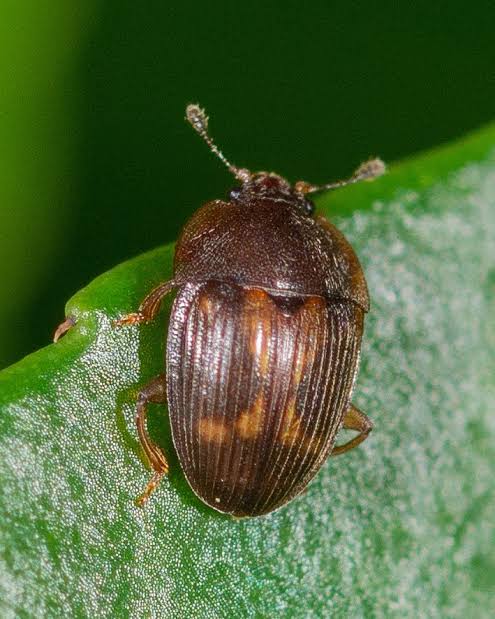
Overview
Sap Beetles (Family Nitidulidae) are small, oval beetles commonly associated with fermenting fruits, damaged vegetables, tree sap, and decaying plant material. While many species play an important role in decomposition, several are significant agricultural pests that contaminate crops and spread plant diseases. They are especially problematic in fruit production, sweet corn fields, vineyards, berry farms, and home gardens.
Sap beetles are attracted to sugary odors released by overripe, injured, or fermenting plant tissues. Once present, they can rapidly colonize fruits and vegetables, causing contamination and increasing the spread of fungal and bacterial pathogens. Their ability to move between infected and healthy plants makes them important vectors of crop diseases.
Taxonomy and Classification
- Kingdom: Animalia
- Phylum: Arthropoda
- Class: Insecta
- Order: Coleoptera
- Family: Nitidulidae
The family Nitidulidae contains more than 4,000 species worldwide. Common pest species include picnic beetles, dried fruit beetles, and strawberry sap beetles. Many members of the family are scavengers, while others have evolved into serious agricultural pests.
Physical Description
Adult sap beetles are small insects typically measuring between 1/8 and 1/4 inch (3–6 mm) in length.
- Body Shape: Oval, flattened, and compact.
- Color: Usually shiny black, dark brown, or reddish-brown.
- Markings: Some species possess yellow, orange, or cream-colored spots.
- Antennae: Short with distinctive clubbed tips.
- Wing Covers: Often shortened, leaving part of the abdomen exposed.
- Larvae: Cream-colored to yellowish grubs with brown heads and segmented bodies.
Their small size allows them to enter cracks, damaged fruit openings, and other protected feeding sites.
Distribution and Habitat
Sap beetles are found throughout North America and around the world.
They thrive wherever fermenting plant material is present, including:
- Fruit orchards
- Berry fields
- Sweet corn plantings
- Vegetable gardens
- Vineyards
- Compost piles
- Garbage areas
- Damaged trees producing sap
Warm temperatures and abundant food sources encourage rapid population growth.
Life Cycle
Sap beetles undergo complete metamorphosis consisting of four life stages.
Egg Stage
Females deposit eggs in damaged fruits, decaying vegetation, or fermenting organic matter.
Larval Stage
Larvae feed aggressively on plant tissues and fermenting materials. This stage is responsible for much of the contamination found in infested produce.
Pupal Stage
When fully developed, larvae leave the food source and pupate in nearby soil.
Adult Stage
Adults emerge and seek out new food sources using their highly developed sense of smell.
Multiple generations can occur annually in warm climates.
Damage and Economic Importance
Sap beetles cause both direct and indirect damage to crops.
Fruit Feeding
Adults and larvae feed on:
- Strawberries
- Raspberries
- Blueberries
- Melons
- Peaches
- Tomatoes
- Sweet corn
- Grapes
Their feeding creates wounds that accelerate decay and reduce market quality.
Crop Contamination
Presence of beetles, larvae, frass, and damaged tissue often makes produce unsuitable for sale.
Disease Transmission
Sap beetles are important vectors of plant pathogens.
They commonly spread:
- Sour rot organisms
- Fruit-rotting fungi
- Bacterial pathogens
- Oak wilt spores
- Fusarium fungi
By moving between infected and healthy plants, they can rapidly spread disease throughout a field or orchard.
Sweet Corn Damage
Several species enter corn ears through silk channels and feed on developing kernels.
This damage reduces quality and creates entry points for secondary pathogens.
Signs of Infestation
Common indicators include:
- Clusters of Small Beetles: Around damaged or ripening fruits.
- Feeding Holes: Small punctures near stems or damaged tissue.
- Soft Rot: Areas of decomposition surrounding feeding sites.
- Larvae Inside Fruit: Cream-colored grubs within damaged produce.
- Fermentation Odor: Sweet or sour smell from affected fruits.
- Premature Fruit Decay: Rapid spoilage after feeding begins.
Behavior and Conflict
Sap beetles are highly attracted to volatile chemicals produced during fermentation.
- Strong Sense of Smell: Detects damaged fruit from long distances.
- Rapid Colonization: Large numbers may gather within hours.
- Disease Vectoring: Frequently spread fungal spores while feeding.
- Multiple Hosts: Able to exploit a wide variety of crops.
- Hidden Feeding: Often feed inside fruit where damage is difficult to detect.
Because they prefer damaged produce, secondary injuries caused by birds, hail, insects, or cracking often increase infestations.
Management and Control (IPM)
Integrated pest management focuses heavily on sanitation and prevention.
Sanitation
The most effective management strategy is eliminating breeding and feeding sites.
- Remove fallen fruit promptly.
- Dispose of damaged produce.
- Harvest crops regularly.
- Clean up crop debris.
- Manage compost piles properly.
Harvest Management
Harvest fruits and vegetables promptly when ripe.
Overripe produce greatly increases sap beetle attraction.
Trapping
Fermentation-based traps can reduce populations.
Common attractants include:
- Beer
- Molasses solutions
- Apple cider vinegar
- Yeast-based baits
- Fruit fermentation mixtures
Exclusion
Protect high-value crops using:
- Netting
- Fruit bags
- Protective coverings
- Harvest timing adjustments
Chemical Control
In severe infestations, labeled insecticides may be used.
Chemical control is often challenging because beetles frequently feed inside fruit or hidden locations where sprays have limited effectiveness.
Natural Enemies
Several predators and parasites help suppress sap beetle populations.
- Ground beetles
- Predatory mites
- Parasitic wasps
- Birds
- Spiders
Conserving beneficial organisms can improve long-term management.
Research and Future Management
Researchers continue studying sap beetle behavior and disease transmission.
Current research focuses on:
- Improved attractant traps
- Disease-vector relationships
- Biological control agents
- Crop sanitation programs
- Exclusion technologies
- Sustainable IPM systems
These efforts aim to reduce crop losses while minimizing pesticide use.
Conclusion
Sap Beetles are important agricultural pests that primarily attack damaged, fermenting, and overripe fruits and vegetables. Beyond their feeding damage, they serve as significant vectors of fungal and bacterial diseases that can greatly increase crop losses. Effective management depends on sanitation, timely harvesting, trapping, and integrated pest management strategies that eliminate breeding sites and reduce opportunities for infestation.