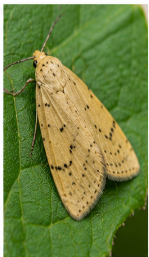
Parsnip Webworm Moths (Depressaria radiella) are small moths whose larvae specialize in feeding on plants within the carrot family (Apiaceae). Although the adult moth is rarely noticed, the caterpillar stage can become a significant pest of wild parsnip, cultivated parsnips, parsley, dill, fennel, celery, carrots, and several related plants. The larvae are best known for producing distinctive silk webbing that binds flower heads and seed clusters together while they feed safely inside.
Originally native to Europe and parts of Asia, the Parsnip Webworm has become well established throughout much of North America. In some regions, the insect is viewed as both a pest and a beneficial biological control agent because it damages the seeds of invasive wild parsnip populations. Whether considered helpful or harmful depends largely on the plant being attacked and the local agricultural or ecological situation.
Overview
The Parsnip Webworm is a member of the family Depressariidae, a group of small moths whose caterpillars frequently feed within flowers, seeds, rolled leaves, or silk shelters. Unlike many leaf-feeding caterpillars, Parsnip Webworm larvae spend much of their development concealed inside protective webs spun around flower clusters.
These silk shelters protect the larvae from predators while allowing them to consume developing flowers and seeds. Heavy infestations can significantly reduce seed production and lower crop quality in commercial seed production fields.
Taxonomy and Classification
- Order: Lepidoptera
- Family: Depressariidae
- Genus: Depressaria
- Species: Depressaria radiella
- Common Name: Parsnip Webworm Moth
Like all moths, Parsnip Webworms undergo complete metamorphosis, progressing through egg, larva, pupa, and adult stages.
Identification
The adult moth is relatively small and blends well into its surroundings.
- Wingspan: Approximately 20–28 mm.
- Color: Grayish-brown to tan.
- Forewings: Mottled with darker markings that resemble bark or dried vegetation.
- Body: Slender with narrow folded wings at rest.
- Activity: Primarily nocturnal and attracted to lights.
The adults are seldom observed because they rest quietly during the day among vegetation.
Larval Identification
The caterpillar is the damaging stage of the life cycle.
- Length: Up to 18 mm.
- Color: Bright green or yellow-green.
- Markings: Distinct black spots and stripes running along the body.
- Head: Dark brown to black.
The striking green body with black markings makes the larvae relatively easy to identify once the protective webbing is opened.
Distribution and Habitat
Parsnip Webworm Moths are widespread throughout Europe and have become established across much of North America.
They commonly inhabit:
- Roadsides
- Fields
- Prairies
- Meadows
- Agricultural fields
- Gardens
- Naturalized wild parsnip populations
Their distribution closely follows the availability of plants in the carrot family.
Life Cycle
Adult females lay eggs on flower buds or developing seed heads of suitable host plants.
After hatching, the young caterpillars immediately begin feeding while spinning silk that binds flowers and seed clusters together into protective shelters.
As they mature, larvae consume flowers, developing seeds, and surrounding plant tissues before pupating within their silk web or nearby plant debris.
Adults emerge later in the season to repeat the cycle. Most populations complete one generation each year.
Host Plants
The larvae feed primarily on members of the carrot family (Apiaceae).
Common hosts include:
- Wild parsnip
- Cultivated parsnip
- Parsley
- Dill
- Fennel
- Celery
- Carrots
- Queen Anne’s lace
- Other native umbellifers
Flowering plants are particularly attractive because developing seeds provide high nutritional value.
Behavior and Damage
Unlike foliage-feeding caterpillars, Parsnip Webworms concentrate on flowers and seed heads.
Common signs of infestation include:
- Silk webbing surrounding flower clusters.
- Chewed flowers and developing seeds.
- Black frass within webbed plant material.
- Reduced seed production.
- Premature drying of flower heads.
Heavy infestations may significantly reduce seed yields in commercial herb or vegetable seed production.
Conversely, feeding on invasive wild parsnip can reduce the spread of this troublesome weed by limiting viable seed production.
Integrated Pest Management (IPM)
Management depends on whether the insect is damaging cultivated crops or helping suppress invasive plants.
Monitoring
- Inspect flower heads regularly during summer.
- Look for silk webbing and feeding damage.
- Monitor developing seed clusters for caterpillars.
Cultural Controls
- Remove heavily infested flower heads.
- Destroy plant debris after harvest.
- Control invasive wild parsnip where appropriate.
- Rotate susceptible crops when practical.
Biological Control
Natural enemies help regulate populations.
- Parasitic wasps
- Predatory bugs
- Birds
- Ground beetles
- Spiders
Preserving beneficial insects often reduces the need for chemical intervention.
Chemical Control
Insecticides are rarely necessary except in commercial seed production fields experiencing severe infestations. Treatments should target young larvae before extensive webbing develops.
Ecological Importance
Parsnip Webworms occupy an unusual ecological niche because they may function as both agricultural pests and beneficial biological control agents.
By reducing seed production in invasive wild parsnip populations, they can help limit the spread of this invasive weed in certain habitats.
They also provide food for numerous predators and contribute to the biodiversity of meadow and prairie ecosystems.
Conservation and Research
Scientists frequently study Parsnip Webworms to better understand the evolutionary relationship between insects and plant chemical defenses. Wild parsnip produces toxic furanocoumarins that deter many herbivores, yet Parsnip Webworm caterpillars have evolved specialized adaptations allowing them to tolerate these defensive compounds.
Research continues to explore insect adaptation, host-plant specialization, and sustainable biological control of invasive plant species.
Conclusion
Parsnip Webworm Moths (Depressaria radiella) are specialized moths whose caterpillars feed primarily within the flower heads of plants in the carrot family. Their distinctive silk webbing, green caterpillars, and seed-feeding habits make them important insects in both agriculture and ecology. While they may reduce seed production in cultivated crops, they can also help suppress invasive wild parsnip populations, illustrating the complex role insects play in natural ecosystems.