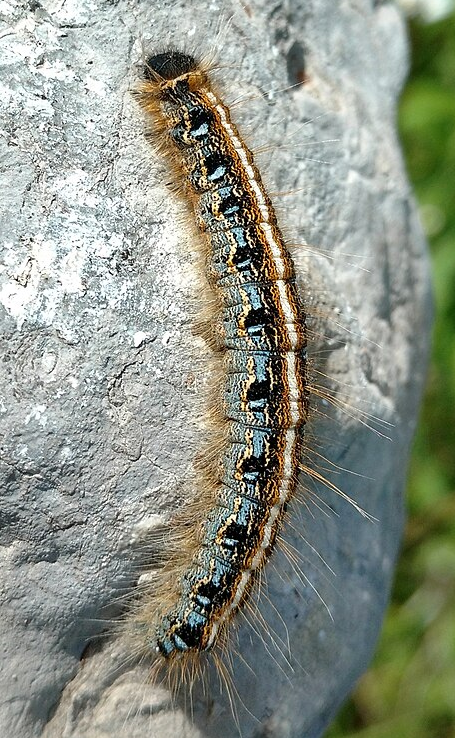
Eastern Tent Caterpillars (Malacosoma americanum) are native North American insects known for constructing distinctive silken “tents” in the branch forks of host trees during early spring. These social caterpillars primarily infest species in the rose family, including wild cherry, apple, and crabapple. Their feeding activity can lead to noticeable defoliation, especially during outbreak years. While the damage is often dramatic and unsightly, healthy, established trees typically recover and are rarely killed.
Taxonomy and Classification
The Eastern Tent Caterpillar belongs to the family Lasiocampidae within the order Lepidoptera, which includes moths and butterflies. It undergoes complete metamorphosis with egg, larva, pupa, and adult stages. This species is often confused with similar defoliators such as the Fall Webworm, which builds tents at branch tips later in the season, and the Gypsy Moth, which does not construct communal tents.
Physical Description
The caterpillar is the most recognizable stage, growing up to 2.5 inches long. It has a black body marked by a continuous white stripe running down the center of its back, along with blue spots and orange or brown lateral markings. Fine hairs cover the body, giving it a slightly fuzzy appearance.
The adult moth is stout-bodied and reddish-brown to tan in color, with two pale diagonal lines crossing each forewing. Adults are nocturnal and are rarely observed, emerging primarily in early summer.
Distribution and Habitat
Eastern Tent Caterpillars are widespread throughout eastern North America, from the Great Plains to the Atlantic Coast. Their habitat consists of deciduous forests, orchards, and ornamental landscapes where host trees are present. They show a strong preference for trees in the Rosaceae family, particularly wild cherry, apple, plum, and peach.
Behavior and Life Cycle
This species completes one generation per year. It overwinters in the egg stage, with eggs laid in glossy, dark bands encircling small twigs. In early spring, as buds begin to open, the larvae hatch and immediately begin feeding and constructing their communal silk tent.
The tent is typically built in a branch crotch on the sun-facing side of the tree and serves as a shelter for the colony. The caterpillars are highly social, leaving the tent in groups to feed and returning via chemical (pheromone) trails. As they mature, the larvae disperse and pupate in protected locations such as bark crevices, fences, or nearby structures. Adult moths emerge in early summer, mate, and lay eggs to complete the cycle.
Feeding and Damage
Eastern Tent Caterpillars are voracious foliage feeders, consuming newly emerged leaves in the spring. Their feeding activity results in several types of damage:
- Defoliation: Heavy infestations can strip leaves from branches or entire small trees. Most deciduous trees recover by producing new foliage later in the season.
- Aesthetic Damage: The presence of large silk tents and defoliated branches reduces the visual appeal of ornamental trees.
- Nuisance Behavior: Mature caterpillars often wander in large numbers, crossing sidewalks, roads, and buildings, creating a temporary nuisance.
Management and Prevention
Effective management relies on early detection and timely intervention.
- Dormant Season Control: Inspect trees in winter for egg masses and prune them out before hatching.
- Mechanical Removal: Remove tents manually in early spring when colonies are small. This is best done during cooler parts of the day when caterpillars are inside the tent.
- Biological Control: Apply Bacillus thuringiensis (Bt), a selective biological insecticide, to foliage when larvae are young.
- Natural Predators: Birds, parasitic wasps, and pathogens naturally help regulate populations over time.
Important: Burning tents while they are still attached to trees is not recommended, as it can severely damage the tree.
Conservation and Research
As a native species, Eastern Tent Caterpillars play a role in forest ecosystems, serving as a food source for wildlife and contributing to natural population cycles. Their outbreaks are typically cyclical, with natural enemies and environmental factors eventually reducing their numbers. Research continues to explore these population dynamics and the effectiveness of biological control strategies in managing outbreaks.