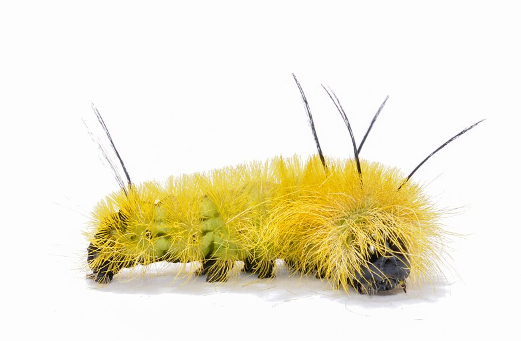
American Dagger Moth (Acronicta americana) is a species of noctuid moth in the family Noctuidae, commonly referred to as owlet moths. Native to North America, this species is widely distributed across the eastern and central United States and parts of southern Canada. It is best known for its distinctive larval stage, which features a striking, fuzzy appearance that can attract attention in gardens and wooded areas.
While the adult moth is relatively inconspicuous, the caterpillar is more noticeable and may feed on a variety of deciduous trees. Despite this feeding activity, the American Dagger Moth is generally not considered a major pest and plays an important role in natural ecosystems.
Taxonomy and Classification
- Common Name: American Dagger Moth
- Scientific Name: Acronicta americana
- Order: Lepidoptera
- Family: Noctuidae
- Type: Dagger moth (owlet moth)
The genus Acronicta includes numerous species known as dagger moths, named for the dagger-like markings on their wings. These moths are commonly associated with deciduous forests and a variety of host plants.
Identification and Physical Description
Adult American Dagger Moths are medium-sized, with a wingspan of approximately 1.8 to 2.5 inches. Their forewings are pale gray with darker markings that may resemble streaks or dagger-shaped patterns, providing camouflage against tree bark.
The hindwings are lighter, often pale gray or white, and are usually hidden beneath the forewings when at rest.
The larval stage is highly distinctive. Caterpillars are covered in dense, soft hairs and display a combination of:
- Yellow or pale coloration
- Black tufts of hair along the back
- Long, thin black “pencils” of hair near the front and rear
These hairs can cause skin irritation in some individuals and should not be handled directly.
Life Cycle
The American Dagger Moth undergoes complete metamorphosis, progressing through egg, larva, pupa, and adult stages.
Females lay eggs on the leaves of host plants. After hatching, larvae begin feeding on foliage and grow through several instars over a period of weeks.
When fully developed, the caterpillar pupates, often within leaf litter or in a sheltered location. The pupal stage allows transformation into the adult moth.
Adults emerge to mate and lay eggs, completing the life cycle. Typically, there is one generation per year, although this may vary depending on climate.
Host Plants
The larvae of the American Dagger Moth feed on a variety of deciduous trees and shrubs. Common host plants include:
- Maple
- Oak
- Elm
- Birch
- Hickory
- Fruit trees
This broad host range allows the species to thrive in diverse woodland and urban environments.
Damage and Symptoms
Larval feeding results in leaf damage, which may include:
- Chewed or missing leaf tissue
- Irregular holes in leaves
- Localized defoliation
In most cases, the damage is minor and does not significantly affect the health of mature trees. Severe infestations are uncommon.
Habitat and Distribution
The American Dagger Moth is widely distributed across eastern North America. It is commonly found in:
- Deciduous forests
- Woodland edges
- Parks and urban landscapes
- Residential areas with mature trees
Its distribution closely follows the availability of host plants.
Behavior and Ecology
Adult moths are nocturnal and are attracted to light sources. During the day, they rest on tree bark or other surfaces where their coloration provides camouflage.
The caterpillars are more active during the day and may be seen feeding on leaves. Their bright coloration and hair tufts may serve as a warning to predators.
As part of the ecosystem, the American Dagger Moth serves as a food source for birds and other predators, contributing to the natural food web.
Human Interaction and Risks
While the adult moth is harmless, the caterpillar’s hairs can cause skin irritation or mild allergic reactions in some individuals. Contact with the caterpillar should be avoided.
Symptoms of irritation may include itching, redness, or a mild rash. Washing the affected area with soap and water can help alleviate discomfort.
Management and Control
Control measures are rarely necessary due to the limited impact of this species. However, if caterpillars are present in high numbers, simple management steps can be taken.
- Manual removal: Carefully remove caterpillars using gloves.
- Encourage natural predators: Birds and beneficial insects help regulate populations.
- Monitor plants: Regular inspection can identify early feeding activity.
Chemical control is generally unnecessary and not recommended for minor infestations.
Prevention
Preventative measures focus on reducing contact and maintaining healthy plants.
- Avoid handling caterpillars directly
- Wear gloves when working around infested plants
- Maintain plant health to reduce susceptibility to damage
These steps help minimize risk while preserving ecological balance.
Related Articles
Conclusion
The American Dagger Moth is a distinctive species known for its striking caterpillar and subtle adult form. While its larvae may cause minor feeding damage, it is not considered a significant pest.
Understanding its life cycle and behavior helps homeowners and gardeners manage interactions safely while appreciating its role in natural ecosystems. With minimal need for intervention, it remains an important part of North American biodiversity.