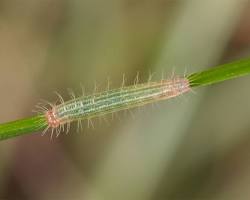
Ypthima Turf Feeders
Ypthima Turf Feeders are grass-feeding caterpillars associated with the larval stages of Ypthima butterflies and related grassland butterfly species. These insects inhabit lawns, meadows, parks, golf courses, sports fields, and natural grasslands where they feed on turfgrass foliage. While generally considered minor pests compared to destructive turf insects such as sod webworms, cutworms, and armyworms, they can contribute to thinning turf and reduced lawn quality when populations become unusually high.
Most Ypthima turf feeders are regarded as beneficial components of healthy grassland ecosystems. Their caterpillars serve as food for birds, spiders, predatory beetles, and parasitic insects, while adult butterflies contribute to pollination and biodiversity. For this reason, they are often viewed as indicators of a balanced and environmentally healthy landscape.
In most situations, healthy turf can tolerate their feeding with little or no visible damage. Problems typically arise only when lawns are already stressed by drought, poor soil conditions, nutrient deficiencies, excessive traffic, or other environmental pressures.
Taxonomy and Classification
- Kingdom: Animalia
- Phylum: Arthropoda
- Class: Insecta
- Order: Lepidoptera
- Family: Nymphalidae
- Subfamily: Satyrinae
- Genus: Ypthima
Ypthima butterflies undergo complete metamorphosis, progressing through egg, larval, pupal, and adult stages.
Identification
The caterpillars are highly adapted for life among grasses.
- Length: Approximately 15–25 mm when mature.
- Color: Green, yellow-green, tan, or light brown.
- Shape: Slender, spindle-shaped body tapering toward both ends.
- Tail: Distinctive forked or bifid tail projection.
- Head: Rounded with small horn-like projections.
- Camouflage: Excellent resemblance to surrounding grass blades.
Adult butterflies are small brown butterflies with characteristic eye spots on their wings and a low, bobbing flight pattern over grassy habitats.
Distribution and Habitat
Ypthima turf feeders occur in warm and temperate grassland environments throughout many parts of the world.
Common habitats include:
- Residential lawns
- Golf courses
- Sports fields
- Public parks
- Native grasslands
- Prairies
- Pastures
- Roadside vegetation
They thrive wherever suitable grasses are available for larval development.
Host Plants
The caterpillars are specialized grass feeders.
Preferred host plants include:
- Fescue grasses
- Bermuda grass
- Bluegrass species
- Native bunchgrasses
- Sedges
- Pasture grasses
- Ornamental turf species
Unlike many caterpillar pests, they rarely feed on flowers, shrubs, vegetables, or trees.
Life Cycle
Ypthima turf feeders undergo complete metamorphosis.
- Egg Stage: Females deposit eggs on grasses or nearby vegetation.
- Larval Stage: Caterpillars hatch and begin feeding on grass blades.
- Pupal Stage: Pupation occurs within the thatch layer, soil surface, or surrounding vegetation.
- Adult Stage: Butterflies emerge, mate, and lay eggs to begin the next generation.
Multiple generations may occur annually in warm climates with extended growing seasons.
Behavior
Ypthima turf feeders display several behaviors that help them avoid predators.
- Feed primarily near the base of grass plants.
- Remain hidden during daylight hours.
- Use camouflage to blend into vegetation.
- Rest head-down among grass blades.
- Move slowly and avoid detection.
Their secretive nature allows populations to develop without being noticed until turf symptoms become visible.
Damage and Economic Importance
Damage results from the removal of turfgrass foliage during feeding.
Grass Blade Consumption
Caterpillars feed on leaf tissue rather than roots.
- Small feeding notches.
- Reduced leaf area.
- Lower photosynthetic efficiency.
Turf Thinning
Continued feeding may produce:
- Reduced turf density.
- Patchy growth.
- Uneven lawn appearance.
- Declining vigor.
Stress Amplification
Damage becomes more noticeable when lawns experience:
- Drought conditions.
- Nutrient deficiencies.
- Heavy traffic.
- Compacted soil.
- Disease pressure.
Landscape Impact
In highly maintained turf areas such as golf courses and sports fields, even moderate thinning can affect appearance and performance.
In residential landscapes, aesthetic decline is usually the primary concern.
Signs of Infestation
Common indicators include:
- Patchy turf thinning.
- Reduced grass density.
- Small feeding scars on blades.
- Visible caterpillars near the soil surface.
- Adult butterflies flying low over turf.
- Gradual decline in lawn quality.
Symptoms are often mistaken for drought stress or nutrient deficiencies.
Behavior and Conflict
The primary conflict associated with Ypthima turf feeders involves their feeding activity on grasses.
- Low-Intensity Herbivory: Grass blades are consumed gradually.
- Hidden Feeding: Larvae remain concealed near the turf base.
- Turf Quality Reduction: Heavy populations may reduce visual appeal.
- Environmental Sensitivity: Damage is greatest in already stressed lawns.
Unlike major turf pests, these caterpillars rarely cause widespread lawn destruction or permanent damage.
Management and Prevention
Integrated Pest Management is the recommended approach.
Cultural Management
- Maintain proper irrigation.
- Apply balanced fertilization.
- Avoid scalping during mowing.
- Reduce soil compaction.
- Encourage healthy root development.
Healthy turf can generally tolerate feeding without significant injury.
Monitoring
- Inspect turf during peak growing periods.
- Watch for adult butterfly activity.
- Examine thinning areas closely.
- Look for larvae within grass thatch.
Biological Control
Natural predators provide excellent suppression.
- Birds
- Ground beetles
- Spiders
- Parasitic wasps
- Predatory insects
These beneficial organisms typically keep populations below damaging levels.
Chemical Control
Chemical treatment is rarely necessary and is generally discouraged because it may harm beneficial insects and natural predators that help maintain ecological balance.
Conservation and Research
Researchers study Ypthima turf feeders as indicators of grassland biodiversity and environmental quality. Their presence often reflects reduced pesticide pressure, healthy ecosystems, and functioning food webs.
Conservation efforts focus on preserving grassland habitats, supporting native butterfly populations, encouraging pollinator-friendly landscapes, and minimizing unnecessary pesticide use.
Although Ypthima turf feeders may occasionally contribute to turf thinning, they are generally considered beneficial members of healthy ecosystems. Their ecological value as prey species, pollinators, and indicators of environmental health far outweighs the minor damage they may cause in most lawns and managed landscapes.