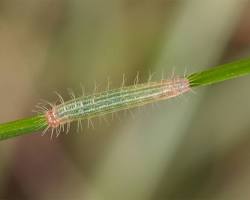
Ypthima Caterpillars
Ypthima Caterpillars are the larval stage of Ypthima butterflies, a group of grass-feeding butterflies commonly associated with meadows, pastures, lawns, and natural grassland habitats. While adult butterflies are harmless pollinators that contribute to ecosystem health, the caterpillars feed on grasses and may occasionally contribute to turf thinning in lawns and managed landscapes.
Unlike highly destructive turf pests such as armyworms, cutworms, or sod webworms, Ypthima caterpillars are generally considered minor pests. Their feeding tends to be slow and localized, and healthy grass can usually tolerate their activity without significant injury. However, under conditions of drought, poor soil fertility, heavy traffic, or unusually high caterpillar populations, visible turf damage may develop.
These caterpillars are important components of grassland ecosystems. They serve as food for birds, spiders, predatory insects, and other wildlife while helping support biodiversity within natural and managed landscapes.
Taxonomy and Classification
- Kingdom: Animalia
- Phylum: Arthropoda
- Class: Insecta
- Order: Lepidoptera
- Family: Nymphalidae
- Subfamily: Satyrinae
- Genus: Ypthima
Like all butterflies, Ypthima species undergo complete metamorphosis with egg, larval, pupal, and adult stages.
Identification
Ypthima caterpillars are highly adapted for camouflage among grasses.
- Length: Approximately 15–25 mm when mature.
- Color: Green, yellow-green, tan, or brown.
- Shape: Slender and spindle-shaped.
- Tail: Distinctive forked or bifid tail projection.
- Head: Rounded with small horn-like projections.
- Markings: Fine longitudinal stripes resembling grass veins.
Their coloration allows them to blend almost perfectly with surrounding vegetation.
Adult butterflies are often observed flying low over grassy areas and can provide an indication that larvae are present nearby.
Distribution and Habitat
Ypthima species are widespread throughout warm and temperate regions where grasses are abundant.
Typical habitats include:
- Lawns
- Parks
- Golf courses
- Sports fields
- Pastures
- Prairies
- Meadows
- Roadside grasslands
These habitats provide both food and shelter throughout the caterpillar’s development.
Host Plants
Ypthima caterpillars are specialized grass feeders.
Common host plants include:
- Bermuda grass
- Fescue grasses
- Bluegrass species
- Native prairie grasses
- Sedges
- Bunch grasses
- Pasture grasses
The caterpillars rarely feed on ornamental flowers, shrubs, or trees.
Life Cycle
Ypthima caterpillars develop through several stages before becoming adult butterflies.
- Egg Stage: Females deposit eggs on grasses or nearby vegetation.
- Larval Stage: Caterpillars hatch and begin feeding on grass blades.
- Pupal Stage: Pupation occurs within vegetation, thatch, or ground cover.
- Adult Stage: Butterflies emerge, feed on nectar, and reproduce.
In warm climates, multiple generations may occur during a single growing season.
Behavior
Ypthima caterpillars are primarily nocturnal or crepuscular feeders.
- Feed near the base of grass plants.
- Remain concealed during daylight hours.
- Use camouflage to avoid predators.
- Move slowly and cautiously.
- Prefer dense grass cover.
Their hidden lifestyle makes infestations difficult to detect until feeding damage becomes noticeable.
Damage and Economic Importance
Most damage results from the removal of grass tissue during feeding.
Grass Blade Feeding
Caterpillars graze on leaf margins and surfaces.
- Small feeding notches.
- Reduced leaf area.
- Lower photosynthetic capacity.
Turf Thinning
Continuous feeding may result in:
- Patchy lawn appearance.
- Reduced grass density.
- Uneven turf growth.
- Declining vigor.
Stress Enhancement
Damage becomes more severe when combined with:
- Drought stress.
- Poor fertility.
- Soil compaction.
- Heavy traffic.
- Disease pressure.
Healthy turf can usually withstand feeding without permanent injury.
Signs of Infestation
Common symptoms include:
- Thinning grass.
- Patchy turf.
- Irregular feeding scars.
- Reduced lawn density.
- Small caterpillars near the soil surface.
- Adult butterflies flying low over grass.
Damage is often mistaken for drought stress, nutrient deficiency, or disease problems.
Behavior and Conflict
The primary conflict associated with Ypthima caterpillars is their feeding on turfgrass.
- Low-Level Herbivory: Grass blades are consumed gradually.
- Hidden Activity: Larvae remain difficult to detect.
- Turf Quality Reduction: Heavy feeding may reduce lawn appearance.
- Stress Interaction: Existing lawn problems become more visible.
Despite these impacts, they are generally regarded as beneficial components of healthy grassland ecosystems rather than serious pests.
Management and Prevention
Integrated Pest Management provides the best long-term strategy.
Turf Maintenance
- Water deeply and consistently.
- Maintain proper fertilization.
- Avoid excessive mowing.
- Reduce soil compaction.
Healthy turf tolerates feeding more effectively than stressed turf.
Monitoring
- Inspect grass regularly.
- Monitor butterfly activity.
- Look for thinning patches.
- Check grass bases for caterpillars.
Biological Control
Natural predators help suppress populations.
- Birds
- Spiders
- Ground beetles
- Parasitic wasps
- Predatory insects
These natural enemies usually prevent damaging outbreaks.
Chemical Control
Chemical treatment is rarely required. Most infestations remain below economic thresholds and can be managed through cultural practices and biological control.
Conservation and Research
Scientists study Ypthima caterpillars because of their importance in grassland ecosystems and food webs. Their populations help support birds, predatory insects, and other wildlife while serving as indicators of habitat quality and environmental health.
Conservation efforts focus on preserving native grasslands, encouraging biodiversity, reducing pesticide exposure, and maintaining healthy ecosystems that support both caterpillars and adult butterflies.
Although Ypthima caterpillars can occasionally contribute to turf thinning, they are generally considered beneficial and ecologically important insects. Their modest feeding activity is typically outweighed by their role in supporting biodiversity, pollination, and healthy grassland ecosystems.