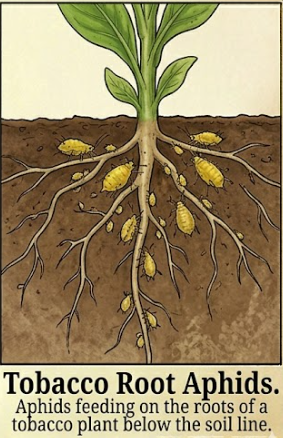
Tobacco Root Aphids are subterranean sap-feeding pests that attack the roots of tobacco and related host plants. Unlike the familiar aphids that cluster on leaves and stems, these insects spend nearly their entire lives below ground, feeding directly on root tissues and extracting valuable nutrients and moisture from the plant. Their hidden lifestyle makes them particularly difficult to detect, and infestations often remain unnoticed until plants begin showing symptoms of decline, stunting, and poor vigor.
Because healthy roots are essential for water absorption, nutrient uptake, and overall plant growth, even moderate root aphid infestations can significantly affect crop performance. In tobacco production, reduced root function translates directly into smaller plants, lower-quality leaves, delayed maturity, and reduced yields. Root aphids are frequently associated with ants, which protect and transport the aphids in exchange for sugary secretions. This relationship can increase infestation severity and make management more challenging.
Root aphids are particularly problematic in greenhouses, nurseries, container production systems, and agricultural fields where susceptible host plants are grown repeatedly. Their ability to persist underground and reproduce rapidly allows populations to build unnoticed until significant economic damage has occurred.
Taxonomy and Classification
Tobacco Root Aphids belong to the order Hemiptera and the family Aphididae.
- Order: Hemiptera
- Family: Aphididae
- Genus: Pemphigus and related genera
- Common Name: Tobacco Root Aphid
Like other aphids, they possess specialized piercing-sucking mouthparts designed to extract plant sap. However, their underground lifestyle has led to several adaptations that distinguish them from their above-ground relatives.
Identification
Tobacco Root Aphids are difficult to detect because they remain concealed beneath the soil surface.
Adult Aphids
- Size: Approximately 1.5–2.5 mm long.
- Color: Pale yellow, white, gray, or light green.
- Shape: Pear-shaped and soft-bodied.
- Antennae: Relatively short.
- Cornicles: Greatly reduced compared to leaf-feeding aphids.
Waxy Coating
- Many species produce a white, powdery wax.
- Infested roots may appear covered in white dust or cottony material.
- This wax helps protect colonies from environmental stress.
Key Signs of Infestation
- Stunted growth.
- Yellowing foliage.
- Wilting despite adequate moisture.
- Poor root development.
- Visible aphid colonies on roots.
- Ant activity around plant bases.
Root inspection is usually necessary to confirm an infestation.
Distribution and Habitat
Tobacco Root Aphids occur in many tobacco-producing regions worldwide.
Common habitats include:
- Tobacco fields
- Greenhouses
- Nurseries
- Container-grown crops
- Agricultural soils
- Weedy field margins
- Root zones of susceptible host plants
They thrive in loose, well-aerated soils where roots are abundant and environmental conditions remain relatively stable.
Host Plants
Although tobacco is a major host, these aphids feed on numerous other plants.
- Tobacco
- Lettuce
- Sunflowers
- Aster family plants
- Various weeds
- Ornamental plants
- Greenhouse crops
Alternate hosts allow populations to survive between tobacco-growing seasons.
Life Cycle
Tobacco Root Aphids reproduce rapidly when suitable hosts are available.
- Nymph Stage: Young aphids begin feeding immediately after birth.
- Adult Stage: Mature aphids reproduce and establish expanding colonies.
- Winged Forms: Produced when colonies become crowded or environmental conditions deteriorate.
Many populations reproduce asexually for much of the growing season, allowing numbers to increase rapidly. Multiple overlapping generations may occur annually.
Feeding Behavior
Root aphids feed by inserting their mouthparts into root tissues and extracting plant fluids.
Preferred feeding sites include:
- Fine feeder roots.
- Root tips.
- Crown tissues.
- Young root growth.
Continuous feeding weakens the root system and reduces the plant’s ability to absorb essential resources.
Damage and Economic Importance
The primary impact of Tobacco Root Aphids results from reduced root function.
Water Stress
- Reduced water uptake.
- Wilting during warm periods.
- Poor drought tolerance.
Plants often appear drought-stressed even when adequate soil moisture is available.
Nutrient Deficiencies
- Yellowing leaves.
- Slow growth.
- Reduced vigor.
- Poor leaf development.
Damaged roots cannot efficiently absorb nutrients from the soil.
Stunting
- Smaller plants.
- Uneven field growth.
- Delayed maturity.
- Reduced yields.
Heavily infested plants may remain substantially smaller than neighboring healthy plants.
Association with Ants
One of the most important aspects of Tobacco Root Aphid biology is their relationship with ants.
- Ants protect aphids from predators.
- Ants transport aphids between plants.
- Ants feed on sugary secretions produced by the aphids.
- Colonies may persist longer because of ant protection.
Effective management often requires addressing both aphids and associated ant populations.
Secondary Problems
Root aphid feeding may contribute to additional plant health issues.
- Root diseases.
- Fungal infections.
- Bacterial pathogens.
- Reduced transplant establishment.
- Chronic plant stress.
These secondary effects often increase the overall impact of infestations.
Signs of Infestation
Growers should watch for:
- Unexplained stunting.
- Yellow foliage.
- Wilting despite irrigation.
- Poor root systems.
- Ant activity near plant bases.
- White waxy material on roots.
Direct root examination remains the most reliable diagnostic method.
Behavior and Conflict
Several characteristics make Tobacco Root Aphids difficult pests to manage.
- Underground Feeding: Hidden from routine scouting.
- Rapid Reproduction: Colonies expand quickly.
- Ant Protection: Reduces natural enemy effectiveness.
- Multiple Hosts: Alternate plants support survival.
- Overlapping Generations: Continuous population growth.
These traits allow infestations to become established before symptoms are recognized.
Monitoring and Detection
Successful management depends on early detection.
- Inspect stunted plants.
- Examine roots directly.
- Monitor ant activity.
- Check transplants before planting.
- Inspect greenhouse stock regularly.
Because symptoms resemble nutrient deficiencies and root diseases, direct confirmation is essential.
Management and Prevention
An Integrated Pest Management (IPM) program offers the most effective long-term control.
Sanitation
- Use clean planting material.
- Avoid contaminated soil.
- Remove infested plants.
- Clean tools and containers.
Preventing introduction is often easier than eliminating established infestations.
Ant Management
- Control ant colonies.
- Use ant baits when appropriate.
- Reduce ant access to crop areas.
Managing ants often reduces aphid survival and spread.
Cultural Controls
- Maintain proper drainage.
- Avoid plant stress.
- Rotate susceptible crops.
- Control weed hosts.
Healthy root systems are better able to tolerate moderate feeding pressure.
Biological Control
- Predatory beetles.
- Beneficial fungi.
- Soil-dwelling predators.
Natural enemies may contribute to population suppression when environmental conditions are favorable.
Chemical Control
- Use soil-directed products when necessary.
- Target root zones effectively.
- Follow label instructions carefully.
Because the aphids remain underground, treatment placement is critical for successful control.
Conservation and Research
Research on Tobacco Root Aphids focuses on biological control agents, ant-aphid interactions, improved monitoring methods, and sustainable management practices. Scientists continue investigating ways to suppress populations while minimizing environmental impacts and reducing dependence on chemical controls.
Regular root inspections, sanitation, ant management, and early intervention remain the most effective defenses against Tobacco Root Aphids. Because infestations often remain hidden for extended periods, preventive monitoring is essential for protecting crop health and maintaining consistent yields.