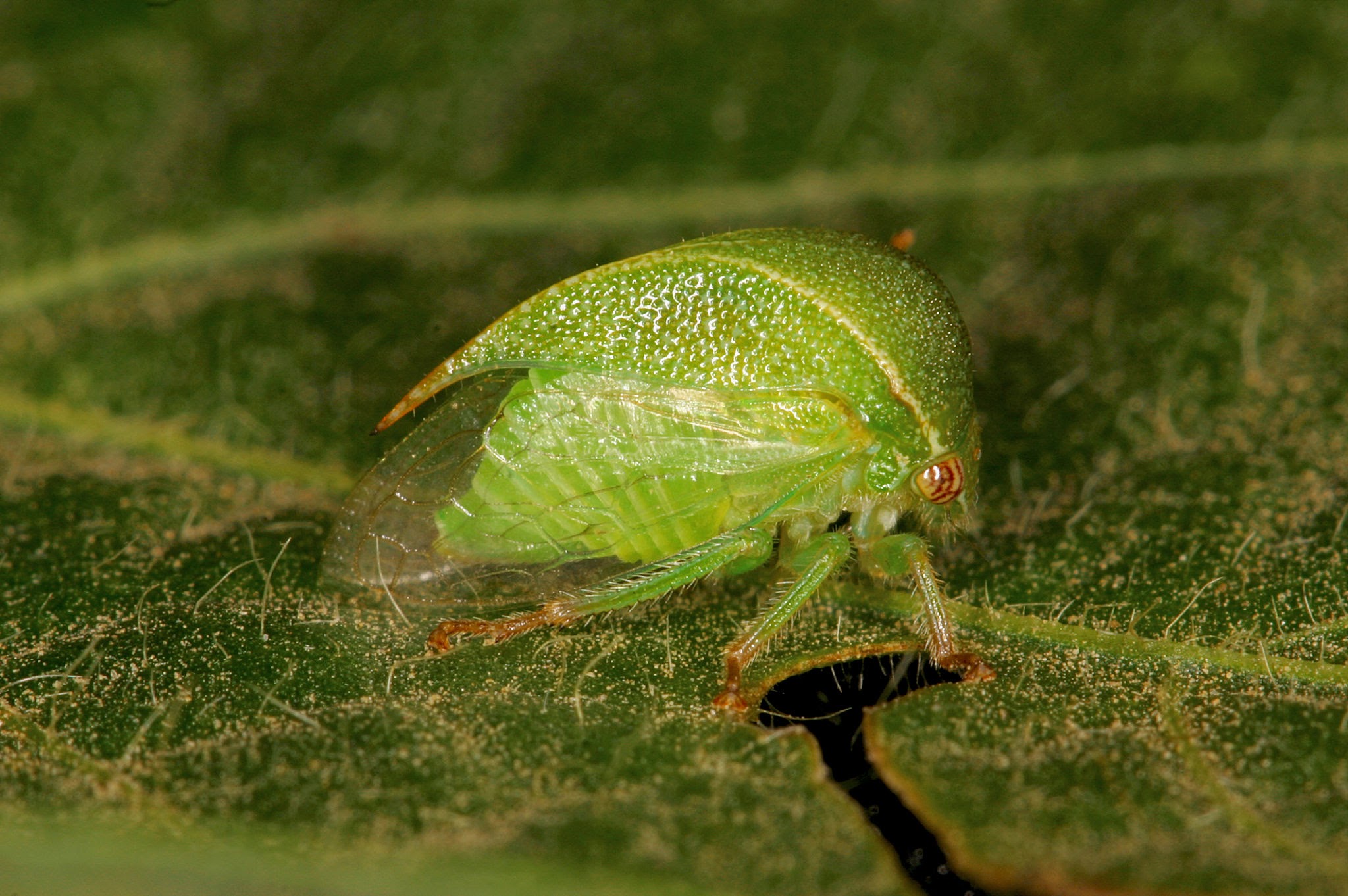
Threecornered Alfalfa Hoppers (Spissistilus festinus) are sap-feeding treehoppers that attack a wide range of agricultural crops, particularly legumes and row crops such as soybeans, alfalfa, peanuts, cotton, tomatoes, and other broadleaf plants. Unlike many sap-feeding insects that primarily damage leaves, Threecornered Alfalfa Hoppers target stems, petioles, and branches. Their feeding creates distinctive girdling-like wounds that weaken plant structure and interfere with the movement of water and nutrients. Heavy infestations can stunt plant growth, reduce yields, increase lodging, and cause stems to break under the weight of developing fruit or seed pods. Because their damage is often structural rather than cosmetic, relatively small populations can have a significant impact on crop productivity.
Taxonomy and Classification
Threecornered Alfalfa Hoppers belong to the order Hemiptera, the group that includes leafhoppers, aphids, cicadas, and other sap-feeding insects. They are members of the family Membracidae, commonly known as treehoppers.
- Order: Hemiptera
- Family: Membracidae
- Genus: Spissistilus
- Species: Spissistilus festinus
Treehoppers are famous for their unusual body shapes, many of which mimic thorns, plant buds, or other natural structures. The Threecornered Alfalfa Hopper is one of the most recognizable species due to its sharply angled triangular profile.
Identification
Threecornered Alfalfa Hoppers are relatively small but distinctive insects.
Adult Hoppers
- Size: Approximately 1/4 inch long.
- Color: Bright green.
- Shape: Triangular or wedge-shaped.
- Pronotum: Enlarged and extended upward, creating the characteristic three-cornered appearance.
- Profile: Resembles a thorn or small plant spine.
- Movement: Quick-moving and capable of powerful jumps when disturbed.
Nymphs
- Color: Pale green.
- Appearance: Wingless and smaller than adults.
- Body Features: Often covered with small spines or projections.
- Location: Commonly found near stems and lower plant growth.
Damage Indicators
- Stem Swelling: Enlarged rings around feeding sites.
- Girdling: Circular feeding scars around stems.
- Bent Stems: Weak or distorted growth.
- Stem Breakage: Plants snapping at damaged locations.
Distribution and Habitat
Threecornered Alfalfa Hoppers occur throughout much of the southern and southeastern United States, Mexico, Central America, and portions of South America.
Common habitats include:
- Soybean fields
- Alfalfa plantings
- Peanut fields
- Cotton production areas
- Vegetable gardens
- Roadside vegetation
- Weedy field margins
- Legume cover crops
They frequently move between cultivated crops and wild host plants throughout the growing season.
Host Plants
Threecornered Alfalfa Hoppers feed on a broad range of plants.
Important hosts include:
- Soybeans
- Alfalfa
- Peanuts
- Cotton
- Tomatoes
- Beans
- Clover
- Vetch
- Cowpeas
- Various weeds and legumes
Their wide host range allows populations to persist and expand throughout the growing season.
Life Cycle
Threecornered Alfalfa Hoppers undergo incomplete metamorphosis.
- Egg Stage: Females insert eggs into stems, petioles, and other soft plant tissues.
- Nymph Stage: Newly hatched nymphs begin feeding on plant sap and molt through several developmental stages.
- Adult Stage: Mature winged adults disperse, feed, and reproduce.
Development occurs rapidly during warm weather, and multiple generations may occur annually in favorable climates.
Feeding Behavior
Threecornered Alfalfa Hoppers are unique among many crop pests because they focus their feeding on stems rather than leaves.
As they feed, adults and nymphs repeatedly puncture the stem while moving around it in a circular pattern.
This behavior creates:
- Localized tissue damage.
- Disrupted nutrient transport.
- Reduced structural strength.
- Characteristic girdling symptoms.
Because the injury surrounds the stem, it can significantly impair plant function.
Damage and Economic Importance
The primary injury caused by Threecornered Alfalfa Hoppers is stem girdling.
Common symptoms include:
- Stem Swelling: Enlarged bands around feeding sites.
- Reduced Nutrient Flow: Disruption of vascular tissues.
- Plant Stunting: Slower growth and development.
- Lodging: Plants leaning or collapsing.
- Stem Breakage: Weakened stems snapping under stress.
- Reduced Pod Production: Lower yields in legumes.
- Poor Fruit Development: Reduced productivity in vegetables.
Damage is often most severe when infestations occur early in crop development.
Signs of Infestation
Several symptoms help distinguish Threecornered Alfalfa Hopper damage from other pest problems.
- Swollen Rings: Circular callus-like growth on stems.
- Girdled Areas: Distinct feeding bands around stems.
- Purple or Red Foliage: Nutrient movement disruption may alter leaf color.
- Air Roots: Adventitious roots sometimes form above damaged areas.
- Broken Plants: Stems breaking near feeding sites.
These symptoms are particularly common in soybeans, peanuts, and other legumes.
Behavior and Conflict
Several biological traits contribute to the pest status of Threecornered Alfalfa Hoppers.
- High Mobility: Adults move readily between host plants.
- Multiple Generations: Repeated infestations may occur during the season.
- Wide Host Range: Numerous crops and weeds support populations.
- Structural Damage: Feeding causes lasting injury.
- Early-Season Impact: Young plants are especially vulnerable.
Unlike many sap feeders, their damage often continues affecting plant performance long after the insects have departed.
Monitoring and Detection
Regular scouting is critical for early management.
- Inspect stems for girdling symptoms.
- Use sweep nets in field crops.
- Monitor field edges and weedy areas.
- Watch for adults resting along stems.
- Examine young plants closely during warm weather.
Early detection allows intervention before permanent stem damage becomes widespread.
Management and Prevention
An Integrated Pest Management (IPM) approach provides the most effective control.
Cultural Controls
- Weed Management: Remove alternate host plants.
- Field Sanitation: Reduce overwintering sites.
- Early Planting: Allows crops to become established before peak populations.
- Balanced Fertility: Maintain healthy plant growth.
Biological Control
- Predatory bugs.
- Spiders.
- Parasitic insects.
- Generalist predators.
Conserving beneficial insects can help suppress populations naturally.
Chemical Control
- Apply insecticides when economic thresholds are exceeded.
- Target active nymph and adult populations.
- Follow local recommendations for crop-specific treatments.
- Rotate products to reduce resistance risks.
Because girdling damage is permanent, treatments are most effective before extensive injury occurs.
Conservation and Research
Research on Threecornered Alfalfa Hoppers focuses on crop resistance, biological control, disease transmission, and improved monitoring techniques. Scientists continue studying how feeding injuries affect crop productivity and how sustainable management practices can reduce economic losses.
Integrated approaches that combine monitoring, weed management, beneficial insect conservation, and timely intervention remain the most effective long-term strategy for managing this important agricultural pest.