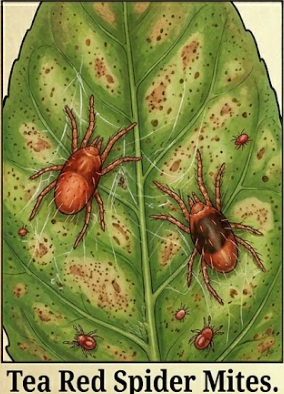
Tea Red Spider Mites (Oligonychus coffeae and related species) are among the most destructive mite pests of tea plants worldwide. These microscopic arachnids feed on leaf tissues by piercing individual plant cells and extracting their contents, causing progressive discoloration, reduced photosynthesis, premature leaf drop, and declining plant vigor. Although extremely small, their ability to reproduce rapidly allows populations to reach damaging levels in a relatively short period, particularly during hot, dry weather.
Tea Red Spider Mites are especially problematic because the leaves they damage are the harvested product in tea production. Even moderate infestations can reduce leaf quality, diminish harvest yields, and weaken future flush development. In ornamental camellias and related plants, infestations produce bronzed, unhealthy foliage that significantly reduces landscape value. Their preference for warm, dry conditions makes them particularly troublesome during drought periods and in environments where natural predators have been disrupted.
Taxonomy and Classification
Tea Red Spider Mites belong to the class Arachnida and are closely related to spiders, ticks, and other mites.
- Class: Arachnida
- Subclass: Acari
- Family: Tetranychidae
- Genus: Oligonychus
- Species: Oligonychus coffeae
Unlike insects, adult mites possess eight legs and lack wings and antennae. Members of the spider mite family are among the most economically important plant-feeding arthropods worldwide.
Identification
Tea Red Spider Mites are extremely small and often require magnification for positive identification.
Adult Mites
- Size: Approximately 0.4–0.5 mm long.
- Color: Bright red, crimson, rust-red, or dark reddish-brown.
- Shape: Oval to elliptical.
- Body: Smooth and soft-bodied.
- Movement: Slow-moving but highly active when populations are dense.
Eggs
- Small and spherical.
- Reddish or translucent in color.
- Deposited along leaf veins and feeding sites.
Key Signs of Infestation
- Bronzed leaf surfaces.
- Rusty or reddish discoloration.
- Loss of natural leaf shine.
- Fine speckling.
- Premature leaf drop.
- Reduced vigor.
Because of their small size, plant symptoms are often easier to observe than the mites themselves.
Distribution and Habitat
Tea Red Spider Mites are common throughout tea-growing regions of Asia, Africa, and other subtropical and tropical areas.
Typical habitats include:
- Tea plantations
- Camellia plantings
- Nurseries
- Greenhouses
- Botanical gardens
- Ornamental landscapes
Populations thrive in hot, dry environments where humidity is low and foliage remains exposed to sunlight.
Host Plants
Although tea plants are their primary host, Tea Red Spider Mites may feed on several other plant species.
Common hosts include:
- Tea
- Camellias
- Hibiscus
- Azaleas
- Various ornamental shrubs
- Certain fruit crops
Host availability throughout the year contributes to their persistence in favorable climates.
Life Cycle
Tea Red Spider Mites develop through several life stages.
- Egg Stage: Females lay eggs directly on leaf surfaces.
- Larval Stage: Young mites begin feeding shortly after hatching.
- Nymph Stage: Several immature stages occur before adulthood.
- Adult Stage: Mature mites reproduce and establish new colonies.
Development is strongly influenced by temperature. Warm conditions accelerate reproduction and population growth, allowing multiple generations to occur in rapid succession.
Feeding Behavior
Tea Red Spider Mites feed by puncturing leaf cells and removing their contents.
Preferred feeding areas include:
- Leaf surfaces.
- Areas near major veins.
- Older foliage.
- Sun-exposed leaves.
As feeding continues, chlorophyll-containing cells are destroyed, reducing the plant’s ability to perform photosynthesis.
Damage and Economic Importance
The primary impact of Tea Red Spider Mites comes from cumulative feeding injury.
Leaf Discoloration
- Bronzing.
- Rust-colored patches.
- Speckled appearance.
- Dull foliage.
These symptoms often begin as small feeding spots that gradually merge into larger damaged areas.
Reduced Photosynthesis
- Loss of chlorophyll.
- Reduced energy production.
- Lower growth rates.
- Reduced flush development.
Plants weakened by extensive feeding may struggle to produce vigorous new growth.
Premature Leaf Drop
- Early defoliation.
- Canopy thinning.
- Reduced plant vigor.
- Increased environmental stress.
Severe infestations can dramatically reduce the amount of healthy foliage available for harvest.
Impact on Tea Production
Tea Red Spider Mites directly affect both yield and quality.
- Reduced harvest volume.
- Lower-quality leaves.
- Slower regrowth after harvest.
- Reduced plant longevity.
- Uneven plantation performance.
Because tea production depends on healthy foliage, sustained infestations can create significant economic losses.
Signs of Infestation
Growers should watch for:
- Bronzed foliage.
- Reddish leaf surfaces.
- Loss of leaf gloss.
- Fine stippling.
- Premature leaf drop.
- Visible mite colonies under magnification.
Infestations often become most noticeable during extended periods of hot, dry weather.
Behavior and Conflict
Several characteristics contribute to the pest status of Tea Red Spider Mites.
- Rapid Reproduction: Populations increase quickly.
- Microscopic Size: Difficult to detect early.
- Heat Tolerance: Thrive during hot weather.
- Continuous Feeding: Damage accumulates rapidly.
- Multiple Generations: Persistent infestations throughout the season.
These characteristics often allow outbreaks to develop before growers recognize the severity of the problem.
Monitoring and Detection
Regular scouting is critical.
- Inspect foliage frequently.
- Monitor during dry periods.
- Examine leaves with magnification.
- Watch for bronzing and discoloration.
- Track population trends.
Early intervention is far more effective than attempting to suppress advanced infestations.
Management and Prevention
An Integrated Pest Management (IPM) program provides the most reliable long-term control.
Cultural Controls
- Maintain adequate irrigation.
- Reduce plant stress.
- Avoid excessive dust accumulation.
- Promote healthy plant growth.
Healthy plants are generally more tolerant of mite feeding.
Biological Control
- Predatory mites.
- Lady beetles.
- Minute pirate bugs.
- Other beneficial arthropods.
Conserving natural enemies is one of the most effective long-term management strategies.
Organic Controls
- Horticultural oils.
- Neem oil.
- Insecticidal soaps.
Thorough coverage is necessary because mites often concentrate in protected feeding areas.
Chemical Control
- Use registered miticides when necessary.
- Rotate active ingredients.
- Follow label directions carefully.
- Avoid repeated use of the same product.
Resistance management is particularly important because spider mites can develop resistance rapidly.
Conservation and Research
Research on Tea Red Spider Mites focuses on biological control, resistant plant varieties, improved monitoring methods, and sustainable management programs. Scientists continue developing strategies that reduce reliance on chemical miticides while maintaining effective suppression of damaging populations.
Routine monitoring, conservation of predatory mites, proper irrigation management, and early intervention remain the most effective defenses against Tea Red Spider Mite outbreaks. These practices help protect both plant health and crop quality while supporting long-term sustainable pest management.