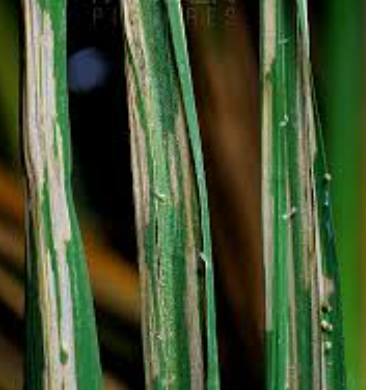
Rice caseworms (Nymphula depunctalis) are aquatic caterpillars that primarily affect rice grown in flooded environments. Unlike many agricultural pests, these larvae are uniquely adapted to waterlogged conditions and spend much of their lifecycle partially submerged. They are known for constructing protective “cases” from cut plant material, which they carry while feeding. Although often underestimated, rice caseworms can significantly reduce plant vigor and yield, particularly in young rice crops.
Identification and Behavior
Larvae are pale green to translucent caterpillars with brown heads and are typically found attached to rice leaves near the water surface. Their signature behavior is the construction of tubular cases made from leaf fragments. These cases provide protection from predators and environmental stress.
Adult moths are small, white to light brown, and are active during the evening. They lay eggs on rice plants, especially in moist, humid conditions that favor larval survival.
The Semi-Aquatic “Sailor”: Rice Caseworms
The Rice Caseworm (Nymphula depunctalis) is a “noxious” and highly specialized aquatic caterpillar. While it is a major pest in the tropical rice-growing regions of Asia, it is a high-priority “quarantine alert” species in the United States, particularly in the flooded rice fields of California, Louisiana, and Arkansas. These “O” pests are unique because they are semi-aquatic; the larvae breathe underwater using specialized gills and construct portable, water-filled “sleeping bags” from rolled leaf tissue, allowing them to float and migrate across the paddy surface with the wind and current.
Identification: The “Floating Leaf-Tube”
Identifying the Rice Caseworm requires looking at the water’s surface as much as the plant itself. For Pestipedia.com users, the “floating case” is the definitive diagnostic key:
- The Case: Look for small, rectangular or cylindrical tubes (10mm to 15mm long) made of green leaf tissue floating on the water or attached to the base of the rice stalks.
- The Larva: A pale, semi-translucent green caterpillar with a light brown head. Under a lens, you can see six rows of filamentous gills along its body, which allow it to absorb oxygen from the water inside its case.
- The Adult: A delicate, snowy-white moth (15mm wingspan) with several light brown or orange “wavy” lines and a distinct dark dot on each forewing.
- Night Activity: The moths are highly nocturnal and are strongly attracted to the light traps used by U.S. Rice Belt monitoring stations.
The “Ladder-Like” and “Patchy” Damage
The “noxious” impact of the Rice Caseworm is the rapid “skeletonizing” of the plant, often occurring in distinct patches across a field:
- Ladder-Like Feeding: Adults and young larvae scrape the green tissue off the leaf in a characteristic “ladder” pattern, leaving behind parallel horizontal strips of transparent epidermis.
- Defoliation: As the larvae grow, they cut entire sections of the leaf to build their cases. A heavy infestation can leave a rice hill looking “shredded” or completely topped.
- Patchy Stunting: Because the cases float, they tend to congregate in the corners of the paddy where the wind blows them. This creates “hot spots” of severe damage while the rest of the field remains green.
U.S. Hydraulic and Cultural Management
In the United States, managing Rice Caseworms is almost entirely a matter of Water Manipulation. Because they are aquatic, they are uniquely vulnerable to changes in their environment.
- The “Drain-and-Dry” Strike: This is the most effective U.S. “organic” control. By draining the rice field for 3 to 5 days, the larvae lose their ability to float and move. Without the water to support their cases, they quickly dehydrate in the Arizona or California sun or are eaten by ground-dwelling predators.
- The “Rope-Drag” Method: In some U.S. specialty grain plots, two people drag a kerosene-soaked rope across the surface of the flooded field. This knocks the cases into the water, where a thin film of oil prevents the larvae from breathing. (Note: This is an older technique and often replaced by modern IGRs).
- Nitrogen Management: High-nitrogen fields attract more egg-laying moths. For Pestipedia.com users, using slow-release fertilizers helps avoid the “succulent surge” that triggers a caseworm outbreak.
- Filtering Irrigation: Since the cases move with the water, installing fine-mesh filters at the “intake” of your rice paddy can prevent “hitchhiking” larvae from being pumped into your field from neighboring water sources.
Damage and Symptoms
Rice caseworms feed on leaf tissue, cutting sections and consuming them while protected within their cases. This feeding results in skeletonized leaves and reduced photosynthetic capacity. In severe infestations, young rice plants may appear stunted or thinned.
Damage is most severe during early crop stages, when plants are more vulnerable. Heavy infestations can delay plant development and reduce overall yield potential.
Life Cycle
The life cycle includes egg, larva, pupa, and adult stages. Eggs are laid on leaves, and larvae begin feeding soon after hatching. Pupation occurs within the protective case. The entire cycle can be completed in a few weeks under favorable conditions, allowing multiple generations per season.
Management and Control
- Drain fields temporarily to expose larvae and disrupt feeding
- Encourage natural predators such as fish and aquatic insects
- Maintain proper water levels to reduce favorable conditions
- Use insecticides only when infestations exceed economic thresholds
Integrated pest management strategies are critical to controlling rice caseworms without harming beneficial aquatic organisms.
Economic Importance
While often localized, rice caseworm outbreaks can lead to noticeable yield reductions, particularly in poorly managed or continuously flooded systems. Early detection and timely intervention are essential for minimizing losses.