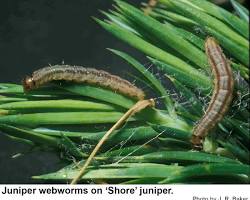
Juniper Webworms are caterpillar pests that feed on juniper foliage while producing protective webbing. These insects can cause noticeable damage to ornamental plantings, particularly when infestations are heavy. Their feeding activity, combined with webbing, reduces the plant’s visual appeal and overall health.
Juniper seed bugs, most commonly species within the genus Cyrtopeltocoris or members of the family Coreidae, are specialized “true bugs” that feed on the reproductive structures of juniper trees. Unlike bark beetles or budworms that damage wood or foliage, these insects focus specifically on the berries (cones), where they extract nutrients from developing seeds. Their feeding rarely threatens the overall health of mature trees, but it can significantly impact seed viability.
In landscapes and natural areas across the Southwest—including Tucson and surrounding desert regions—juniper seed bugs are most often noticed by those attempting to collect seeds for propagation or restoration projects. By feeding on immature seeds, these insects can reduce germination success and limit the ability to grow new plants from harvested cones.
Taxonomy and Classification
- Kingdom: Animalia
- Phylum: Arthropoda
- Class: Insecta
- Order: Hemiptera (True Bugs)
- Suborder: Heteroptera
- Family: Coreidae (Leaf-footed Bugs) or Miridae (Plant Bugs), depending on species
- Genus: Cyrtopeltocoris
Identification and Behavior
Juniper seed bugs are small to medium-sized insects with elongated bodies typical of true bugs. Depending on the species, they may resemble leaf-footed bugs or plant bugs, often displaying muted brown or green coloration that allows them to blend into the foliage and cones of their host plants. Some species in the Coreidae family may exhibit the characteristic flattened expansions on their hind legs, giving them a “leaf-footed” appearance.
These insects use piercing-sucking mouthparts to penetrate developing juniper berries and extract nutrients from the seeds inside. Their feeding is highly targeted, focusing on reproductive tissues rather than vegetative growth. Because of this, infestations may go unnoticed unless seed production is being monitored closely.
Signs of Infestation and Damage
The most significant impact of juniper seed bugs is reduced seed viability. Infested berries may appear normal externally but contain damaged or undeveloped seeds internally. In some cases, cones may become discolored, shriveled, or prematurely drop from the plant.
Because these pests do not typically affect foliage or structural integrity, there are often no obvious signs such as dieback or browning branches. This makes them particularly problematic for seed collection efforts, where damage may only be discovered after harvesting and inspecting the seeds.
Host Plants
Juniper seed bugs primarily target juniper species, especially those producing abundant berries used for propagation or wildlife food sources. They may also be found on related conifers depending on the species and regional conditions. Plants in both natural ecosystems and cultivated landscapes can be affected.
Habitat and Distribution
Common in areas where junipers grow, especially in landscaped environments.
Life Cycle
Eggs hatch into larvae that feed and create webs before pupating.
Prevention and Control
Pruning and biological treatments help manage infestations.