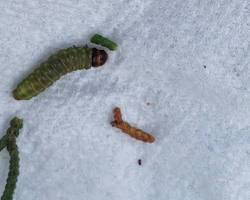
Juniper Budworms are caterpillar pests that primarily attack juniper trees and shrubs by feeding on new growth, buds, and needles. These insects can significantly reduce the aesthetic value of ornamental plantings and weaken plants over time, making them more vulnerable to environmental stress and other pests.
The Juniper Budworm, most commonly associated with species such as Cudonia laricella or members of the genus Choristoneura, is a foliage-feeding caterpillar that targets the fresh, developing growth of juniper trees. Unlike wood-boring pests such as bark beetles that attack the trunk and structural tissues, budworms specifically feed on new buds and terminal tips, making them particularly damaging during the spring growing season.
In regions like Tucson and the surrounding high-desert foothills, juniper budworm activity is often most noticeable in early to mid-spring. During this time, larvae feed inside unopened buds, hollowing them out before they have a chance to expand. This results in visible browning and dieback of branch tips, which can give ornamental junipers a scorched or patchy appearance. While rarely fatal to healthy trees, repeated infestations can reduce aesthetic value and weaken overall plant vigor.
Taxonomy and Classification
- Kingdom: Animalia (Animals)
- Phylum: Arthropoda (Arthropods)
- Class: Insecta (Insects)
- Order: Lepidoptera (Moths and Butterflies)
- Superfamily: Tortricoidea (Tortricid Moths)
- Family: Tortricidae (Leafroller Moths)
- Genus: Cudonia (or Choristoneura, depending on species)
Common Species
- Cudonia laricella
Identification
Larvae are small caterpillars with green or brown bodies that blend well with foliage. Adult moths are relatively small and inconspicuous, with muted coloration that provides camouflage against bark and foliage.
Habitat and Distribution
Juniper budworms are found in regions where juniper species grow, particularly in dry and semi-arid climates. They are common in both natural landscapes and urban plantings.
Life Cycle
Eggs are laid on foliage, and larvae feed on buds and needles after hatching. Pupation occurs in sheltered areas, and adults emerge to repeat the cycle. Several generations may occur annually.
Damage and Impact
Feeding results in defoliation, browning foliage, and reduced plant vigor. Severe infestations can stunt growth and damage the plant’s appearance.
Signs of Infestation
Webbing, chewed needles, and visible caterpillars are common signs.
Prevention and Control
Manual removal, pruning, and biological controls such as Bt are effective management strategies.