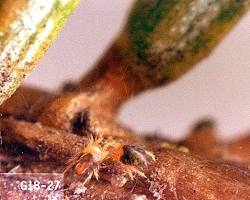
Juniper Spider Mites are microscopic pests that thrive in hot, dry conditions and can rapidly infest juniper plants. Despite their tiny size, they can cause extensive damage by feeding on plant cells and disrupting photosynthesis.
Juniper Spider Mites (Oligonychus ununguis), often called Spruce Spider Mites, are destructive microscopic arachnids that infest junipers and other coniferous evergreens. Unlike many common spider mite species that thrive during intense summer heat, juniper spider mites are considered cool-season mites, becoming most active during spring and fall when temperatures are moderate. Despite their extremely small size, these pests can rapidly weaken ornamental shrubs and trees by piercing plant tissues and feeding on chlorophyll-rich cells.
Heavy infestations often cause juniper foliage to appear dusty, bronzed, gray, or scorched. Because the damage develops gradually and the mites themselves are nearly invisible without magnification, infestations frequently go unnoticed until significant plant decline has already occurred. Their ability to reproduce rapidly under favorable conditions makes them one of the most important arthropod pests affecting junipers, arborvitae, cypress, spruce, and related evergreens in residential landscapes and nurseries.
Quick Facts
- Common Name: Juniper Spider Mites
- Scientific Name: Oligonychus ununguis
- Other Name: Spruce Spider Mite
- Class: Arachnida
- Main Hosts: Juniper, spruce, arborvitae, cypress
- Primary Damage: Needle discoloration and bronzing
- Peak Activity: Spring and fall
Taxonomy and Classification
Juniper spider mites belong to the family Tetranychidae, commonly known as spider mites. Although frequently mistaken for insects, spider mites are actually arachnids and are more closely related to ticks and spiders.
Scientific Classification
- Kingdom: Animalia
- Phylum: Arthropoda
- Class: Arachnida
- Order: Trombidiformes
- Family: Tetranychidae
- Species: Oligonychus ununguis
They undergo several developmental stages:
- Egg
- Larva
- Nymph
- Adult
Under favorable conditions, development can occur extremely quickly, allowing populations to explode within a short time.
Physical Description
Juniper spider mites are exceptionally small, usually measuring less than 0.5 millimeters in length.
Adult Appearance
- Tiny oval-shaped body
- Greenish, reddish, or dark coloration
- Eight legs as adults
- Barely visible without magnification
Because of their microscopic size, infestations are usually identified through plant symptoms rather than direct observation of the mites themselves.
Webbing
Like many spider mites, they produce fine silk webbing between needles and twigs.
The webbing:
- Protects the colony
- Traps dust and debris
- Creates a dirty or dusty appearance
- Becomes more visible during severe infestations
White Paper Test
A simple diagnostic method commonly used to confirm spider mite infestations is the white paper test.
- Hold white paper beneath a branch
- Shake or tap the branch firmly
- Tiny moving specks on the paper indicate mites
This technique is highly effective for early detection.
Distribution and Habitat
Juniper spider mites are widespread throughout North America and many temperate regions worldwide.
Common Habitats
- Residential landscapes
- Nurseries
- Parks
- Golf courses
- Commercial landscapes
- Forest edges
They prefer:
- Dry conditions
- Dusty environments
- Dense evergreen foliage
- Plants under stress
Primary Host Plants
- Juniper
- Spruce
- Arborvitae
- Cypress
- Fir
- Pine
Plants growing in hot urban settings often become more vulnerable due to environmental stress.
Life Cycle
Juniper spider mites are unusual because they thrive during cooler parts of the year.
Egg Stage
Females lay tiny spherical eggs on needles and branches.
Many eggs overwinter directly on host plants and hatch when temperatures begin warming in spring.
Larval and Nymph Stages
Young mites begin feeding immediately after hatching.
Development proceeds rapidly through several immature stages:
- Larva
- Protonymph
- Deutonymph
Each stage feeds aggressively on plant tissue.
Adult Stage
Adults continue feeding and reproducing rapidly throughout spring and fall.
During extremely hot summer weather:
- Activity slows
- Reproduction decreases
- Populations temporarily decline
Once cooler temperatures return, activity increases again.
Behavior and Feeding
Juniper spider mites feed by piercing individual plant cells and removing chlorophyll-containing fluids.
Feeding Damage
Early feeding causes:
- Tiny yellow spots
- White stippling on needles
- Loss of green coloration
As feeding intensifies:
- Foliage bronzes
- Needles turn grayish-brown
- Needle drop may occur
- Plant vigor declines
Preference for Interior Foliage
Infestations commonly begin deep inside the plant canopy where:
- Humidity is slightly higher
- Predators are reduced
- Protection from weather exists
This hidden feeding behavior often delays detection.
Damage and Impact
Juniper spider mites are capable of causing extensive ornamental damage.
Visual Damage
- Bronzed foliage
- Dusty appearance
- Patchy browning
- Needle loss
- Overall decline in plant appearance
Plant Stress
Continuous feeding weakens the plant’s ability to photosynthesize effectively.
Severely infested plants become:
- More vulnerable to drought
- Susceptible to disease
- Less cold tolerant
- Prone to branch dieback
Nursery and Landscape Impact
Spider mite infestations can significantly reduce the commercial value of ornamental evergreens due to cosmetic damage.
Signs of Infestation
Common indicators include:
- Fine silk webbing
- Yellow stippling on needles
- Bronzed foliage
- Gray or dusty appearance
- Needle drop
- Tiny moving specks during the white paper test
Symptoms often appear first on:
- Interior branches
- Lower foliage
- Sun-exposed sides of plants
Prevention and Control
Successful management relies on early detection and integrated pest management strategies.
Water Sprays
One of the simplest and most effective controls is:
- Strong water sprays directed into foliage
This helps:
- Dislodge mites
- Destroy webbing
- Reduce dust accumulation
- Lower populations naturally
Horticultural Oils
Dormant oils and horticultural oils are commonly used during active periods.
These oils:
- Smother eggs and mites
- Reduce reproduction
- Minimize plant damage
Applications are most effective during spring and fall activity windows.
Miticides
Severe infestations may require specialized miticides specifically labeled for spider mites.
Rotating products helps reduce resistance development.
Environmental Management
- Reduce dust around plants
- Avoid excessive drought stress
- Improve irrigation consistency
- Maintain plant health
Protecting Beneficial Predators
Natural predators often help suppress spider mite populations.
Beneficial predators include:
- Predatory mites
- Lacewings
- Lady beetles
- Minute pirate bugs
Avoiding broad-spectrum insecticides helps preserve these natural enemies.
Interesting Facts
- Juniper spider mites are cool-season pests, unlike many other spider mites.
- They are arachnids, not insects.
- Heavy webbing can trap dust, making plants appear dirty.
- The white paper test is one of the easiest ways to detect infestations.
- Large populations can develop extremely quickly during mild weather.
Conservation and Research
Research involving juniper spider mites focuses on:
- Biological control strategies
- Predatory mite effectiveness
- Miticide resistance
- Climate influences on outbreaks
- Improved ornamental plant management
Scientists continue exploring environmentally friendly control methods that minimize chemical usage while preserving beneficial insects and mites in ornamental landscapes.