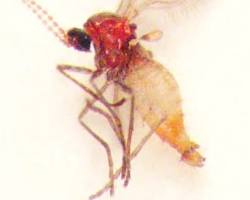
Juniper Gall Midges are small flies whose larvae induce the formation of galls on juniper plants. These abnormal growths serve as both food and shelter for developing larvae. While often not fatal, gall formation can significantly affect the appearance and health of ornamental plants.
Juniper gall midges (primarily species within the genus Contarinia) are tiny, delicate flies that belong to the family Cecidomyiidae. While the adults are short-lived and rarely seen, their larvae are specialized “gall-makers” that can cause significant aesthetic and structural damage to various juniper species. In the American Southwest, these midges are a frequent concern for homeowners, as they target the succulent new growth that emerges during our brief spring and monsoon seasons
.
The damage begins when a female midge deposits her eggs into the scale-like leaves or the tips of young twigs. As the orange or reddish larvae hatch and begin to feed, they secrete chemicals that mimic plant growth hormones. This causes the juniper to grow abnormal, swollen tissues—galls—around the larvae. These galls can appear as small, bulbous swellings at the branch tips or as “rosette” growths that look like tiny, deformed pinecones. Over time, the vascular flow to the tip is cut off, causing the branch beyond the gall to turn brown and die, a symptom often confused with drought stress or “flagging” from twig beetles.
For Pestipedia readers, the most effective management is mechanical. Since the larvae are protected inside the woody gall, contact sprays are often ineffective. Pruning out and destroying the infested tips before the adults emerge in the spring is the best way to break the cycle.
Taxonomy
- Kingdom: Animalia
- Phylum: Arthropoda
- Class: Insecta
- Order: Diptera
- Family: Cecidomyiidae
Identification
Adults are tiny flies, while larvae are small maggots inside galls.
Habitat and Distribution
Common in areas with junipers, especially ornamental landscapes.
Life Cycle
Eggs are laid in plant tissue, triggering gall formation where larvae develop.
Damage and Impact
Galls distort growth and reduce plant vigor.
Signs of Infestation
Swollen or abnormal plant tissue is the primary indicator.
Prevention and Control
Pruning galls and maintaining plant health are effective strategies.