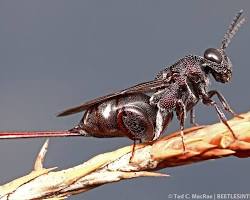
Jewel Wasp Parasitoids are remarkable insects known for their brilliant metallic coloration and highly specialized parasitic behavior. Unlike destructive pests, these wasps are considered highly beneficial because they naturally suppress populations of harmful insects such as cockroaches, caterpillars, beetle larvae, and other soft-bodied hosts. Their unusual life cycle and sophisticated hunting behavior have made them one of the most studied groups of parasitoid insects in the world.
Many species of jewel wasps belong to the family Chrysididae or related parasitoid wasp groups, though the term is commonly associated with metallic blue or green parasitic wasps that attack other insects. Some species are especially famous for their ability to manipulate host behavior using venom, effectively turning the host into a living food source for their offspring.
Quick Facts
- Common Name: Jewel Wasp Parasitoids
- Order: Hymenoptera
- Primary Role: Biological control insect
- Diet: Nectar and host insects
- Behavior: Parasitoid predator
- Activity: Mostly active in warm weather
- Benefit: Natural suppression of pest insects
Taxonomy and Classification
Jewel wasp parasitoids belong to the order Hymenoptera, which also includes:
- Bees
- Ants
- Hornets
- Sawflies
- Parasitic wasps
Many jewel wasps are classified within:
- Family Chrysididae – cuckoo wasps
- Family Ampulicidae – cockroach-hunting wasps
- Family Ichneumonidae – parasitoid wasps
- Family Braconidae – biological control parasitoids
These insects undergo complete metamorphosis with four life stages:
- Egg
- Larva
- Pupa
- Adult
Physical Description
Jewel wasps are generally small, slender insects with smooth, reflective exoskeletons.
Adult Appearance
- Metallic blue, green, gold, or bronze coloration
- Narrow waist typical of wasps
- Transparent wings
- Long antennae
- Smooth, shiny body surface
Their iridescent coloration often appears jewel-like in sunlight, giving rise to their common name.
Size
Most species range from:
- 1/8 inch to 1 inch long
Some parasitoid species are extremely tiny and difficult to notice without close inspection.
Stinger and Ovipositor
Female jewel wasps possess specialized structures used for:
- Injecting venom
- Paralyzing hosts
- Laying eggs
In many species, the ovipositor is modified into a highly precise egg-laying tool.
Distribution and Habitat
Jewel wasp parasitoids are found worldwide in a wide variety of habitats.
Common Habitats
- Forests
- Gardens
- Grasslands
- Urban landscapes
- Agricultural fields
- Greenhouses
They are especially common in environments with abundant insect populations suitable for parasitism.
Climate Preferences
Most species thrive in:
- Warm climates
- Temperate regions
- Tropical environments
Activity increases during warmer months when host insects are abundant.
Life Cycle
The jewel wasp life cycle revolves around locating and exploiting host insects.
Host Location
Female wasps actively search for suitable hosts using:
- Chemical signals
- Movement detection
- Host odors
- Visual cues
Paralysis and Manipulation
Many jewel wasps inject venom directly into the host nervous system.
Depending on the species, the venom may:
- Paralyze the host
- Alter host behavior
- Reduce defensive responses
- Keep the host alive but immobile
One famous species known as the “emerald cockroach wasp” can manipulate cockroach behavior so precisely that the cockroach effectively becomes a living nursery for the wasp larva.
Egg Stage
After subduing the host, the female lays eggs:
- On the host
- Inside the host
- Within a nearby chamber
Larval Development
The developing larva feeds on the host gradually.
Many parasitoid larvae consume:
- Non-essential tissues first
- Vital organs last
This keeps the host alive as long as possible while providing fresh food.
Pupation
After feeding is complete, the larva pupates within:
- The host body
- A cocoon
- The surrounding soil
Adult wasps later emerge to repeat the cycle.
Behavior and Ecology
Jewel wasp parasitoids are highly specialized predators and play an important ecological role.
Natural Pest Control
They help suppress populations of:
- Cockroaches
- Caterpillars
- Beetle larvae
- Flies
- Other pest insects
This makes them valuable biological control agents in both agriculture and natural ecosystems.
Adult Feeding
Adult jewel wasps typically feed on:
- Nectar
- Honeydew
- Plant fluids
Some adults consume little food and focus primarily on reproduction.
Solitary Lifestyle
Most jewel wasps are solitary rather than social.
Each female independently:
- Finds hosts
- Constructs nesting sites
- Lays eggs
- Provides offspring resources
Impact and Benefits
Jewel wasp parasitoids are overwhelmingly beneficial insects.
Biological Control
Their natural predation helps:
- Reduce pest populations
- Limit crop damage
- Decrease pesticide dependence
- Maintain ecological balance
Agricultural Importance
Farmers and greenhouse growers often benefit from parasitoid wasp activity because these insects naturally suppress destructive agricultural pests.
Human Safety
Most jewel wasps:
- Rarely sting humans
- Are non-aggressive
- Pose minimal health risks
They typically focus entirely on locating insect hosts.
Signs of Activity
Jewel wasps are often difficult to observe directly due to their small size and secretive behavior.
Possible Indicators
- Reduced pest insect populations
- Paralyzed host insects
- Small metallic wasps near flowers
- Parasitoid emergence holes in host bodies
Gardeners may unknowingly benefit from their presence without ever seeing them.
Management and Prevention
No control measures are necessary because jewel wasp parasitoids are beneficial insects.
Encouraging Populations
Beneficial populations can be supported by:
- Reducing broad-spectrum pesticide use
- Planting flowering plants
- Maintaining insect diversity
- Providing natural habitat areas
Avoiding Harm
Excessive insecticide use may unintentionally eliminate these important natural predators, leading to increased pest outbreaks.
Interesting Facts
- Some jewel wasps can manipulate host behavior using specialized venom.
- The emerald cockroach wasp is one of the most famous parasitoid insects in the world.
- Many species display brilliant metallic coloration visible in sunlight.
- Parasitoid wasps are among nature’s most effective biological control organisms.
- Some species specialize on only a single host insect species.
Conservation and Research
Research involving jewel wasp parasitoids focuses on:
- Biological pest management
- Venom chemistry
- Host manipulation behavior
- Neurobiology
- Sustainable agriculture
Scientists continue studying how parasitoid wasps may reduce agricultural pesticide dependence while improving long-term ecosystem stability.