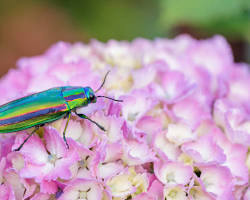
Jewel Flower Bugs are small, colorful true bugs commonly found on flowering plants, shrubs, and ornamental vegetation. These insects are known for their vivid metallic or jewel-like coloration, which may include bright greens, blues, reds, bronze, or iridescent patterns. Depending on the species, jewel flower bugs may behave as plant feeders, predators, or opportunistic omnivores. Because of this dual ecological role, they are sometimes considered beneficial insects and sometimes regarded as minor plant pests.
In gardens and agricultural environments, jewel flower bugs are frequently observed moving across blossoms, leaves, and stems in search of food. Some species feed on plant sap or developing seeds, while others prey upon aphids, mites, caterpillar eggs, and soft-bodied insects. Their presence often indicates a biologically active garden ecosystem rich in flowering plants and insect diversity.
Quick Facts
- Common Name: Jewel Flower Bugs
- Order: Hemiptera
- Primary Habitat: Flowering plants and gardens
- Diet: Plant sap, nectar, pollen, and small insects
- Activity: Most active during warm months
- Behavior: Both predatory and plant-feeding species exist
- Importance: Minor pests and beneficial predators
Taxonomy and Classification
Jewel flower bugs belong to the order Hemiptera, also known as the true bugs. This diverse insect order includes:
- Stink bugs
- Leafhoppers
- Aphids
- Assassin bugs
- Plant bugs
Many species associated with the term “jewel flower bugs” belong to families that include brightly colored flower-dwelling insects adapted for feeding on nectar, plant fluids, or smaller arthropods.
Like other true bugs, they possess specialized piercing-sucking mouthparts used to:
- Pierce plant tissue
- Extract sap
- Feed on prey fluids
- Consume nectar or pollen
Physical Description
Jewel flower bugs are typically small and slender, though appearance varies significantly among species.
Adult Appearance
- Elongated or oval body shape
- Bright metallic or iridescent coloration
- Patterns of red, blue, green, bronze, or black
- Long antennae
- Piercing mouthparts beneath the head
Some species display highly reflective surfaces that shimmer in sunlight, giving them their “jewel” appearance.
Wings
Adult jewel flower bugs possess partially hardened front wings typical of true bugs.
- Fold flat over the body
- Often patterned or translucent
- Aid in quick movement between flowers
Nymphs
Immature stages resemble miniature adults but lack fully developed wings.
Nymphs may:
- Display brighter coloration
- Cluster near feeding sites
- Remain hidden beneath foliage
Distribution and Habitat
Jewel flower bugs are widely distributed in temperate, subtropical, and tropical regions around the world.
Preferred Habitats
- Flower gardens
- Wildflower meadows
- Agricultural fields
- Greenhouses
- Forest edges
- Urban landscapes
They are especially common in areas with abundant flowering plants and high insect diversity.
Seasonal Activity
Populations usually peak during:
- Spring
- Summer
- Early autumn
Warm temperatures and flowering vegetation encourage rapid reproduction and feeding activity.
Life Cycle
Jewel flower bugs undergo incomplete metamorphosis.
Egg Stage
Females lay eggs on:
- Leaf surfaces
- Flower stems
- Plant buds
- Protected crevices
Eggs are usually tiny and difficult to notice.
Nymph Stage
After hatching, nymphs begin feeding immediately.
They molt several times while gradually developing:
- Wing pads
- Adult coloration
- Mature body structure
Adult Stage
Adults become highly mobile and may disperse among flowering plants searching for food and mates.
Several generations may occur annually in favorable climates.
Behavior and Ecology
Jewel flower bugs display highly variable feeding behaviors depending on species.
Plant Feeding
Some species feed directly on:
- Plant sap
- Flower tissues
- Seeds
- Developing buds
This feeding may result in:
- Minor discoloration
- Wilted blossoms
- Reduced seed production
- Leaf spotting
Predatory Behavior
Other species are beneficial predators that feed on:
- Aphids
- Mites
- Small caterpillars
- Insect eggs
- Thrips
These predatory species help naturally regulate pest populations in gardens and farms.
Flower Association
Jewel flower bugs are frequently observed:
- Crawling across blossoms
- Feeding on pollen
- Searching for prey
- Hiding within flower clusters
Damage and Impact
Most jewel flower bugs cause only minor plant damage.
Plant Damage
Feeding injury may include:
- Leaf discoloration
- Tiny feeding punctures
- Flower distortion
- Minor tissue necrosis
Heavy infestations are uncommon but may occasionally stress ornamental plants.
Beneficial Effects
Many gardeners tolerate or encourage jewel flower bugs because they:
- Consume pest insects
- Reduce aphid populations
- Support biological control
- Contribute to ecological diversity
Agricultural Impact
In commercial agriculture, certain species may:
- Damage blossoms
- Reduce crop quality
- Feed on developing seeds
However, beneficial predatory species often outweigh negative effects.
Signs of Presence
Jewel flower bugs are relatively easy to spot because of their bright coloration.
- Metallic or brightly colored bugs on flowers
- Small feeding spots on leaves
- Clusters near aphid infestations
- Insects moving quickly across blossoms
Careful observation is often needed to determine whether a species is beneficial or damaging.
Management and Prevention
Control is rarely necessary because most jewel flower bug populations remain low and many species are beneficial.
Monitoring
Regular inspection of flowering plants helps determine:
- Population size
- Feeding activity
- Potential plant damage
Manual Removal
If necessary:
- Hand-pick insects from plants
- Shake them into soapy water
- Prune heavily infested foliage
Insecticidal Soap
Mild insecticidal soaps may reduce populations when plant damage becomes noticeable.
However, treatments should be used cautiously to avoid harming beneficial insects and pollinators.
Encouraging Natural Balance
Maintaining a healthy garden ecosystem often keeps populations balanced naturally.
- Plant diverse flowers
- Avoid excessive pesticide use
- Support beneficial predators
- Maintain proper plant health
Interesting Facts
- Many jewel flower bugs display iridescent coloration that changes in sunlight.
- Some species are valuable biological control agents.
- Their bright colors may serve as warning signals to predators.
- They belong to the same insect order as aphids and stink bugs.
- Flower-rich environments greatly increase their diversity.
Conservation and Research
Research involving jewel flower bugs focuses on:
- Biological pest control potential
- Plant-insect interactions
- Pollinator ecosystem dynamics
- Agricultural biodiversity
- Integrated pest management strategies
Scientists continue studying how beneficial true bugs can reduce the need for chemical pesticides while supporting healthier agricultural and garden ecosystems.