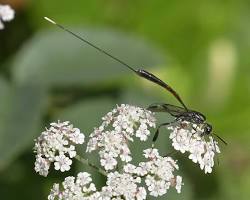
Javelin Sand Wasps are solitary, ground-nesting wasps commonly found in sandy or loose soils. Despite their intimidating appearance and active behavior, these wasps are generally non-aggressive and play an important ecological role as natural predators of other insects. Their presence is often misunderstood, leading homeowners to view them as pests when they are actually beneficial to the environment.
Identification
Javelin sand wasps are slender insects with elongated bodies, long legs, and narrow waists typical of many wasp species. Their coloration ranges from black to metallic blue or green, sometimes with subtle markings. They are fast fliers and are often seen hovering close to the ground as they search for prey or nesting sites.
Habitat and Distribution
These wasps are commonly found in dry, sandy environments such as deserts, coastal dunes, and sparsely vegetated landscapes. They are especially prevalent in regions with loose soil that allows easy excavation of burrows. In residential areas, they may establish nests in lawns, garden beds, or sandy patches.
Life Cycle
The life cycle begins when a female digs a burrow in the soil and hunts for prey, typically other insects such as flies or caterpillars. She paralyzes the prey with her sting and places it inside the burrow as food for her developing larva. An egg is laid on the prey, and once it hatches, the larva consumes the immobilized insect. After feeding, it pupates within the burrow and eventually emerges as an adult.
Damage and Impact
Javelin sand wasps cause minimal structural or plant damage. Their primary impact is the creation of small burrows in soil, which may be unsightly but are generally harmless. Their role as predators helps reduce populations of other pest insects, making them beneficial in gardens and natural ecosystems.
Signs of Activity
Signs include small holes in the ground, loose mounds of soil, and wasps flying low over the surface. Unlike social wasps, they do not form large colonies, so activity is usually limited to individual insects.
Prevention and Control
Because these wasps are beneficial and rarely aggressive, control is usually unnecessary. If their presence is undesirable, reducing exposed sandy areas and increasing vegetation can discourage nesting. Watering soil and compacting loose areas may also help deter them. Chemical control is not typically recommended due to their ecological benefits.