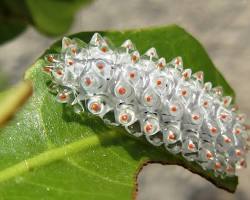
Jewel Caterpillars are the larval stage of various moth species known for their vibrant, metallic-like coloration and unique body structures. While visually fascinating, these caterpillars can become minor to moderate plant pests when present in large numbers, feeding on leaves and reducing plant vitality. Their striking appearance often serves as a warning signal to predators, indicating that they may be toxic or unpalatable.
Identification
Jewel caterpillars are easily recognizable due to their bright colors, which can include shades of green, blue, orange, and even iridescent hues. Many species have spiny or ornate projections along their bodies, giving them a jeweled or armored appearance. These features not only provide camouflage among foliage but also deter predators.
Habitat and Distribution
These caterpillars are found in a wide range of habitats, including forests, gardens, and agricultural areas. They are most common in warm and temperate regions where host plants are abundant. Different species may specialize in feeding on specific plants, including ornamental shrubs and trees.
Life Cycle
The life cycle begins when adult moths lay eggs on host plants. After hatching, larvae feed on foliage, growing through several instar stages. Once fully developed, they pupate in cocoons or sheltered areas before emerging as adult moths. The duration of the life cycle varies depending on species and environmental conditions.
Damage and Impact
Jewel caterpillars feed on leaves, creating holes and reducing the plant’s ability to photosynthesize. While individual caterpillars cause minimal damage, large populations can lead to noticeable defoliation. In ornamental settings, this damage may reduce aesthetic appeal.
Signs of Infestation
Signs include visible caterpillars on leaves, irregular feeding patterns, and partially eaten foliage. Their bright coloration often makes them easier to spot than other caterpillars.
Prevention and Control
Control methods include manual removal, encouraging natural predators, and applying biological treatments such as Bacillus thuringiensis (Bt). Maintaining plant health can also reduce susceptibility to infestations.