Overview
Fruit Tree Borers are a group of wood-boring insect larvae that attack the trunks, branches, or crowns of fruit-bearing trees. Rather than referring to a single species, this term commonly includes several beetle and moth larvae that tunnel beneath bark or into wood, weakening trees and disrupting the flow of water and nutrients. Apples, peaches, plums, cherries, pears, and other orchard trees may all be affected depending on the borer species involved. Because larvae develop hidden inside the tree, infestations often go unnoticed until visible symptoms appear, by which time significant internal damage may already be present.
These pests are especially problematic in orchards, backyard fruit plantings, and stressed landscapes where young or weakened trees are more vulnerable. Adult insects usually lay eggs on bark, at the base of trunks, in pruning wounds, or near damaged areas. After hatching, larvae bore into the cambium or heartwood and feed for weeks or months, depending on the species. Their tunneling weakens branches, invites disease organisms, and can eventually girdle or kill small trees. Fruit tree borers are among the most destructive hidden pests in orchard systems because damage can continue long before the infestation is discovered.
Identification
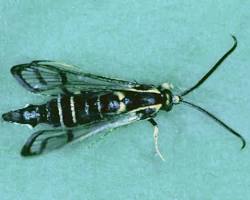
- Adults may be moths or beetles depending on the species
- Larvae are typically cream-colored, legless or sparsely legged borers
- Entry holes may show sap flow, sawdust-like frass, or gummy residue
- Branches may wilt, die back, or break easily
- Damage often concentrated at the trunk base, lower scaffold limbs, or injured bark
Habitat
Fruit tree borers are found in orchards, home gardens, nurseries, and landscaped areas with fruiting trees. They are especially common where trees are stressed by drought, winter injury, sunscald, poor pruning, or mechanical bark damage. Fresh wounds and weakened bark provide ideal egg-laying sites for many species. Young trees are often at highest risk because their thinner bark is easier for larvae to penetrate.
Behavior and Damage
After eggs hatch, larvae bore beneath the bark and begin feeding on conductive tissues that transport water and nutrients. Some species remain close to the surface, while others tunnel deeper into woody tissue. As galleries expand, affected limbs may wilt, leaves may yellow, and fruit production may decline. Severe infestations can cause girdling, trunk weakness, branch breakage, and eventual tree death. Even when trees survive, borer injury increases susceptibility to cankers, fungal infections, and secondary insect attack.
Because symptoms can mimic drought stress, disease, or root problems, close inspection is important. Signs such as loose bark, sawdust-like material, oozing gum, and localized dieback can help point to borer activity. Infestations may recur if damaged trees remain untreated or if surrounding orchard sanitation is poor.
Ecological and Economic Importance
Wood-boring insects are part of natural decomposition and forest recycling systems, often targeting stressed or dying trees in wild settings. In managed orchards and landscapes, however, that same behavior becomes economically significant. Fruit tree borers can reduce productivity, kill young plantings, shorten orchard life, and increase maintenance costs. For homeowners, the loss of a mature fruit tree can represent years of lost growth and harvest.
Prevention and Control
Keeping trees healthy is one of the best preventive measures. Proper irrigation, pruning, mulching, and trunk protection reduce stress and limit attractive egg-laying sites. Mechanical injuries from mowers and string trimmers should be avoided. Regular inspection of lower trunks and branch unions can help catch infestations early. In some cases, larvae can be physically removed from accessible galleries, while targeted treatments may be used against adult egg-laying periods depending on the pest species. Removing severely infested wood and maintaining orchard sanitation are also important long-term practices.