Overview
The Filbertworm is a moth larva that primarily attacks nuts such as hazelnuts (filberts), walnuts, and occasionally acorns. It is considered a serious agricultural pest due to its ability to infest developing nuts, rendering them unmarketable. This pest is particularly problematic in commercial orchards but can also affect backyard nut trees.
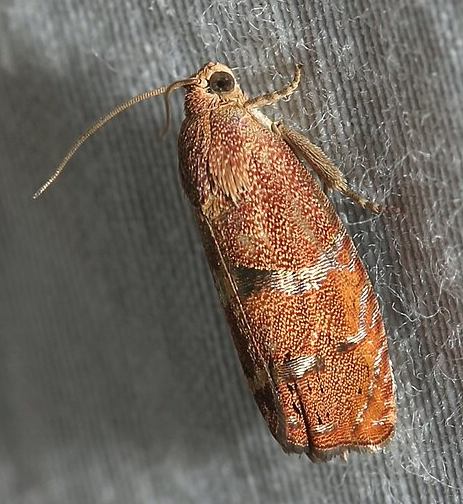
The filbertworm (Cydia latiferreana) is a premier pest of hazelnut (filbert) orchards and oak woodlands across North America. While it is native to the United States and traditionally survived on acorns, it has adapted perfectly to commercial hazelnut production. The adult moth is relatively small and inconspicuous, featuring copper-colored bands on its wings that help it blend into the bark of its host trees. The real damage, however, is caused by the larvae—creamy-white caterpillars with reddish-brown heads—which burrow into the developing nut as soon as the shell begins to harden.
Once inside the nut, the larva feeds on the kernel, rendering it unmarketable and often leaving behind a cavity filled with “frass” (excrement) and silk webbing. Because the larva enters through the base of the nut, the damage is often invisible from the outside until the nut is cracked open or the larva exits, leaving a perfectly circular “exit hole” in the shell. For commercial growers and home gardeners, management relies heavily on pheromone traps to monitor the emergence of adult moths in early July. If the moth count exceeds a specific threshold, precisely timed treatments are necessary to catch the larvae before they bore into the protective shell, as they are nearly impossible to control once they are tucked safely inside the nut.
Identification
- Larvae are small, cream-colored caterpillars
- Adult moths are brown with subtle markings
- Entry holes visible in nut shells
- Frass may be present near openings
Habitat
Filbertworms are found in nut orchards, wooded areas, and landscapes with hazelnut or walnut trees. Eggs are laid on developing nuts during the growing season.
Behavior and Damage
After hatching, larvae bore into nuts and feed internally. This feeding destroys the kernel and may introduce mold or decay. Infested nuts often drop prematurely.
Prevention and Control
Monitoring adult moth activity and removing infested nuts can help reduce populations. Maintaining orchard sanitation and encouraging natural predators are also important control strategies.