Overview
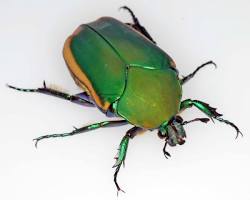
The Figeater Beetle (Cotinis mutabilis) is a large, metallic green scarab beetle commonly found in the southwestern United States. Known for its loud buzzing flight and attraction to ripe fruit, this beetle is a frequent visitor to gardens, orchards, and compost areas. While often mistaken for June beetles, figeaters are particularly associated with soft, overripe fruits such as figs, peaches, and grapes.
The figeater beetle (Cotinis mutabilis), often confused with the green June beetle, is a large, metallic green scarab common in the Southwestern United States and Mexico. Known for their loud, buzzing flight and clumsy aerial maneuvers, these beetles are most active during the heat of mid-to-late summer. While the adults are visually striking with their iridescent emerald bodies and duller green undersides, they can become significant garden pests as they congregate in large numbers to feed on soft-skinned fruits. They are particularly drawn to figs, peaches, grapes, and cactus pears, often hollowing out ripening fruit and leaving behind a fermented mess
.
Unlike many other beetles, the larval stage of the figeater—a large, C-shaped white grub—is relatively harmless to lawns. These grubs are “detritivores,” meaning they primarily feed on decaying organic matter and compost rather than living grass roots. Interestingly, figeater grubs are known for “crawly-backing,” a unique behavior where they flip onto their backs and use stiff bristles to scoot along the ground. Management for homeowners usually focuses on sanitation; removing overripe or fallen fruit promptly reduces the pheromone-driven “feeding frenzies” that attract more beetles. For those with persistent issues, covering prized fruit trees with bird netting or using physical traps baited with fermented fruit can effectively reduce adult populations without the need for heavy pesticides.
Although adult beetles are the most visible stage, the larvae—often called “crawly backs”—develop in soil rich in organic matter. While larvae primarily feed on decaying material and can be beneficial decomposers, adults can become nuisance pests when they congregate in large numbers around fruiting plants.
Identification
- Large beetle (up to 1.25 inches long)
- Velvety metallic green coloration
- Loud, clumsy flight pattern
- Larvae are thick, white grubs that move on their backs
Habitat
Figeater beetles are commonly found in gardens, orchards, compost piles, and lawns with high organic content. Larvae develop in soil enriched with manure or decaying plant material.
Behavior and Damage
Adult beetles feed on soft fruits, often burrowing into them and causing rot. Their feeding can damage crops and attract secondary pests such as flies. Larvae, however, typically contribute to soil health by breaking down organic matter.
Prevention and Control
Maintaining proper sanitation by removing overripe fruit and compost management can help reduce beetle attraction. In lawns, limiting excessive organic buildup may reduce larval populations. Netting fruit trees and harvesting promptly can also minimize damage.