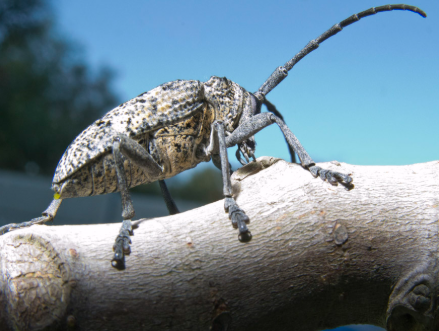
Fig Weevils are plant-feeding beetles belonging to the family Curculionidae, one of the largest insect families in the world. These weevils are associated with fig trees and other fruit-bearing plants where they feed on foliage, stems, roots, and developing fruit. In agricultural settings, Fig Weevils are considered important orchard pests because their feeding activity can reduce fruit quality, weaken plants, and create openings for fungal pathogens and decay organisms.
Both adult and larval stages contribute to plant damage. Adult Fig Weevils chew on leaves and fruit surfaces, while the larvae may burrow into fruit, stems, or root tissues depending on the species involved. Heavy infestations can lead to fruit drop, deformed fruit, reduced harvest yields, and long-term stress on fig trees.
Fig Weevils are commonly encountered in orchards, backyard gardens, nurseries, and ornamental landscapes where figs are cultivated. Because many species remain hidden during daylight hours or inside plant tissues, infestations may go unnoticed until visible damage appears.
Taxonomy and Classification
- Kingdom: Animalia
- Phylum: Arthropoda
- Class: Insecta
- Order: Coleoptera
- Family: Curculionidae
- Common Name: Fig Weevil
Fig Weevils belong to the beetle family Curculionidae, commonly known as the true weevils or snout beetles.
This family contains thousands of species worldwide, many of which are serious agricultural pests affecting crops, stored products, trees, and ornamental plants.
Weevils undergo complete metamorphosis with four life stages:
- Egg
- Larva
- Pupa
- Adult
The characteristic elongated snout, known as a rostrum, is one of the defining features of this insect family.
Physical Description
Adult Fig Weevils are compact beetles with a hard oval-shaped body and an elongated snout used for feeding and egg-laying.
Key identifying characteristics include:
- Distinct elongated rostrum (snout)
- Brown, gray, or mottled coloration
- Oval or pear-shaped body
- Elbowed antennae
- Strong chewing mouthparts
- Hard protective wing covers
Body coloration often helps camouflage the beetles against bark, leaves, and soil.
Adult size varies depending on species, but many Fig Weevils range from 1/4 inch to 1/2 inch long.
The larvae are:
- Legless
- Creamy white
- Soft-bodied
- C-shaped grubs
- Brown-headed
Larvae remain concealed inside fruit, roots, stems, or soil where they feed protected from predators and environmental exposure.
Distribution and Habitat
Fig Weevils are found in regions where fig trees and related host plants are cultivated.
They are common in:
- Commercial orchards
- Backyard fig gardens
- Mediterranean climates
- Subtropical agricultural regions
- Nurseries
- Landscaped gardens
Preferred habitats include:
- Fig tree bark crevices
- Leaf litter
- Mulch layers
- Soil around roots
- Decaying fruit
- Fruit clusters
Adults often hide during daytime hours in shaded protected areas and become more active during evening or nighttime periods.
Life Cycle
The life cycle of Fig Weevils varies depending on species and climate conditions, but most follow a similar developmental pattern.
Egg Stage
Female weevils use their elongated snout to create small openings in fruit, stems, or plant tissue where eggs are deposited.
Eggs are usually hidden and protected within plant material.
Larval Stage
The larvae hatch and begin feeding internally on:
- Fruit flesh
- Seeds
- Roots
- Stem tissue
- Plant fibers
Internal feeding often causes the greatest damage because it may remain hidden until fruit collapse or plant decline becomes visible.
Larval feeding can result in:
- Fruit deformities
- Premature fruit drop
- Root damage
- Reduced nutrient uptake
- Plant stress
Pupal Stage
Pupation may occur:
- Inside fruit
- Within soil
- Under bark
- Inside plant debris
The pupa gradually transforms into the adult beetle.
Adult Stage
Adults emerge and begin feeding on foliage, fruit surfaces, and tender plant tissue.
Multiple generations may occur annually in warm climates.
Behavior and Feeding
Fig Weevils are herbivorous insects that feed using strong chewing mouthparts.
Adult feeding commonly targets:
- Leaves
- Fruit skins
- Buds
- Tender shoots
- Stem tissue
Larvae feed internally where they are protected from many predators and environmental hazards.
Most feeding activity occurs during warm seasons when fig trees are actively producing foliage and fruit.
Adults may drop to the ground or hide when disturbed, making them difficult to detect.
Damage and Economic Importance
Fig Weevils can significantly impact both home gardens and commercial fig production.
Common damage includes:
- Chewed leaves
- Scarred fruit surfaces
- Fruit deformities
- Premature fruit drop
- Reduced fruit quality
- Root injury
- Plant stress
Internal larval feeding is especially problematic because it often allows:
- Fungal pathogens
- Bacterial infections
- Secondary decay organisms
- Fruit rot
Heavy infestations can weaken young trees and reduce long-term productivity.
Commercial orchards may experience economic losses when damaged fruit becomes unsuitable for market sale.
Signs of Infestation
- Small feeding holes on leaves
- Damaged or scarred figs
- Premature fruit drop
- Wilted or stressed plants
- Presence of adult beetles on foliage
- Larvae inside fruit or roots
- Decay or fungal infection around feeding sites
Infestations are often most noticeable during fruit development periods.
Management and Control (IPM)
Successful management of Fig Weevils relies on integrated pest management strategies combining sanitation, monitoring, biological control, and targeted treatments.
Sanitation
Remove fallen fruit and plant debris regularly to reduce breeding and hiding sites.
Decaying fruit can harbor larvae and attract additional pests.
Monitoring
Inspect trees frequently for:
- Adult feeding damage
- Fruit deformities
- Larval entry holes
- Wilting foliage
Monitoring traps may help detect adult activity early.
Biological Control
Encouraging natural predators can help suppress weevil populations.
Beneficial organisms may include:
- Predatory beetles
- Parasitic wasps
- Birds
- Beneficial nematodes
Cultural Control
Maintaining healthy trees through:
- Proper irrigation
- Balanced fertilization
- Pruning
- Improved airflow
can reduce stress and improve plant resistance.
Chemical Control
If infestations become severe, targeted insecticide applications may be necessary.
Treatments are generally most effective when aimed at adults before eggs are deposited.
Always follow local agricultural recommendations and pesticide labels carefully.
Ecological Importance
Although considered agricultural pests, Fig Weevils are part of broader ecological food webs.
They serve as prey for:
- Birds
- Reptiles
- Predatory insects
- Small mammals
Some weevil species also contribute to decomposition and nutrient cycling within natural ecosystems.
Research and Scientific Interest
Researchers study Fig Weevils to improve:
- Fruit pest management
- Biological control programs
- Integrated orchard management
- Sustainable agriculture techniques
- Weevil reproductive biology
Modern research increasingly focuses on reducing pesticide reliance while maintaining effective orchard protection.
Conclusion
Fig Weevils are plant-feeding snout beetles belonging to the family Curculionidae that commonly attack fig trees and other fruit-bearing plants. Adults feed on foliage and fruit surfaces while larvae may burrow internally into fruit or root tissue, causing reduced yields, fruit deformities, and increased susceptibility to fungal decay. These pests are common in orchards, gardens, and landscaped environments where figs are cultivated. Effective management depends on sanitation, monitoring, biological control, and targeted treatments when necessary.