Overview
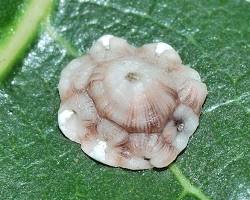
Fig Scale Insects are small sap-feeding pests that infest fig trees and related plants by attaching themselves to stems, branches, leaves, and sometimes fruit surfaces. These insects belong to a larger group known as scale insects, which are among the most persistent and difficult plant pests to control due to their protective waxy or armored outer covering.
Scale insects damage fig trees by piercing plant tissue and extracting sap directly from the vascular system. Heavy infestations weaken trees, reduce fruit production, and contribute to leaf yellowing, branch dieback, and overall decline in plant vigor.
Many species of fig scale insects also excrete a sticky sugary substance known as honeydew. This honeydew promotes the development of black fungal growth called sooty mold, which coats leaves and interferes with photosynthesis.
Fig scale infestations are common in:
- Home gardens
- Commercial fig orchards
- Greenhouses
- Warm subtropical landscapes
- Container-grown fig trees
Because scale insects often resemble tiny bumps or growths on plant surfaces, infestations may go unnoticed until plant damage becomes significant.
Taxonomy and Classification
- Kingdom: Animalia
- Phylum: Arthropoda
- Class: Insecta
- Order: Hemiptera
- Suborder: Sternorrhyncha
- Superfamily: Coccoidea
- Common Name: Fig Scale Insects
Fig Scale Insects belong to the order Hemiptera, the true bugs, which also includes:
- Aphids
- Whiteflies
- Mealybugs
- Leafhoppers
Several different scale insect species may infest fig trees, including both:
- Soft scales
- Armored scales
These insects undergo incomplete metamorphosis with the following life stages:
- Egg
- Crawler (mobile immature stage)
- Nymph
- Adult
The crawler stage is the primary dispersal phase and the most vulnerable stage for control treatments.
Physical Description
Adult Fig Scale Insects are extremely small and usually remain attached to plant surfaces throughout much of their lives.
Important identifying characteristics include:
- Oval or circular body shape
- Brown, gray, white, or tan coloration
- Protective waxy or armored covering
- Immobile adult females
- Bump-like appearance on stems and leaves
Depending on the species, the scales may appear:
- Flattened
- Domed
- Cottony
- Crust-like
Heavy infestations can make branches appear rough or encrusted.
The crawler stage is tiny, mobile, and yellowish to orange in color.
These young insects move across plant surfaces before selecting feeding sites and becoming permanently attached.
Distribution and Habitat
Fig Scale Insects are found worldwide wherever fig trees are cultivated.
They are especially common in:
- Warm climates
- Mediterranean regions
- Subtropical gardens
- Greenhouses
- Indoor ornamental fig plantings
Preferred habitats include:
- Leaf undersides
- Young stems
- Twigs
- Branch crotches
- Fruit surfaces
Scale insects thrive in protected environments with:
- Warm temperatures
- Limited rainfall
- Dense foliage
- Poor air circulation
Indoor and greenhouse fig trees are particularly vulnerable because natural predators may be absent.
Life Cycle
The life cycle of Fig Scale Insects varies slightly among species but generally follows a similar pattern.
Egg Stage
Adult females lay eggs beneath their protective covering.
The eggs are protected from environmental conditions and predators by the female’s waxy shell.
Crawler Stage
After hatching, the tiny crawlers emerge and disperse across the plant.
This is the only highly mobile stage in the life cycle.
Crawlers may spread through:
- Wind
- Pruning tools
- Birds
- Human activity
- Plant-to-plant contact
Once a suitable feeding site is found, the crawler inserts its mouthparts into plant tissue and begins feeding.
Nymph and Adult Stages
As the insect matures, it develops its characteristic protective covering.
Adult females remain attached to the plant for life.
Several overlapping generations may occur annually in warm climates.
Behavior and Feeding
Fig Scale Insects feed by inserting needle-like mouthparts into plant tissue and extracting sap from the vascular system.
Feeding commonly occurs on:
- Leaves
- Stems
- Branches
- Fruit
Continuous sap removal weakens the host plant and disrupts nutrient transport.
Many species produce honeydew, a sugary waste product that accumulates on plant surfaces.
Honeydew attracts:
- Ants
- Flies
- Wasps
- Sooty mold fungi
Black sooty mold growth may cover leaves and branches, reducing sunlight penetration and photosynthesis.
Damage and Economic Importance
Fig Scale Insects can cause significant damage when populations become large.
Common symptoms include:
- Leaf yellowing
- Leaf drop
- Reduced fruit production
- Stunted growth
- Twig dieback
- Black sooty mold buildup
Heavy infestations weaken trees over time and increase susceptibility to:
- Drought stress
- Secondary insect pests
- Plant diseases
Young trees and container-grown figs are particularly vulnerable.
Commercial orchards may experience:
- Reduced fruit quality
- Lower yields
- Increased management costs
Signs of Infestation
- Bump-like insects on stems or leaves
- Sticky honeydew residue
- Black sooty mold growth
- Yellowing foliage
- Ant activity on trees
- Reduced plant vigor
- Leaf drop
Because scale insects blend into bark and stems, infestations are often overlooked during early stages.
Management and Control (IPM)
Managing Fig Scale Insects requires an integrated pest management approach focused on monitoring, biological control, and targeted treatments.
Regular Inspection
Carefully inspect fig trees regularly, especially:
- Leaf undersides
- Young stems
- Branch junctions
- Areas with honeydew buildup
Early detection greatly improves control success.
Pruning
Remove heavily infested branches to reduce populations and improve airflow.
Dispose of infested material away from healthy plants.
Biological Control
Natural predators are highly important in controlling scale insects.
Beneficial insects include:
- Lady beetles
- Lacewings
- Parasitic wasps
- Predatory mites
Avoid unnecessary insecticide applications that may harm beneficial species.
Horticultural Oils
Horticultural oils are among the most effective treatments.
These oils work by coating and suffocating the insects.
Applications are most effective during crawler emergence.
Insecticidal Soaps
Insecticidal soaps help control soft-bodied crawler stages.
Thorough coverage is essential for effectiveness.
Ant Management
Controlling ants is important because ants protect scale insects from natural predators in exchange for honeydew.
Reducing ant activity improves biological control effectiveness.
Ecological Importance
Although considered pests, scale insects are part of natural ecosystems and serve as food sources for many beneficial insects and predators.
Predatory species that feed on scales help maintain ecological balance in gardens and orchards.
However, introduced or uncontrolled scale populations can disrupt plant health significantly.
Research and Scientific Importance
Researchers study scale insects because of their economic importance in agriculture and horticulture.
Research focuses include:
- Biological control methods
- Integrated pest management
- Insecticide resistance
- Host plant interactions
- Honeydew and mold relationships
Improving sustainable management strategies remains a major priority for orchard systems worldwide.
Conclusion
Fig Scale Insects are persistent sap-feeding pests that infest fig trees by attaching to stems, branches, and leaves. Their feeding weakens plants, reduces fruit production, and promotes black sooty mold growth through honeydew secretion. Because their protective outer covering shields them from many treatments, infestations can be difficult to control once established. Effective management relies on regular monitoring, pruning, biological control, horticultural oils, and maintaining healthy growing conditions to reduce long-term damage.