Overview
The Flatheaded Apple Tree Borer (Chrysobothris femorata) is a destructive wood-boring beetle that targets fruit trees and ornamental hardwoods. It is particularly damaging to young or stressed trees, where larval feeding can lead to girdling and tree death.
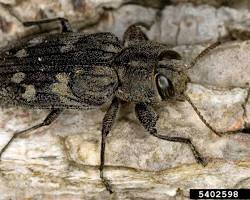
The flatheaded apple tree borer (Chrysobothris femorata) is one of the most destructive wood-boring pests affecting fruit, fast-growing shade trees, and various ornamental shrubs. Despite its name, this beetle targets a wide range of hosts beyond apple trees, including maple, oak, hickory, and mountain ash. The adult beetles are roughly 1/2 inch long, metallic dark bronze, and shaped like a blunt-ended cigar. They are “sun-loving” insects, often found on the sunny side of tree trunks in late spring and early summer, where females seek out stressed or wounded bark to deposit their eggs.
The true damage is caused by the larvae, which are creamy-white, legless, and possess a significantly broadened, flattened thorax just behind the head. Upon hatching, the larvae bore directly into the bark to feed on the cambium and phloem layers. Their winding, sawdust-filled galleries effectively girdle the tree, cutting off the flow of water and nutrients. In young trees, a single larva can kill the host by circling the entire trunk, while older trees may show signs of “weeping” sap, cracked bark, and localized dieback in the upper canopy. Because these borers are attracted to weakened trees, the best prevention strategy is maintaining tree health through consistent watering, proper mulching, and avoiding mechanical damage from lawnmowers or weed trimmers.
Identification
- Adult beetles are metallic bronze with elongated bodies
- Larvae are cream-colored with flattened head region
- D-shaped exit holes on bark
- Sunken or cracked bark areas
Habitat
Common in orchards, nurseries, and residential landscapes, especially where trees experience stress from drought, injury, or poor soil conditions.
Behavior and Damage
Larvae tunnel beneath bark, feeding on cambium layers. This disrupts nutrient flow and can girdle branches or trunks, leading to decline or death.
Prevention and Control
Maintaining tree vigor, protecting trunks from sunscald, and avoiding mechanical damage are key preventive measures. Early detection and removal of infested tissue can reduce spread.