Overview
The Fir Engraver Beetle is a bark beetle species that attacks weakened or stressed fir trees. Known for its distinctive gallery patterns beneath bark, this beetle disrupts nutrient transport and can lead to tree death.
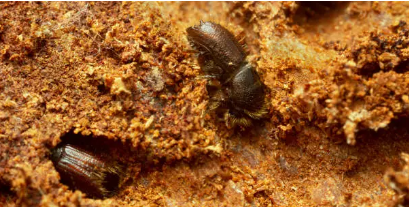
The fir engraver beetle (Scolytus ventralis) is a notorious bark beetle that serves as one of the primary causes of mortality for true firs across Western North America, with a particular affinity for white fir and grand fir. These small, cylindrical, black beetles are “secondary” pests, meaning they typically target trees already weakened by drought, root disease, or defoliators like the Douglas-fir tussock moth. An infestation is often first signaled by “red-topping,” where the crown of the tree turns reddish-brown as the water-conducting tissues are severed, or by the presence of clear, marble-sized drops of resin (pitch tubes) on the trunk where the tree attempted to “pitch out” the invading beetles.
What makes the fir engraver unique is the horizontal orientation of its egg galleries. When the female bores into the inner bark (cambium), she carves a distinct, transverse gallery that extends horizontally across the grain of the wood. This “engraving” effectively girdles the tree’s vascular system, cutting off the flow of nutrients. Because these beetles can attack specific sections of the trunk rather than the whole tree at once, a fir may survive for several years with “patch kills” before eventually succumbing. In managed forests or landscapes, the best defense is maintaining tree vigor through proper thinning and irrigation, as healthy firs can often produce enough sap to drown the beetles before they can successfully mate and lay eggs.
Identification
- Small, cylindrical beetle
- Brown to black coloration
- Etched gallery patterns under bark
- White larvae beneath bark layers
Habitat
Found in forests and wooded landscapes, particularly where trees are stressed due to drought, fire damage, or disease.
Behavior and Diet
Adults bore into bark to lay eggs. Larvae feed on inner bark tissues, disrupting the flow of nutrients and water.
Impact
Severe infestations can kill trees and contribute to forest decline, especially during drought conditions.
Prevention and Control
- Maintain tree health
- Remove infested wood
- Avoid injury to trees
- Monitor with pheromone traps