Overview
The Fir Tussock Moth is a well-known defoliator of conifer trees, especially fir species. Outbreaks can lead to widespread defoliation and long-term forest damage.
The Douglas-fir tussock moth (*Orgyia pseudotsugata*) is a significant defoliator of coniferous forests across Western North America. While its name highlights the Douglas-fir, these moths frequently devastate true firs and spruces. The larvae are easily recognized by their striking but hazardous appearance: they sport dense tufts of hair, including two long black “horns” at the front and a single “tail” at the rear. It is important to handle them with caution, as these hairs can cause **tussockosis**, an allergic reaction resulting in skin rashes or respiratory issues in humans.
Unlike many steady forest pests, tussock moth populations are famously cyclical, erupting in explosive outbreaks every 7 to 12 years. During these peaks, larvae consume the current year’s new needles before moving to older foliage, often starting at the top of the tree canopy and working downward. A severe infestation can completely strip a tree in a single season, leading to significant dieback or mortality. Natural collapses of these populations usually occur after 2–3 years, often driven by a species-specific nuclear polyhedrosis virus (NPV). In managed landscapes, monitoring “egg masses” on the undersides of branches is the primary way to predict next season’s impact.
Identification
- Hairy caterpillars with tufted appearance
- Bright contrasting colors
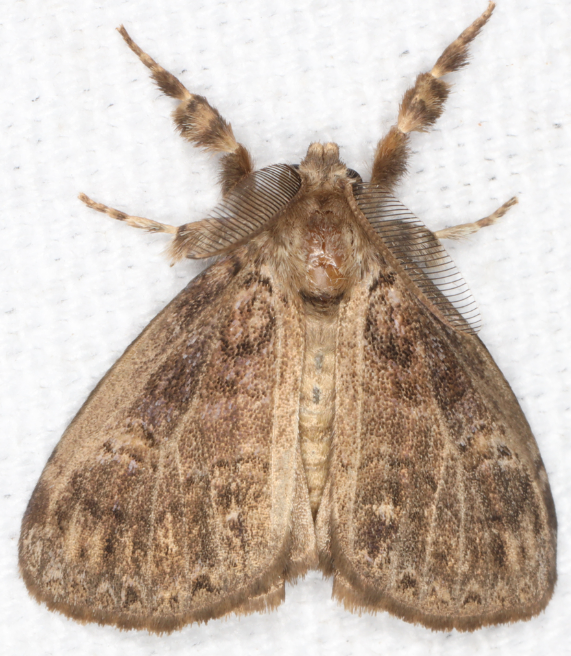
- Grayish adult moths
Habitat
Found in dense conifer forests and wooded landscapes where fir trees are abundant.
Behavior and Diet
Larvae feed aggressively on needles, often causing significant defoliation during population surges.
Impact
Severe infestations can weaken or kill trees and increase vulnerability to bark beetles and disease.
Prevention and Control
- Monitor for egg masses
- Encourage natural predators
- Use biological controls like Bt