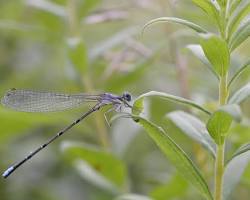
The Blue-fronted Dancer (Argia apicalis) is a colorful damselfly species commonly found near freshwater habitats throughout North America. This slender insect belongs to the order Odonata, the same group that includes dragonflies. Like many damselflies, the Blue-fronted Dancer is an agile predator that feeds on mosquitoes and other small flying insects, making it a highly beneficial species in wetland ecosystems.
Blue-fronted dancers are often seen perched on grasses, reeds, and shoreline vegetation near ponds and streams. Their brilliant blue coloration and delicate appearance make them popular among insect enthusiasts and wildlife photographers.
Quick Facts
- Order: Odonata
- Family: Coenagrionidae
- Scientific Name: Argia apicalis
- Habitat: Freshwater wetlands and shorelines
- Diet: Small flying insects
- Status: Beneficial predator
Identification
Adult Blue-fronted Dancers are slender-bodied insects measuring approximately:
- 1.25 to 1.5 inches long
Males are especially recognizable because of their:
- Bright blue facial markings
- Blue thorax coloration
- Dark abdominal segments
Females are generally more subdued in color and may appear:
- Brown
- Greenish
- Gray-blue
Like other damselflies, they possess:
- Long narrow abdomens
- Large compound eyes
- Transparent wings
- Thin delicate legs
Unlike dragonflies, damselflies usually hold their wings folded together above their bodies while resting.
The species gets its common name from the bright blue coloration found on the front portion of the male’s head and thorax.
Distribution and Habitat
The Blue-fronted Dancer occurs throughout much of:
- The United States
- Southern Canada
It is especially common in regions containing permanent freshwater habitats.
Preferred habitats include:
- Ponds
- Lakes
- Streams
- Rivers
- Wetlands
- Marshes
- Slow-moving waterways
These damselflies prefer areas with:
- Aquatic vegetation
- Reeds
- Emergent grasses
- Calm shoreline zones
Adults are often observed resting on plants near the water’s edge where prey insects are abundant.
Life Cycle
Like other members of the order Odonata, Blue-fronted Dancers undergo incomplete metamorphosis consisting of three primary stages:
- Egg
- Aquatic nymph
- Adult
Females deposit eggs directly into aquatic vegetation or submerged plant material.
After hatching, immature nymphs live underwater where they become active predators.
Aquatic nymphs feed on:
- Mosquito larvae
- Small aquatic insects
- Tiny crustaceans
- Other invertebrates
Nymphs breathe underwater using specialized structures and may remain aquatic for:
- Several months to over a year depending on environmental conditions
When mature, the nymph climbs onto vegetation above the water surface and molts into its adult form.
Freshly emerged adults initially appear soft and pale before developing their final coloration.
Behavior
Blue-fronted Dancers are agile daytime predators that actively hunt small insects.
Adults commonly feed on:
- Mosquitoes
- Gnats
- Midges
- Small flies
- Tiny flying insects
They capture prey in midair using their legs to form a basket-like structure during flight.
Males are often territorial and may defend favored perching sites along shorelines.
Courtship and mating typically occur near water where females later deposit eggs.
These insects are most active during:
- Warm sunny days
- Spring
- Summer
- Early fall
Pest Status
Blue-fronted Dancers are not pests.
Instead, they are considered highly beneficial insects because they naturally reduce populations of nuisance insects.
Benefits include:
- Mosquito control
- Natural biological pest management
- Support for healthy wetland ecosystems
- Food source for birds and fish
These damselflies do not:
- Bite humans
- Damage plants
- Infest homes
- Spread disease
Ecological Importance
Blue-fronted Dancers play an important role in freshwater ecosystems.
Both adults and aquatic nymphs function as predators that help regulate insect populations.
They also serve as food for:
- Fish
- Birds
- Frogs
- Spiders
- Larger dragonflies
Because damselflies are sensitive to pollution and habitat changes, their presence is often considered an indicator of:
- Healthy water quality
- Balanced wetland ecosystems
- Stable aquatic habitats
Prevention
No prevention is needed because Blue-fronted Dancers are beneficial predators.
Many gardeners and conservationists intentionally encourage damselflies by:
- Maintaining ponds
- Protecting wetland habitats
- Reducing pesticide use
- Planting native shoreline vegetation
Control
Control is not recommended.
Protecting damselfly populations helps improve natural pest control and supports biodiversity in freshwater environments.
Interesting Facts
- Damselflies have existed for hundreds of millions of years.
- Blue-fronted Dancers can capture prey while flying.
- Aquatic nymphs are important underwater predators.
- They are closely related to dragonflies.
- The species is commonly seen resting with folded wings.
- Males are more brightly colored than females.