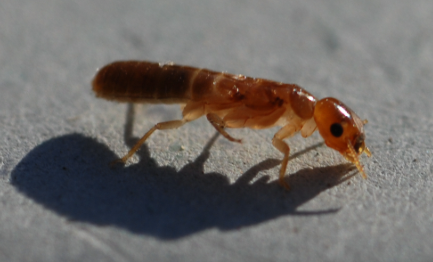
West Indian Drywood Termites (Cryptotermes brevis) are among the most destructive drywood termite species in the world. Unlike subterranean termites, these insects do not require contact with soil or external moisture sources. Instead, they live entirely inside dry wood, where they feed, reproduce, and establish colonies. This unique adaptation allows them to infest furniture, structural lumber, flooring, doors, trim, and even wooden picture frames.
Native to the Caribbean and parts of Central America, West Indian drywood termites have spread throughout many tropical and subtropical regions through the movement of infested furniture, shipping crates, lumber, and household goods. Today they are considered one of the most important structural pests in coastal regions of the United States, particularly in Florida, Hawaii, and portions of the Gulf Coast.
Because colonies remain hidden inside wood and produce few outward signs, infestations often go unnoticed for years while extensive damage accumulates.
Taxonomy and Classification
- Kingdom: Animalia
- Phylum: Arthropoda
- Class: Insecta
- Order: Blattodea
- Infraorder: Isoptera
- Family: Kalotermitidae
- Species: Cryptotermes brevis
Drywood termites differ significantly from subterranean termites because they can survive entirely within dry wood without requiring a connection to soil.
Identification
West Indian drywood termites are small insects with soft bodies and specialized castes.
Workers and Nymphs
- Length: 4 mm to 6 mm.
- Cream-colored bodies.
- Soft-bodied appearance.
- Wingless.
These termites perform feeding, excavation, and colony maintenance duties.
Soldiers
- Dark brown head capsule.
- Large mandibles.
- Short, block-shaped head.
- Defensive caste.
Soldiers protect colony entrances and tunnels from predators.
Swarmers (Alates)
- Length: 10 mm to 11 mm.
- Medium brown coloration.
- Two pairs of wings.
- Dark wing veins.
Swarmers are responsible for establishing new colonies.
Key Signs of Infestation
Frass Pellets
The most recognizable sign of drywood termite activity is the presence of frass.
- Tiny pellet-like droppings.
- Hard texture.
- Sand-like appearance.
- Uniform size.
- Six-sided shape under magnification.
These pellets accumulate beneath infested wood and are often mistaken for sawdust.
Kick-Out Holes
Drywood termites create small openings to remove waste.
- Pin-sized holes.
- Located on wood surfaces.
- Associated with frass piles.
These openings may be difficult to detect during early infestations.
Hollow Wood
- Wood sounds hollow when tapped.
- Structural weakness develops.
- Hidden internal galleries.
Severe infestations can leave only a thin outer layer of wood intact.
Distribution and Habitat
West Indian drywood termites are established throughout many tropical and subtropical regions.
In the United States they are most common in:
- Florida.
- Hawaii.
- Puerto Rico.
- Gulf Coast states.
- Coastal communities.
Because colonies live entirely within wood, they may be found anywhere suitable wood is present.
Preferred Materials
West Indian drywood termites infest a wide variety of wooden items.
- Wall framing.
- Roof supports.
- Flooring.
- Furniture.
- Cabinets.
- Doors.
- Window frames.
- Wooden antiques.
- Musical instruments.
Unlike subterranean termites, they frequently infest furniture that is completely isolated from the ground.
Life Cycle
West Indian drywood termites undergo simple metamorphosis.
- Swarming Stage: Winged reproductives leave established colonies.
- Colony Foundation: A male and female pair establish a new colony inside suitable wood.
- Egg Stage: The queen begins laying eggs.
- Nymph Stage: Young termites develop into workers, soldiers, or reproductives.
- Mature Colony: Colonies expand gradually over many years.
Drywood termite colonies grow more slowly than subterranean termite colonies but can remain active for decades.
Damage and Economic Importance
Structural Damage
These termites excavate extensive galleries within wood.
- Weaken support beams.
- Damage wall framing.
- Compromise flooring.
- Reduce structural integrity.
Significant damage often develops before infestations are discovered.
Furniture Destruction
West Indian drywood termites commonly infest valuable furniture.
- Antique furniture.
- Wooden cabinets.
- Pianos.
- Decorative woodwork.
Infested furniture is one of the primary methods of spread.
Economic Costs
Repair expenses can be substantial.
- Structural repairs.
- Replacement lumber.
- Treatment costs.
- Property value reductions.
Millions of dollars are spent annually managing drywood termite infestations.
Behavior and Conflict
Hidden Colonies
One of the most challenging aspects of drywood termite management is their concealed lifestyle.
- Colonies remain inside wood.
- No mud tubes are produced.
- Little external evidence appears.
Damage may remain hidden for years.
Independent Colonies
Unlike subterranean termites, drywood termites do not need soil contact.
- Live entirely within wood.
- Occupy upper floors.
- Infest isolated furniture.
- Survive in dry environments.
This makes detection and treatment significantly more difficult.
Slow Expansion
Colonies grow slowly but steadily.
- Long-term infestations.
- Progressive damage.
- Multiple colonies possible.
Even small colonies can cause substantial damage over time.
Management and Prevention
Integrated Pest Management (IPM) is essential for effective control.
Regular Inspections
- Check for frass piles.
- Inspect furniture.
- Examine exposed wood.
- Monitor swarming activity.
Early detection dramatically reduces repair costs.
Wood Treatments
- Borate treatments.
- Preventive preservatives.
- Protective coatings.
Treated wood is less susceptible to infestation.
Localized Treatments
- Drill-and-treat applications.
- Foam injections.
- Borate solutions.
These treatments may be effective for isolated infestations.
Heat Treatment
- Non-chemical option.
- Penetrates infested wood.
- Kills all life stages.
Heat treatment is increasingly used for furniture and localized infestations.
Whole-Structure Fumigation
- Used for severe infestations.
- Treats inaccessible colonies.
- Provides complete structure coverage.
Fumigation remains the gold standard for widespread drywood termite infestations.
Furniture Inspection
- Inspect secondhand furniture.
- Check imported wooden items.
- Look for pellets and kick-out holes.
Preventing introduction is often easier than eliminating established colonies.
Research and Future Studies
Researchers continue developing improved detection systems, including acoustic sensors, thermal imaging, and microwave technologies that can identify hidden termite activity. Additional research focuses on environmentally friendly treatments, improved fumigation methods, and long-term prevention strategies.
Scientists are also studying termite colony biology to improve targeted treatments that reduce pesticide use while maintaining effectiveness.
Conclusion
West Indian drywood termites are among the most damaging structural pests in tropical and subtropical regions. Their ability to live entirely inside dry wood allows them to infest buildings, furniture, and valuable wooden objects without requiring soil contact. Because infestations often remain hidden for years, early detection, regular inspections, and professional treatment are critical for protecting homes and structures from costly damage.