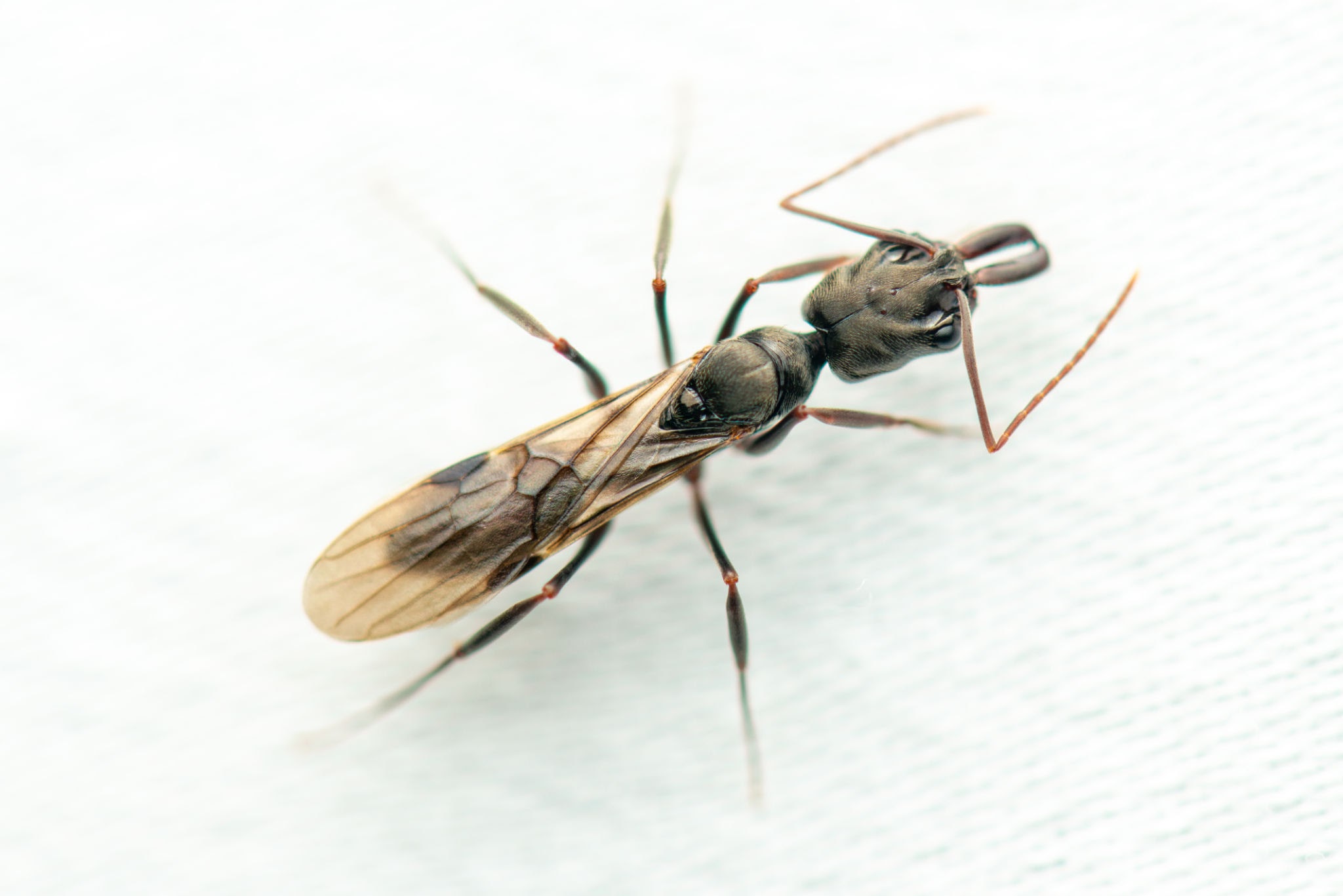
Trap-Jaw Ants are among the most remarkable ants in the world, famous for their incredibly fast-closing mandibles that rank among the fastest moving biological structures known. Belonging primarily to the genus Odontomachus, these predatory ants use their elongated jaws to capture prey, defend their colonies, and even propel themselves away from danger through a unique “jumping” mechanism. While Trap-Jaw Ants play an important role as predators in natural ecosystems, they can become nuisance pests when colonies establish near homes, patios, playgrounds, gardens, or frequently used landscape areas.
Unlike many household ants that primarily scavenge sweets and food scraps, Trap-Jaw Ants are active hunters that prey upon insects, spiders, and other small arthropods. Most encounters occur outdoors while gardening, moving firewood, lifting stones, or working around mulch beds. Their powerful jaws and painful sting make them one of the more intimidating ant species encountered by homeowners. Although they rarely invade structures in large numbers, nests located near high-traffic areas can create safety concerns for people and pets.
Taxonomy and Classification
Trap-Jaw Ants belong to the order Hymenoptera and the family Formicidae.
- Order: Hymenoptera
- Family: Formicidae
- Genus: Odontomachus
- Common Species: Odontomachus clarus, Odontomachus brunneus, and related species
These ants are highly specialized predators that have evolved an extraordinary jaw mechanism capable of snapping shut in fractions of a millisecond. This adaptation allows them to capture fast-moving prey and defend themselves effectively against threats.
Identification
Trap-Jaw Ants are relatively easy to identify because of their unusual body structure and distinctive mandibles.
Workers
- Size: Approximately 8–13 mm long.
- Color: Reddish-brown, dark brown, or black.
- Body Shape: Slender with long legs.
- Head: Large and elongated.
- Eyes: Prominent and well-developed.
- Mandibles: Long, straight jaws capable of opening nearly 180 degrees.
The Trap-Jaw Mechanism
The defining characteristic of these ants is their spring-loaded mandibles.
- Jaws remain locked in an open position.
- Sensory trigger hairs detect prey or threats.
- Mandibles snap shut at extremely high speed.
- Used for hunting, defense, and escape.
The force generated by the jaws can be strong enough to launch the ant backward several inches.
Stinger
- Workers possess a functional stinger.
- Used to subdue prey and defend the colony.
- Can deliver a painful sting to humans.
Distribution and Habitat
Trap-Jaw Ants occur throughout tropical, subtropical, and warm temperate regions around the world.
In North America, they are most commonly found in:
- Arizona
- Texas
- Florida
- Louisiana
- New Mexico
- Other southern states
Preferred habitats include:
- Mulch beds
- Wooded areas
- Leaf litter
- Rotting logs
- Soil beneath stones
- Garden edges
- Shaded landscapes
Colonies typically favor locations with moderate moisture and abundant prey.
Nesting Behavior
Trap-Jaw Ant colonies are usually smaller than those of many invasive pest ants.
Nests may be located:
- Under rocks.
- Beneath landscape timbers.
- Inside rotting wood.
- Within mulch layers.
- In soil cavities.
- Along wooded borders.
Unlike pavement ants or Argentine ants, Trap-Jaw Ants often forage individually rather than forming conspicuous trails.
Life Cycle
Trap-Jaw Ants undergo complete metamorphosis.
- Egg Stage: Queens lay eggs within protected nest chambers.
- Larval Stage: Workers care for and feed developing larvae.
- Pupal Stage: Larvae transform into adults.
- Adult Stage: Workers forage, hunt prey, and defend the colony.
New colonies are established by reproductive queens following mating flights.
Feeding Behavior
Trap-Jaw Ants are primarily predators rather than scavengers.
Common prey includes:
- Small insects
- Termites
- Beetle larvae
- Spiders
- Caterpillars
- Other ants
Their powerful mandibles allow them to capture prey that would be difficult for many other ants to subdue.
Although predatory, they may occasionally consume sugary substances, honeydew, and plant secretions.
Damage and Economic Importance
Trap-Jaw Ants are not structural pests.
They do not:
- Eat wood.
- Damage wiring.
- Destroy insulation.
- Consume stored food.
Their significance comes primarily from human encounters and defensive behavior.
Human Health Concerns
- Painful stings.
- Localized swelling.
- Redness and irritation.
- Allergic reactions in sensitive individuals.
Most stings cause temporary discomfort, although severe reactions are possible in individuals with insect sting allergies.
The Jumping Defense Mechanism
One of the most fascinating behaviors exhibited by Trap-Jaw Ants is their ability to launch themselves into the air.
When threatened:
- The ant snaps its mandibles against the ground.
- The force propels the ant backward.
- The ant escapes predators rapidly.
This unique adaptation is uncommon among insects and contributes to the group’s scientific interest.
Signs of Infestation
Common indicators of Trap-Jaw Ant activity include:
- Large ants with long open jaws.
- Nests beneath stones or logs.
- Individual workers hunting in mulch beds.
- Painful stings during gardening activities.
- Colonies near patios and walkways.
Unlike many nuisance ants, visible trails are often limited or absent.
Behavior and Conflict
Several characteristics contribute to their nuisance status.
- Aggressive Defense: Workers defend nests vigorously.
- Painful Sting: Encounters can be memorable.
- Hidden Colonies: Nests often remain unnoticed.
- Predatory Nature: Frequently encountered while hunting.
- Outdoor Activity: Common near recreation and landscaping areas.
Most conflicts occur when nests are accidentally disturbed.
Management and Prevention
An Integrated Pest Management (IPM) approach provides the most effective solution.
Habitat Modification
- Remove excess mulch near structures.
- Reduce leaf litter accumulation.
- Remove rotting logs.
- Limit ground clutter.
Moisture Management
- Repair irrigation leaks.
- Improve drainage.
- Avoid overly moist mulch beds.
Physical Control
- Locate and identify nests.
- Remove nesting materials where practical.
- Exercise caution when moving rocks and wood.
Baiting
- Protein-based baits may be more attractive than sweet baits.
- Placement should focus near active nesting areas.
Because these ants are primarily predators, conventional sweet ant baits may provide inconsistent results.
Targeted Treatment
- Treat only colonies that present a genuine risk.
- Focus on nests near entrances, patios, and play areas.
- Avoid unnecessary treatments in naturalized landscapes.
Conservation and Research
Trap-Jaw Ants are widely studied because of their remarkable jaw mechanics, predatory behavior, and ecological importance. Researchers continue investigating the biomechanics of their mandibles, colony behavior, and potential applications in engineering and robotics.
Although they can be nuisance pests near homes, Trap-Jaw Ants serve valuable ecological functions by helping regulate populations of other arthropods. In many situations, tolerance and habitat management are preferable to complete elimination, particularly when colonies are located away from human activity areas.