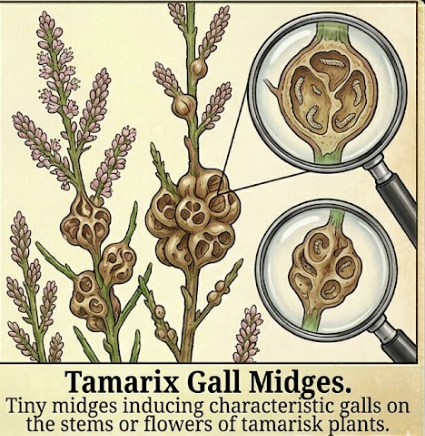
Tamarix Gall Midges are tiny fly-like insects whose larvae induce the formation of galls on tamarisk plants, commonly known as saltcedar. These specialized insects manipulate plant growth by releasing compounds that alter normal tissue development, causing the host plant to produce swollen, abnormal structures known as galls. The gall serves both as a food source and a protective shelter for the developing larva. Although the adult insects are rarely noticed, the distinctive galls they create can significantly alter the appearance and growth of tamarisk plants.
The impact of Tamarix Gall Midges depends largely on the role of the host plant. In ornamental or managed landscapes where tamarisk is valued, gall formation can reduce aesthetic appeal, distort growth, and weaken new shoots. In regions where tamarisk is considered an invasive species, however, these insects may be viewed more favorably because their feeding activity contributes to plant stress and reduced vigor. Regardless of management goals, Tamarix Gall Midges remain important because they redirect plant resources into abnormal tissue production instead of healthy growth and reproduction.
Gall midges are often overlooked because the adults are extremely small and short-lived. Most infestations are discovered through the presence of woody swellings, knob-like growths, or distorted branch tips rather than by observing the insects themselves.
Taxonomy and Classification
Tamarix Gall Midges belong to the order Diptera, the same order that includes flies and mosquitoes.
- Order: Diptera
- Family: Cecidomyiidae
- Representative Species: Psectrosema album
- Representative Species: Psectrosema acuticorne
- Common Name: Tamarix Gall Midges
Members of the family Cecidomyiidae are commonly known as gall midges because many species induce characteristic galls on their host plants.
Identification
Tamarix Gall Midges are most easily identified through the structures they create on host plants.
Adult Midges
- Size: Approximately 2 mm long.
- Color: Pale yellow, orange, or pinkish.
- Body: Delicate and mosquito-like.
- Legs: Long and slender.
- Wings: Clear and finely veined.
Adults are fragile insects that live only briefly and are rarely observed in the field.
Larvae
- Size: Approximately 1–2 mm long.
- Color: Bright orange, yellow, or reddish.
- Shape: Legless maggot-like body.
- Location: Protected within plant galls.
The larvae are responsible for stimulating gall formation and remain concealed within the gall during development.
Gall Characteristics
- Woody stem swellings.
- Knob-like growths.
- Elongated cigar-shaped galls.
- Bead-like enlargements along stems.
- Distorted shoot tips.
- Abnormal branching patterns.
Older galls may contain small circular exit holes where adult midges emerged.
Distribution and Habitat
Tamarix Gall Midges occur wherever suitable tamarisk hosts are present.
Common habitats include:
- Riparian corridors
- Riverbanks
- Desert washes
- Saltcedar thickets
- Ornamental landscapes
- Restoration projects
- Managed tamarisk plantings
Populations are most common in areas where tamarisk produces abundant new growth throughout the growing season.
Host Plants
Tamarix Gall Midges are highly host-specific insects.
Primary hosts include:
- Tamarisk
- Saltcedar
- Various Tamarix species
This specialization makes them particularly interesting for biological control programs targeting invasive tamarisk populations.
Life Cycle
Tamarix Gall Midges undergo complete metamorphosis.
- Egg Stage: Females lay eggs in tender, actively growing plant tissue.
- Larval Stage: Larvae hatch and begin feeding, triggering gall formation.
- Pupal Stage: Development continues within the gall.
- Adult Stage: Small flies emerge and seek new host tissue for egg laying.
Several generations may occur annually in warm climates where host plants continue producing new shoots.
Gall Formation
The most remarkable aspect of Tamarix Gall Midge biology is their ability to manipulate plant growth.
After feeding begins:
- Plant hormones are altered.
- Cell division accelerates.
- Abnormal tissue develops.
- A protective gall forms around the larva.
The gall serves as both a food source and a protective chamber throughout larval development.
Damage and Economic Importance
The primary impact of Tamarix Gall Midges comes from growth distortion rather than direct tissue consumption.
Growth Suppression
- Reduced shoot elongation.
- Shortened branch growth.
- Distorted stems.
- Reduced canopy development.
Energy that would normally support plant growth is redirected into gall production.
Flower Reduction
- Reduced flowering.
- Aborted flower clusters.
- Lower seed production.
Heavy galling can significantly reduce reproductive output.
Branch Weakening
- Brittle stems.
- Increased breakage.
- Structural weakness.
- Dieback of heavily infested shoots.
Galled tissues are often weaker than normal stem wood.
Impact on Tamarisk Plants
Repeated infestations may gradually reduce plant vigor.
- Slower growth.
- Reduced reproduction.
- Increased stress.
- Thinner canopies.
- Reduced competitive ability.
While individual galls rarely threaten mature plants, extensive infestations can contribute to long-term decline.
Signs of Infestation
Common indicators include:
- Woody stem swellings.
- Bead-like growths.
- Knobbed branch tips.
- Distorted shoots.
- Exit holes in old galls.
- Abnormal branching patterns.
The galls themselves are usually much easier to identify than the insects that create them.
Behavior and Conflict
Several characteristics make Tamarix Gall Midges unique among plant pests.
- Host Specificity: Attack primarily tamarisk species.
- Gall Formation: Redirect plant growth.
- Protected Development: Larvae remain inside galls.
- Growth Suppression: Reduce plant vigor over time.
- Potential Biological Control Value: Stress invasive hosts.
These traits distinguish them from more traditional foliage-feeding pests.
Monitoring and Detection
Successful monitoring focuses on identifying fresh gall development.
- Inspect new shoots.
- Monitor stem swellings.
- Look for developing galls.
- Check for exit holes.
- Track seasonal gall production.
New growth is typically the most vulnerable tissue for infestation.
Management and Prevention
Management strategies depend on whether tamarisk is considered desirable or invasive.
Pruning
- Remove heavily galled shoots.
- Destroy infested material.
- Improve plant appearance.
Pruning is most effective before adults emerge from the galls.
Cultural Management
- Maintain plant health.
- Reduce stress where preservation is desired.
- Monitor new growth regularly.
Biological Considerations
- Preserve natural enemies.
- Avoid unnecessary insecticide applications.
- Recognize potential ecological benefits in invasive tamarisk stands.
Because larvae remain protected within galls, broad-spectrum insecticides often provide limited benefits.
Chemical Control
- Rarely necessary.
- Difficult to time effectively.
- Often less practical than pruning and monitoring.
Protected larvae are largely shielded from external treatments.
Conservation and Research
Research on Tamarix Gall Midges focuses on host specificity, biological control potential, population dynamics, and their role in suppressing invasive tamarisk populations. Scientists continue evaluating how these insects interact with other biological control agents and whether they can contribute to long-term management of saltcedar infestations.
Whether viewed as a pest or a beneficial stressor, Tamarix Gall Midges provide an excellent example of the complex relationships that exist between insects and plants. Their remarkable ability to manipulate plant growth makes them one of the most fascinating gall-forming insects associated with tamarisk ecosystems.