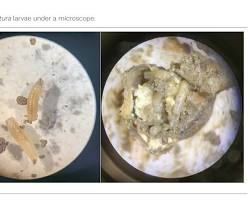
Seedcorn maggots are serious early-season pests that attack germinating seeds and young seedlings of a wide range of crops. Despite the name, they do not limit themselves to corn. These pests commonly damage beans, peas, soybeans, cucumbers, onions, potatoes, spinach, and many other field and vegetable crops. Seedcorn maggots are especially problematic in cool, wet soils where seed germination is delayed and vulnerable plant material remains exposed underground for a longer period of time.
The pest is the larval stage of a fly, usually Delia platura, which belongs to the same general group as root maggots and onion flies. Adults resemble small gray houseflies, but the damage is done below the soil surface by pale, legless maggots that feed on seeds, cotyledons, and tender stems. In commercial agriculture, seedcorn maggots can create stand losses that force replanting, delay crop development, and reduce final yield. In home gardens, they are often blamed when seeds fail to emerge or when seedlings suddenly collapse without obvious chewing damage above ground.
The “Cold-Start” Spoiler: Seedcorn Maggots
The Seedcorn Maggot (Delia platura) is a “noxious” and highly deceptive fly larva that strikes before most gardeners even see a sprout. It is a premier “O” pest for large-seeded crops like Corn, Beans, Peas, and Melons across the United States. In the Tucson and Southwest regions, they are most active during the cool, damp periods of early spring. These maggots are “opportunistic” scavengers; they are attracted to the smell of decaying organic matter and freshly tilled soil, where they burrow into germinating seeds and hollow them out, leading to “patchy” stands and Arizona garden beds that simply fail to emerge.
Identification: The “Headless” Tunneler
Identifying Seedcorn Maggots requires digging up “skipped” seeds that failed to sprout. For Pestipedia.com users, the tapered body and the “hollow” seed are the primary diagnostic keys:
- The Larva: A small (5mm to 6mm), pale yellowish-white legless maggot. The body is cylindrical, tapering to a pointed head end equipped with two small black mouth-hooks.
- The “Hollow” Seed: If you dig up a seed that hasn’t sprouted, you will find it shriveled and hollowed out, often with one or more maggots actively feeding inside the “cotyledon” (the fatty part of the seed).
- The Adult: A small (5mm), greyish-brown fly that looks remarkably like a miniature housefly. They are often seen hovering over freshly turned soil or manure piles in the Tucson spring.
- The Egg: Tiny, white, elongated eggs laid in small clusters in the soil, specifically targeting areas with high moisture and decomposing organic debris.
The “Germination Failure” and “Snake-Head” Damage
The “noxious” impact of the Seedcorn Maggot is the destruction of the plant’s embryonic tissue before it can reach the surface:
- Total Germination Failure: The most common symptom is simply empty space in the row. The maggots consume the high-protein interior of the seed, killing the embryo entirely.
- “Snake-Head” Seedlings: If the plant manage to emerge, it may lack its first true leaves because the maggot ate the growing point. In the Southwest, these “naked” stems are called “snake-heads” and will never develop into productive plants.
- Secondary Rot: The boring holes made by the maggots allow soil-borne fungi and bacteria to enter the seed, causing it to rot rapidly in the cool, moist Arizona spring soil.
U.S. Planting and “Bio-Thermal” Management
In the United States, managing Seedcorn Maggots is a game of Timing and Soil Physics. Because the damage happens underground and very quickly, “rescue” sprays are impossible.
- The “Warm Soil” Rule: For Pestipedia.com users, the #1 U.S. defense is waiting for warm soil. In Tucson, wait until soil temperatures are consistently above 65°F. Warm soil allows seeds to germinate and “outgrow” the maggot’s window of vulnerability.
- Manure Management: Since the flies are attracted to the smell of decaying organic matter, never apply fresh manure or heavy green mulch immediately before planting. Incorporate organic matter at least 2–3 weeks before sowing to allow the “decay smell” to dissipate.
- Seed Treatments (The “U.S. Standard”): Most commercial corn and bean seeds in the U.S. come pre-treated with a fungicide/insecticide coating (often containing neonicotinoids or diamides) specifically to prevent seedcorn maggot strikes.
- Shallow Planting: In the Southwest, plant seeds as shallowly as moisture levels allow. This reduces the time the sprout spends underground, giving the maggots less time to find and attack the seed.
- Tillage Timing: Tilling the soil early (2 weeks before planting) can trigger the flies to lay their eggs. By the time you actually plant your seeds, the first generation of maggots will have already starved or pupated.
Taxonomy and Classification
Seedcorn maggots belong to the order Diptera and the family Anthomyiidae. This family includes several crop pests that attack seedlings and roots. As true flies, they undergo complete metamorphosis with egg, larval, pupal, and adult stages. Their biology is closely tied to soil conditions, organic matter, and crop planting timing.
Identification
Adult seedcorn maggot flies are small, grayish insects that can look similar to houseflies but are generally more slender. They are not the stage most growers notice. The larvae are cream-colored, tapered at the head end, legless, and smooth-bodied. They are usually found in the soil near rotting seeds or within damaged seed cavities and stems.
Damage symptoms often provide the first clue. Seeds may appear hollowed out, soft, or decayed. Seedlings may emerge weakly, show misshapen cotyledons, or fail to emerge entirely. In some crops, young plants wilt and die after the maggots feed on underground stems. The result is patchy emergence and irregular plant stands.
Life Cycle
Adult flies are attracted to freshly worked soil, decaying organic matter, manure-amended fields, and areas with decomposing plant residue. Females lay eggs in moist soil near germinating seeds or organic debris. Eggs hatch into maggots that begin feeding almost immediately. The larval stage lasts several days to a few weeks depending on temperature. Pupation occurs in the soil, and adults later emerge to continue the cycle.
Several generations may occur in one growing season. Early spring generations are often the most damaging because they coincide with cool soil temperatures that slow crop emergence. Fast-growing seeds can sometimes outgrow the threat, but delayed germination creates an ideal window for larval feeding.
Damage and Economic Importance
Seedcorn maggots are primarily stand-reduction pests. Instead of feeding on mature foliage, they damage the crop before it has a chance to establish. This makes them especially frustrating because infestations may not be obvious until missing rows or bare patches appear. Crops planted into cool, wet soil are at greatest risk, especially if the field contains fresh organic matter or recently incorporated green manure.
In high-value vegetable crops, even moderate stand loss can be expensive because it reduces uniformity and may require reseeding. In broadacre agriculture, poor stands from seedcorn maggot injury can translate into lower plant populations and decreased yield potential. The pest is also important because growers often cannot “rescue” damaged seedlings once larvae are active underground.
Management and Control
Management depends heavily on prevention. Because the larvae feed underground, curative control is limited once infestation begins. The most effective strategy is to reduce conditions that attract egg-laying adults and to encourage rapid crop emergence.
- Plant in favorable soil conditions: Warm, well-drained soil helps seeds germinate quickly and reduces vulnerability.
- Avoid planting into fresh organic matter: Recently incorporated manure, cover crops, or green residue can attract adult flies.
- Use high-quality seed: Vigorous seed establishes faster and tolerates minor injury better.
- Consider seed treatments: In commercial production, insecticide seed treatments are often used where seedcorn maggots are a recurring problem.
- Time planting carefully: Delaying planting slightly until soils warm may reduce risk in some systems.
- Maintain sanitation: Managing decaying plant material and crop residue can reduce attraction for egg-laying adults.
Integrated pest management for seedcorn maggots is largely predictive. If a field has a history of seedling loss, high organic matter inputs, and prolonged cool weather, the risk is higher and preventative measures are more justified.