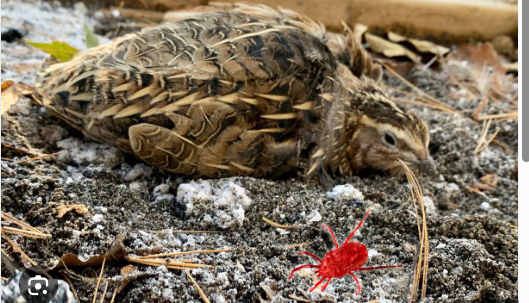
Quail lice are parasitic insects that infest quail and other ground-dwelling birds. Unlike blood-feeding parasites, lice feed on feathers, skin debris, and organic material found on the host. While they do not typically transmit diseases directly, heavy infestations can cause significant discomfort, stress, and secondary health issues in affected birds.
These pests are especially common in captive or farm-raised quail populations, where close quarters facilitate rapid transmission. Wild quail can also harbor lice, but natural behaviors such as dust bathing often help keep populations in check. In domestic settings, however, infestations can escalate quickly without proper management.
Lice infestations can lead to reduced egg production, weight loss, and increased susceptibility to other diseases. For poultry keepers, understanding the lifecycle and behavior of quail lice is critical for effective control.
The Feather-Fretter: Quail Lice
In the United States, Quail Lice (primarily Goniodes mammillatus and Cuclotogaster heterographus) are host-specific, wingless insects that spend their entire lives on the bodies of New World quails, such as the Gambel’s Quail common in Arizona or the Northern Bobwhite. Unlike fleas or ticks, these are “chewing lice” (Mallophaga), meaning they do not suck blood. Instead, they feed on the skin scales, feathers, and down of the bird, causing intense irritation and “feather-raggedness” that can weaken a bird’s ability to survive the winter.
Identification: The “Flat-Head” Crawler
Identifying lice on a quail requires a physical inspection of the bird, particularly around the vent, under the wings, and at the base of the neck. For Pestipedia.com users, the physical traits are diagnostic:
- Appearance: They are tiny, straw-colored or amber insects, typically 1mm to 3mm long. Their bodies are extremely flattened, allowing them to glide easily between the dense feathers of the quail.
- Broad Heads: Unlike “sucking” lice that have narrow heads for piercing skin, chewing lice have broad, rounded heads with mandibles designed for scraping and biting organic debris.
- The Nits: The eggs (nits) are small, white, and oval, usually glued in clusters to the base of the feather shafts. Unlike dandruff, these will not shake off and must be physically scraped away.
- Host Specificity: These lice are “obligate parasites.” They cannot survive for more than a few days off the body of a quail, meaning they are spread primarily through direct bird-to-bird contact.
The “Feather-Ragged” Impact
While a few lice are normal in wild populations, “noxious” levels of infestation can lead to significant health decline in backyard coveys or commercial game bird operations:
- Preening Obsession: Infested birds spend a disproportionate amount of time preening and scratching, which leads to “feather-picking” and bald patches.
- Thermal Loss: By chewing the downy under-feathers, the lice destroy the bird’s insulation. In the U.S. Southwest, this makes quails more susceptible to death during cold desert nights.
- Restlessness: The constant crawling sensation prevents the birds from resting or feeding properly, leading to weight loss and decreased egg production.
U.S. Management: The “Dust Bath” Defense
In the United States, managing quail lice is a combination of encouraging natural behaviors and targeted interventions for captive birds:
- The Dust Bath: The most effective natural control is the dust bath. Quails use fine sand or dust to “clog” the breathing holes (spiracles) of the lice. For captive birds, providing a dedicated box of fine, dry sand mixed with a small amount of Diatomaceous Earth (DE) is the #1 organic deterrent.
- Permethrin Dusting: In heavy infestations, U.S. poultry owners use food-grade Permethrin dusts or sprays labeled for game birds. It is essential to treat the “vent” area and the base of the neck, repeating the treatment after 10 days to kill any newly hatched nits.
- Coop Sanitation: While the lice don’t live in the coop, they can hide in the bedding for a short time. Removing all old straw or shavings and “whitewashing” the interior of the coop can help break the cycle.
- Wild Bird Management: For wild coveys in Arizona, maintaining natural “dusting bowls” and providing high-quality supplemental feed helps the birds maintain the energy levels needed to “out-preen” a minor louse population.
Identification
Quail lice are small, wingless insects typically measuring 1–3 mm in length. They are pale yellow to light brown and have flattened bodies adapted for moving through feathers. Lice are often visible around the base of feathers, particularly near the vent, wings, and neck. Signs of infestation include excessive scratching, feather damage, and visible egg clusters (nits) attached to feather shafts.
Life Cycle
The lifecycle of quail lice is completed entirely on the host. Females lay eggs on feathers, where they hatch into nymphs. Nymphs resemble smaller versions of adults and go through several molts before reaching maturity. Under favorable conditions, the lifecycle can be completed in as little as 2–3 weeks, allowing populations to grow rapidly.
Damage and Impact
While lice do not feed on blood, their feeding behavior can cause irritation and feather damage. Birds may exhibit restlessness, reduced feeding, and increased stress. In severe infestations, feather loss and skin irritation can occur, leading to decreased productivity and overall health.
Prevention and Control
Control involves regular inspection of birds and maintaining clean living conditions. Dust baths are a natural method for birds to control lice. In cases of heavy infestation, insecticidal powders or sprays specifically formulated for poultry may be used. Isolating affected birds can help prevent spread.