Overview
Hen fleas (Ceratophyllus gallinae), also known as poultry fleas or European chicken fleas, are parasitic insects that primarily infest birds, particularly domestic chickens. These fleas are widely distributed and can be found in poultry houses, nests, and coops where birds are housed. While their primary hosts are birds, hen fleas can also bite humans when populations become high, making them both an agricultural and nuisance pest.
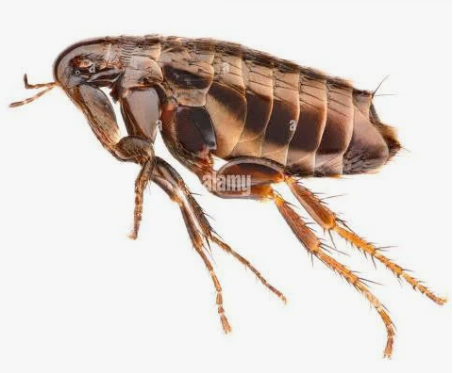
Unlike many flea species that remain on their host continuously, hen fleas spend much of their life cycle in the environment, particularly in bedding, nest materials, and cracks within structures. Adult fleas emerge to feed on birds, then retreat back into their surroundings. This behavior makes infestations persistent and difficult to eliminate without thorough cleaning and treatment of the environment.
Hen flea infestations can lead to stress, reduced egg production, and general health decline in poultry. In severe cases, young or weakened birds may suffer from anemia due to repeated blood feeding.
Identification
Hen fleas are small, wingless insects measuring about 1–4 mm in length. They are dark brown and laterally flattened, allowing them to move easily through feathers and bedding.
They have strong hind legs adapted for jumping, and their presence is often detected through bites on birds or humans, as well as visible movement in nesting areas.
Habitat
These fleas are commonly found in poultry houses, nests, and bedding. They prefer dark, sheltered environments where eggs and larvae can develop undisturbed.
They may also infest wild bird nests, which can serve as a source of infestation for nearby poultry or structures.
Behavior and Life Cycle
Female fleas lay eggs in nesting materials or bedding. Larvae hatch and feed on organic debris and flea feces before pupating.
Adults emerge and seek out hosts for blood meals. This cycle can repeat rapidly under favorable conditions, leading to large infestations.
Impact
Hen fleas can cause irritation, stress, and reduced productivity in poultry. They may also bite humans, causing discomfort.
Prevention and Control
Regular cleaning of coops, replacing bedding, and treating infested areas are key to control. Managing wild bird nests near poultry areas can also reduce infestations.
Taxonomy
- Kingdom: Animalia
- Phylum: Arthropoda
- Class: Insecta
- Order: Siphonaptera
- Family: Ceratophyllidae