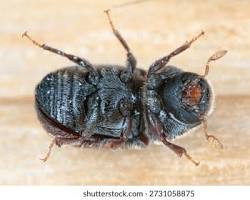
Juniper Bark Beetles are destructive wood-boring insects that target juniper trees and shrubs. These beetles are considered serious pests in both natural ecosystems and landscaped environments, particularly when trees are stressed due to drought, disease, or poor growing conditions. By tunneling beneath the bark, they disrupt the tree’s ability to transport water and nutrients, often leading to branch dieback or complete tree mortality.
Taxonomy and Classification
- Kingdom: Animalia (Animals)
- Phylum: Arthropoda (Arthropods)
- Class: Insecta (Insects)
- Order: Coleoptera (Beetles)
- Suborder: Polyphaga
- Superfamily: Curculionoidea (Weevils and Bark Beetles)
- Family: Curculionidae (True Weevils)
- Subfamily: Scolytinae (Bark Beetles)
- Genus: Phloeosinus
Common Species
- Phloeosinus cristatus (Cypress Bark Beetle)
- Phloeosinus cupressi
Identification
Adult juniper bark beetles are small, cylindrical insects typically dark brown or black in color. They are only a few millimeters long, making them difficult to detect without close inspection. Larvae are white, legless grubs with brown head capsules and are found beneath the bark. Their feeding tunnels create distinctive patterns that can help identify an infestation.
Habitat and Distribution
These beetles are widely distributed across regions where juniper trees are common, including the western and southwestern United States. They thrive in dry environments and are particularly active during periods of drought, when trees are weakened and more susceptible to attack.
Life Cycle
The life cycle begins when adult beetles bore into the bark of a host tree to lay eggs. After hatching, larvae feed on the inner bark and cambium layer, creating tunnels that interfere with nutrient transport. Pupation occurs beneath the bark, and new adults emerge to infest additional trees. Multiple generations may occur each year in warm climates.
Damage and Impact
Damage from juniper bark beetles can be severe. As larvae feed, they girdle branches or entire sections of the tree, cutting off water and nutrient flow. This results in browning foliage, dieback, and eventual tree death. Infestations often spread quickly, especially in dense plantings or drought-stressed landscapes.
Signs of Infestation
Common signs include small entry holes in the bark, fine sawdust (frass) at the base of the tree, and sections of foliage turning brown or red. Peeling back the bark may reveal tunneling patterns created by larvae.
Prevention and Control
Maintaining tree health is the most effective prevention strategy. Proper watering, pruning, and avoiding injury to trees can reduce susceptibility. Infested branches should be removed and destroyed promptly. In severe cases, insecticides may be applied as a preventative measure.