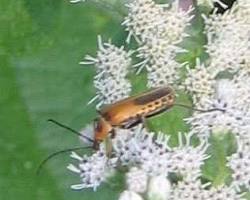
Jumpseed Beetles are small plant-feeding insects known for their ability to damage seeds and foliage. While not always widespread pests, their feeding behavior can impact plant reproduction and growth.
Jumpseed beetles (primarily in the genus Gastrophysa) are small, often metallic-colored leaf beetles that have a specialized relationship with plants in the buckwheat family (Polygonaceae), particularly Jumpseed (Persicaria virginiana). These beetles are part of the larger Chrysomelidae family and are easily recognized by their shiny, iridescent green or copper bodies. While they are not typically considered major agricultural pests, they can cause significant localized defoliation in native plant gardens and woodland restoration areas where their host plants are prevalent.
The damage caused by jumpseed beetles is typical of most leaf beetles: both the adults and the larvae are voracious leaf-eaters. They typically engage in “shothole” feeding, where they chew numerous small, circular holes through the leaves, or they may skeletonize the foliage entirely during peak population bursts. A unique characteristic of some species in this genus is that the larvae are gregarious, meaning they feed in large groups on the undersides of leaves, which can lead to rapid “browning” of the host plant. Because jumpseed is often used in shade gardens for its unique foliage, the tattered appearance caused by these beetles can be an aesthetic nuisance. Management is usually simple and involves “hand-picking” the beetles or using a mild insecticidal soap, as the plants can generally recover from the feeding once the beetle’s short life cycle is complete.
Identification
These beetles are small, often dark-colored, and may have a slightly elongated body. Their mobility allows them to quickly move between plants.
Habitat and Distribution
They are found in gardens, fields, and natural areas where host plants grow.
Life Cycle
Eggs are laid near host plants, and larvae develop in soil or plant material.
Damage and Impact
Feeding reduces seed viability and plant health.
Signs of Infestation
Damaged seeds and feeding marks on leaves are common signs.
Prevention and Control
Crop rotation and monitoring help manage populations.