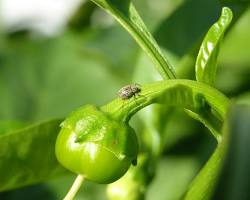
Jalapeño Pepper Weevils (Anthonomus eugenii and closely related species) are highly destructive agricultural pests that attack pepper crops throughout warm growing regions. These tiny snout beetles are especially damaging to jalapeños, bell peppers, chili peppers, and ornamental peppers. Although small and difficult to detect, they are capable of causing severe economic losses due to their hidden feeding habits and rapid reproductive cycle.
The greatest damage occurs when female weevils lay eggs inside flower buds or young peppers. After hatching, the larvae feed internally, protected from weather, predators, and many pesticides. Infested buds and fruit often drop prematurely, while surviving peppers become distorted, scarred, and unsuitable for market. Because infestations can develop rapidly and remain hidden until damage becomes obvious, Pepper Weevils are considered one of the most serious pests of commercial pepper production.
Quick Facts
- Common Name: Jalapeño Pepper Weevil
- Scientific Name: Anthonomus eugenii
- Order: Coleoptera
- Family: Curculionidae
- Main Hosts: Jalapeños, chili peppers, bell peppers
- Primary Damage: Fruit destruction and bud drop
- Habitat: Pepper fields, greenhouses, gardens
- Status: Major agricultural pest
Taxonomy and Classification
Jalapeño Pepper Weevils belong to the order Coleoptera, the group containing all beetles, and the family Curculionidae, commonly known as weevils or snout beetles.
Their long, curved snout is a defining characteristic of the group. Female weevils use this snout to bore into buds and fruit before laying eggs.
Like other beetles, Pepper Weevils undergo complete metamorphosis:
- Egg
- Larva
- Pupa
- Adult
The larval stage is especially destructive because it develops hidden inside the pepper fruit, protected from many conventional treatments.
Physical Description
Adult Pepper Weevils are very small insects, usually only 2 to 4 mm long.
Adult Appearance
- Dark brown to black coloration
- Distinct curved snout (rostrum)
- Oval-shaped beetle body
- Hard wing covers
- Compact, slow-moving appearance
Because of their small size and dark coloration, adults are often difficult to spot among foliage and flowers.
Larvae
Larvae are:
- Legless
- Creamy white
- C-shaped grubs
- Hidden inside peppers
The larvae remain concealed while feeding internally on seeds and surrounding tissue.
Pupae
Pupation usually occurs within the pepper itself, where the insect remains protected until adulthood.
Distribution and Habitat
Jalapeño Pepper Weevils thrive in warm climates where peppers are cultivated extensively.
Primary Distribution
- Southern United States
- Mexico
- Central America
- Caribbean regions
- Greenhouse production systems worldwide
Preferred Habitat
They are commonly found in:
- Commercial pepper fields
- Greenhouses
- Home vegetable gardens
- Nurseries
- Areas with continuous pepper production
Warm temperatures and continuous host availability allow populations to reproduce rapidly.
Life Cycle
Pepper Weevils reproduce quickly and may complete multiple generations during a single growing season.
Egg Stage
Females deposit eggs inside:
- Flower buds
- Young peppers
- Tender plant tissue
The egg-laying puncture is often sealed afterward, making detection difficult.
Larval Stage
After hatching, larvae feed internally on:
- Seeds
- Fruit tissue
- Developing pepper walls
Because the larvae remain hidden, infestations may go unnoticed until fruit damage becomes severe.
Pupal Stage
Pupation occurs safely inside the fruit, protecting the developing insect from many natural enemies and pesticides.
Adult Emergence
New adults chew exit holes and emerge to infest additional plants and fruit.
Behavior and Ecology
Pepper Weevils are highly specialized pests strongly associated with pepper plants.
Host Preference
Preferred hosts include:
- Jalapeño peppers
- Bell peppers
- Chili peppers
- Serrano peppers
- Ornamental peppers
Concealed Feeding
One of the greatest challenges in controlling Pepper Weevils is their concealed feeding behavior.
Larvae remain protected:
- Inside fruit
- Within flower buds
- Away from predators
- Shielded from sprays
Rapid Reproduction
Under favorable conditions, populations can explode quickly and spread throughout entire fields.
Damage and Impact
Pepper Weevils are capable of devastating pepper crops if left unmanaged.
Bud Drop
Infested flower buds often:
- Wilt
- Turn yellow
- Fall prematurely
Fruit Damage
Larval feeding inside peppers causes:
- Internal rot
- Distorted fruit
- Seed destruction
- Premature fruit drop
Economic Losses
Commercial growers may suffer:
- Reduced yields
- Unmarketable produce
- Increased control costs
- Crop rejection
Rapid Spread
Infestations can spread rapidly between:
- Greenhouses
- Fields
- Nurseries
- Transported produce
Signs of Infestation
Several symptoms may indicate Pepper Weevil activity.
- Premature bud drop
- Fallen young peppers
- Small puncture marks on fruit
- Distorted peppers
- Internal larvae within fruit
- Exit holes in mature peppers
- Adult beetles on foliage or flowers
Infested fruit may appear healthy externally while harboring larvae internally.
Management and Prevention
Successful control requires an integrated pest management (IPM) approach focused on early detection and sanitation.
Monitoring
- Inspect buds and fruit regularly
- Use pheromone traps
- Monitor for fallen peppers
- Scout fields frequently during warm weather
Sanitation
Sanitation is critical for reducing populations.
- Remove fallen fruit immediately
- Destroy infested peppers
- Eliminate volunteer pepper plants
- Clean greenhouse debris
Crop Rotation
Rotating away from peppers and related crops helps interrupt the life cycle.
Chemical Control
Targeted insecticide applications may be necessary during adult activity periods.
However:
- Timing is critical
- Larvae inside fruit are protected
- Repeated treatments may be required
Exclusion
In greenhouses:
- Use insect screening
- Inspect incoming plants carefully
- Quarantine suspicious material
Interesting Facts
- Pepper Weevil larvae remain hidden inside peppers for most of development.
- A single female can lay hundreds of eggs.
- Infested peppers often drop before symptoms become obvious.
- The species is one of the most feared pepper pests in commercial agriculture.
- Warm climates allow continuous reproduction throughout much of the year.
Ecological Importance
Although destructive to agriculture, Pepper Weevils are part of natural ecosystems and food webs.
- Serve as prey for predators and parasitoids
- Influence pepper crop management practices
- Drive research into sustainable pest control
Conservation and Research
Research involving Pepper Weevils focuses heavily on:
- Improved pheromone trapping systems
- Biological control agents
- Host plant resistance
- Reduced-risk insecticides
- Early detection technology
- Integrated pest management strategies
Scientists continue developing environmentally responsible approaches that reduce crop losses while minimizing pesticide dependence.