Overview
Guava fruit flies are destructive agricultural pests that target guava and other soft fruits, causing significant economic losses in tropical and subtropical regions. These flies are typically part of the fruit fly family Tephritidae, which includes many species known for infesting fruit crops. Unlike common house flies, fruit flies in this group are specialized pests whose larvae develop inside fruit, making infestations particularly damaging and difficult to manage.
The life cycle of guava fruit flies is closely tied to fruiting plants. Female flies lay their eggs just beneath the surface of ripening fruit, where the developing larvae feed on the pulp. This internal feeding destroys the fruit from the inside, often going unnoticed until the fruit begins to rot or collapse. Because the damage occurs internally, infestations can spread before they are detected.
Guava fruit flies are not limited to guava alone. They may also infest other fruits such as mangoes, papayas, citrus, and various tropical crops. Their broad host range makes them a significant concern in agricultural systems where multiple fruit crops are grown.
Identification
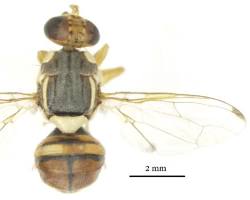
Adult guava fruit flies are small to medium-sized flies with patterned wings and often brightly colored bodies, depending on the species. They may have yellow, brown, or black markings and are more visually distinctive than common flies.
Larvae are white, legless maggots that develop inside fruit. Infested fruit may appear normal initially but will eventually soften, discolor, and show signs of decay.
Habitat
These flies are found in tropical and subtropical regions where host fruits are abundant. They are commonly associated with orchards, backyard fruit trees, and agricultural fields.
They are most active during fruiting seasons when suitable hosts are available for egg-laying.
Behavior and Damage
Female flies lay eggs in ripening fruit, and larvae begin feeding immediately after hatching. This feeding causes internal damage, leading to fruit rot and premature dropping.
Infested fruit becomes unsuitable for consumption or sale, resulting in direct economic losses. Secondary infections by fungi and bacteria often accelerate decay.
Because larvae develop inside fruit, they are protected from many natural predators and control measures.
Impact
Guava fruit flies are major agricultural pests that can significantly reduce fruit quality and yield. In heavily infested areas, entire crops may be lost.
Their presence can also affect trade, as infested fruit may be restricted or rejected in markets.
Prevention and Control
Effective management includes monitoring adult populations, removing and destroying infested fruit, and using traps to reduce populations. Maintaining orchard sanitation is critical.
Integrated pest management strategies, including biological control and targeted treatments, are often used in commercial production.
Taxonomy
- Kingdom: Animalia
- Phylum: Arthropoda
- Class: Insecta
- Order: Diptera
- Family: Tephritidae