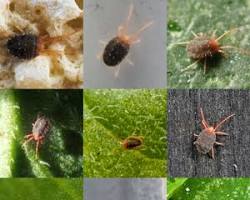
Overview
Ground spider mites are a lesser-known group of mites that live primarily at or below the soil surface, where they feed on plant roots, lower stems, and organic matter. Unlike the more familiar spider mites that infest leaf surfaces, ground spider mites remain hidden within soil or near the base of plants, making them significantly harder to detect and manage. These mites belong broadly to groups within the order Trombidiformes, closely related to common plant-feeding mites.
Because of their subterranean lifestyle, infestations often go unnoticed until plants begin to show symptoms of stress. These may include stunted growth, yellowing leaves, poor root development, and reduced vigor. Gardeners and growers frequently misdiagnose these symptoms as nutrient deficiencies or watering issues, delaying effective intervention.
Ground spider mites are particularly problematic in controlled environments such as greenhouses, raised beds, and container gardens, where soil conditions remain consistently favorable. Their ability to reproduce quickly and remain protected within soil structures allows populations to build over time.
Identification
Ground spider mites are extremely small, often requiring magnification to be seen clearly. They may appear as tiny, moving specks in soil or around plant roots. Their coloration can range from pale white or yellow to reddish or brown depending on species and life stage.
Because they are rarely visible on foliage, identification typically relies on plant symptoms and careful inspection of soil and root systems.
Habitat
These mites inhabit soil, root zones, and the lower portions of plants. They are commonly found in gardens, greenhouses, and agricultural settings where organic matter and moisture are present.
They prefer environments with moderate moisture and organic material, which provide both food sources and protection.
Behavior and Damage
Ground spider mites feed by piercing plant tissue and extracting cellular contents, similar to their above-ground relatives. However, their feeding is concentrated on roots and lower stems, which can disrupt nutrient and water uptake.
Damage often appears as general plant decline rather than obvious feeding marks. Roots may be weakened, and plants may become more susceptible to stress and disease.
In severe infestations, plants may fail to thrive or die, particularly in container or greenhouse environments.
Impact
Ground spider mites can significantly affect plant health, especially when infestations are not detected early. Their hidden nature makes them a persistent and challenging pest.
Prevention and Control
Maintaining healthy soil and proper watering practices can reduce the risk of infestation. Regular inspection of roots and soil is important for early detection.
Biological controls and soil treatments may be used in severe cases, particularly in greenhouse settings.
Taxonomy
- Kingdom: Animalia
- Phylum: Arthropoda
- Class: Arachnida
- Order: Trombidiformes