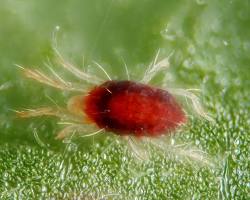
Overview
Greenhouse spider mites are among the most common and damaging pests found in indoor growing environments, greenhouses, and warm outdoor gardens. These tiny arachnids belong to the family Tetranychidae and are closely related to ticks and spiders. Despite their small size, they can cause extensive damage to plants when populations are allowed to grow unchecked.
Spider mites are particularly problematic because they reproduce rapidly, especially in warm, dry conditions. Under ideal circumstances, populations can double in just a few days, leading to severe infestations in a short period of time. Their feeding behavior damages plant cells, reducing photosynthesis and weakening plants.
One of the defining characteristics of spider mite infestations is the presence of fine webbing on plant surfaces. This webbing protects the mites from predators and environmental conditions, making them more difficult to control.
Identification
Spider mites are extremely small, often less than 1 millimeter in size, and may appear as tiny moving dots on leaves. They are usually green, yellow, or reddish in color.
Fine webbing on leaves and stems is a key sign of infestation, along with stippled or speckled leaf damage.
Habitat
Greenhouse spider mites are commonly found in warm, dry environments such as greenhouses and indoor plant setups. They prefer the undersides of leaves, where they are protected and can feed undisturbed.
They infest a wide range of plants, including vegetables, ornamentals, and houseplants.
Behavior and Damage
Spider mites feed by piercing plant cells and extracting their contents, causing small, pale spots on leaves. As feeding continues, leaves may turn yellow, dry out, and drop prematurely.
Heavy infestations can lead to significant plant stress and reduced growth.
Impact
Spider mites can severely damage plants, particularly in controlled environments where populations can grow rapidly.
Prevention and Control
Increasing humidity, regularly inspecting plants, and removing infested material can help control populations. Biological control agents and targeted treatments are often effective.
Taxonomy
- Kingdom: Animalia
- Phylum: Arthropoda
- Class: Arachnida
- Order: Trombidiformes
- Family: Tetranychidae