Overview
Greenhouse whiteflies are one of the most persistent and frustrating pests encountered in indoor growing environments, greenhouses, and even outdoor gardens in warm climates. Belonging to the family Aleyrodidae, these tiny, winged insects are closely related to aphids and scale insects. Despite their small size, greenhouse whiteflies can cause widespread damage to a variety of plants, including vegetables, ornamentals, herbs, and houseplants.
These pests are particularly well adapted to controlled environments where temperatures remain warm and stable year-round. In greenhouses, they can reproduce continuously without seasonal interruption, leading to rapidly expanding populations. Because of their short life cycle and ability to overlap generations, infestations can escalate quickly if not detected early.
Whiteflies are most often noticed when plants are disturbed and small, white, moth-like insects take flight in a cloud. However, much of their life cycle occurs on the undersides of leaves, where immature stages feed and develop unnoticed. This hidden behavior makes them especially difficult to control once populations are established.
Identification
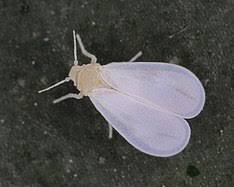
Adult greenhouse whiteflies are small, typically about 1–2 millimeters long, with white, powdery wings that give them a moth-like appearance. They are often found clustered on the undersides of leaves and will quickly fly when disturbed.
Immature stages, including eggs, nymphs, and pupae, are found attached to leaf surfaces. Nymphs appear as tiny, flat, oval structures that are almost scale-like in appearance. Because these stages do not move much, they can go unnoticed until infestations become severe.
Habitat
Greenhouse whiteflies thrive in warm, protected environments such as greenhouses, indoor growing spaces, and densely planted gardens. They are especially common on plants with soft, tender foliage, where feeding is easier. Common host plants include tomatoes, cucumbers, peppers, poinsettias, and many ornamental flowers.
They prefer the undersides of leaves, where they are sheltered from direct sunlight and environmental disturbances. In greenhouses, they may be present year-round, while outdoor populations are typically more seasonal.
Behavior and Damage
Whiteflies feed by inserting their mouthparts into plant tissue and extracting sap. This feeding weakens plants, causing yellowing leaves, reduced growth, and overall decline. Heavy infestations can lead to significant plant stress and reduced yields.
In addition to direct feeding damage, whiteflies produce honeydew, a sticky substance that coats leaves and encourages the growth of sooty mold. This black fungal growth can block sunlight and interfere with photosynthesis, further reducing plant health.
Some species of whiteflies are also known to transmit plant viruses, making them particularly problematic in agricultural settings.
Impact
Greenhouse whiteflies can severely impact plant health, particularly in enclosed environments where natural predators are limited. Infestations can reduce crop yields, damage ornamental plants, and increase the need for pest management interventions.
Prevention and Control
Effective control begins with regular monitoring, especially on the undersides of leaves. Yellow sticky traps are commonly used to detect adult whiteflies. Removing heavily infested leaves and maintaining proper plant spacing can help reduce populations.
Biological control agents, such as parasitic wasps and predatory insects, are often used in greenhouse settings. Insecticidal soaps and horticultural oils can also be effective when applied correctly. Preventing infestations through sanitation and careful plant inspection is key to long-term management.
Taxonomy
- Kingdom: Animalia
- Phylum: Arthropoda
- Class: Insecta
- Order: Hemiptera
- Family: Aleyrodidae