Overview
Green lacewings are delicate, beneficial insects belonging to the family Chrysopidae. Unlike many pests featured on Pestipedia, lacewings are considered highly valuable natural predators that help control populations of harmful insects in gardens, agricultural fields, and landscapes. Their larvae, often referred to as “aphid lions,” are especially effective at consuming large numbers of soft-bodied pests.
These insects play a critical role in integrated pest management systems by reducing the need for chemical controls. Both home gardeners and commercial growers often rely on lacewings to manage pests such as aphids, mealybugs, whiteflies, and small caterpillars. Their presence is typically a sign of a healthy, balanced ecosystem.
While adult lacewings primarily feed on nectar, pollen, and honeydew, their larvae are aggressive predators. A single larva can consume dozens of pests per day, making them one of the most effective biological control agents available.
Identification
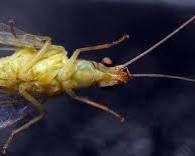
Adult green lacewings have slender green bodies, large golden or copper-colored eyes, and transparent wings with a delicate, lace-like pattern. They are typically about 1/2 to 3/4 inch long and are weak fliers.
Larvae are small, elongated, and resemble tiny alligators with prominent jaws used for capturing prey.
Habitat
Green lacewings are found in gardens, agricultural fields, forests, and urban landscapes. They are most common in areas with abundant plant life and prey populations.
They are often attracted to lights at night and may be seen resting on vegetation during the day.
Behavior and Role
Larvae actively hunt and consume soft-bodied insects, including aphids, thrips, and small caterpillars. Adults feed on nectar and pollen, contributing to pollination.
Their role as predators makes them highly beneficial for controlling pest populations naturally.
Impact
Green lacewings are beneficial insects that reduce pest populations and support healthy ecosystems.
Prevention and Conservation
Avoiding broad-spectrum insecticides and planting flowering plants can help support lacewing populations.
Taxonomy
- Kingdom: Animalia
- Phylum: Arthropoda
- Class: Insecta
- Order: Neuroptera
- Family: Chrysopidae