Overview
Garden aphids are among the most widespread and destructive plant pests found in gardens, landscapes, and agricultural systems. Belonging to the family Aphididae, these small, soft-bodied insects feed on plant sap and reproduce rapidly, often forming dense colonies in a short period of time. Aphids are capable of infesting a wide variety of plants, including vegetables, fruit trees, ornamental flowers, and shrubs.
One of the most notable characteristics of aphids is their ability to reproduce asexually, allowing populations to grow quickly under favorable conditions. In many cases, a single aphid can give rise to hundreds of offspring in a matter of weeks. This rapid reproduction makes early detection and management essential for preventing large infestations.
In addition to direct feeding damage, aphids produce a sticky substance known as honeydew, which can coat plant surfaces and promote the growth of sooty mold. This secondary effect can further reduce plant health and interfere with photosynthesis.
Identification
- Small, pear-shaped insects
- Green, black, yellow, or pink coloration
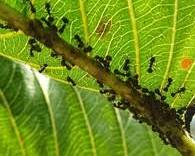
- Often found clustered on new growth or undersides of leaves
- May have winged or wingless forms
Habitat
Garden aphids are found wherever plants grow, including gardens, greenhouses, farms, and indoor plant environments. They are particularly attracted to tender new growth, where sap is easier to access.
Behavior and Damage
Aphids feed by inserting needle-like mouthparts into plant tissue and extracting sap. This feeding weakens plants, causing leaf curling, yellowing, and stunted growth. Heavy infestations can result in significant plant damage and reduced yields.
Honeydew production attracts ants, which may protect aphids from predators in exchange for this sugary substance, further complicating control efforts.
Impact
Aphids are major agricultural pests due to their ability to spread plant viruses and reduce crop productivity. In gardens, they can quickly overwhelm plants if not controlled.
Prevention and Control
Encouraging natural predators such as lady beetles and lacewings is one of the most effective control methods. Insecticidal soaps, neem oil, and strong water sprays can also reduce populations.
Taxonomy
- Kingdom: Animalia
- Phylum: Arthropoda
- Class: Insecta
- Order: Hemiptera
- Family: Aphididae