Overview
Grape mealybugs are sap-feeding insects that can significantly impact grapevine health and productivity. Belonging to the family Pseudococcidae, these pests are characterized by their soft bodies and white, cottony wax covering. They are commonly found in vineyards and backyard grape plantings, where they feed on plant sap and reproduce rapidly under favorable conditions.
One of the key concerns with grape mealybugs is their ability to remain hidden in protected areas of the vine, such as under bark, in leaf axils, or within fruit clusters. This makes early detection difficult and allows populations to grow unnoticed. As infestations develop, mealybugs spread throughout the plant, feeding on leaves, stems, and fruit.
In addition to direct feeding damage, grape mealybugs produce honeydew, a sugary substance that coats plant surfaces. This honeydew promotes the growth of sooty mold, which can reduce photosynthesis and negatively affect fruit quality. Mealybugs are also known vectors of grapevine viruses, making them particularly problematic in commercial vineyards.
Identification
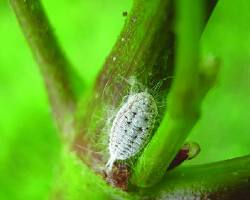
Grape mealybugs are small, oval insects covered in a white, waxy coating. They often appear as cotton-like clusters on plant surfaces. Infestations are commonly associated with sticky residue and black mold growth.
Habitat
These pests are found on grapevines in vineyards and gardens, especially in sheltered areas such as bark crevices and fruit clusters. They thrive in warm climates and protected environments.
Behavior and Damage
Mealybugs feed by inserting their mouthparts into plant tissue and extracting sap. This weakens vines and reduces overall plant vigor. Honeydew production encourages mold growth, which further interferes with plant health.
Heavy infestations can lead to reduced fruit quality, lower yields, and increased susceptibility to disease.
Impact
Grape mealybugs are economically important pests due to their impact on fruit quality and their role in disease transmission.
Prevention and Control
Encouraging natural predators, maintaining vineyard sanitation, and monitoring populations are key control methods.
Taxonomy
- Kingdom: Animalia
- Phylum: Arthropoda
- Class: Insecta
- Order: Hemiptera
- Family: Pseudococcidae