Overview
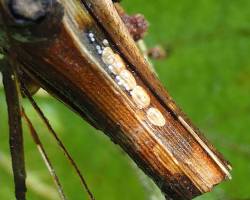
Grape scale insects are sap-feeding pests that attach themselves to grapevine stems, leaves, and canes, where they remain largely immobile for much of their life cycle. These insects belong to the superfamily Coccoidea, a group known for their protective waxy or shell-like coverings. This protective layer makes them difficult to detect and even more challenging to control, especially once populations become established.
Scale insects are often overlooked in early stages because they resemble small bumps or growths on plant surfaces rather than active insects. However, as populations increase, their feeding activity can significantly weaken vines. Like many other sap-feeding pests, grape scale insects extract nutrients directly from plant tissues, reducing plant vigor and potentially affecting fruit production.
Another major concern with grape scale infestations is the production of honeydew. This sticky substance coats leaves and fruit, creating an ideal environment for sooty mold fungi. The resulting black coating can interfere with photosynthesis and reduce the marketability of grapes, particularly in table grape production.
Identification
Grape scale insects appear as small, immobile bumps on plant surfaces. They may be round, oval, or elongated depending on the species. Colors vary from brown and gray to white or translucent. Infestations are often accompanied by sticky residue and black mold growth.
Because they do not move once settled, they can easily blend in with plant tissue, making close inspection necessary for detection.
Habitat
These pests are found on grapevines in vineyards, backyard gardens, and wild grape populations. They tend to concentrate on stems, canes, and leaf undersides where they can remain protected from environmental exposure.
Scale insects thrive in warm climates and can persist year-round in favorable conditions. Dense plant growth and poor air circulation may contribute to higher infestation levels.
Behavior and Damage
Scale insects feed by inserting their mouthparts into plant tissue and extracting sap. This feeding weakens the plant over time, reducing growth and vigor. In heavy infestations, vines may show symptoms such as yellowing leaves, reduced fruit production, and general decline.
The honeydew produced during feeding attracts ants and promotes the growth of sooty mold. Ants may protect scale insects from predators, further complicating control efforts.
Impact
Grape scale insects can reduce vineyard productivity and fruit quality. In severe cases, infestations can lead to long-term vine health issues and economic losses.
Prevention and Control
Regular inspection and pruning of infested plant parts can help manage populations. Encouraging natural predators such as lady beetles and parasitic wasps is also effective. Managing ant populations can improve biological control success.
Taxonomy
- Kingdom: Animalia
- Phylum: Arthropoda
- Class: Insecta
- Order: Hemiptera
- Superfamily: Coccoidea