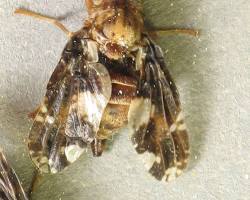
Overview
Goldenrod gall flies are fascinating insects best known for their ability to create distinctive round swellings, or galls, on goldenrod plants. Belonging to the species Eurosta solidaginis within the family Tephritidae, these flies are a classic example of plant-insect interaction. Rather than being destructive pests in the traditional sense, they are often studied for their ecological role and unique life cycle.
The life cycle of goldenrod gall flies revolves entirely around goldenrod plants. Female flies lay eggs on the stems of goldenrod, and when the larvae hatch, they stimulate the plant to form a gall. This gall provides both shelter and nourishment for the developing larva. The round, ball-like galls are commonly seen in fields and meadows during late summer and fall.
Although they alter plant structure, goldenrod gall flies rarely cause serious harm to their host plants. Instead, they are considered an integral part of the ecosystem, supporting a variety of predators and parasites.
Identification
Goldenrod gall flies are small flies with brownish or yellowish bodies and patterned wings. However, they are most easily identified by the spherical galls they create on goldenrod stems. These galls are typically about the size of a marble and are smooth and round.
Inside each gall is a single larva, which remains protected throughout its development.
Habitat
These flies are found in open fields, meadows, roadsides, and other areas where goldenrod plants grow. They are widespread across North America and are especially common in late summer and fall when galls are most visible.
Goldenrod plants serve as both the habitat and food source for these insects, making their distribution closely tied to the presence of their host plant.
Behavior and Life Cycle
After eggs are laid on goldenrod stems, larvae hatch and begin feeding, triggering the plant to form a gall around them. The larva remains inside the gall throughout the winter, protected from environmental conditions and predators.
In spring, the larva pupates and eventually emerges as an adult fly, completing the life cycle. This synchronization with the plant’s growth cycle is key to their survival.
The galls also serve as microhabitats for other organisms, including predators such as birds and parasitic insects that may target the larvae inside.
Impact
Goldenrod gall flies generally have minimal impact on plant health. While they may slightly reduce plant vigor, they do not typically kill or severely damage goldenrod populations.
They play an important ecological role by supporting food webs and contributing to biodiversity.
Prevention and Control
Control is not necessary for goldenrod gall flies, as they are not harmful pests. In managed landscapes where aesthetic concerns exist, galls can be pruned and removed.
In natural settings, they are best left undisturbed to support ecosystem balance.
Taxonomy
- Kingdom: Animalia
- Phylum: Arthropoda
- Class: Insecta
- Order: Diptera
- Family: Tephritidae