Overview
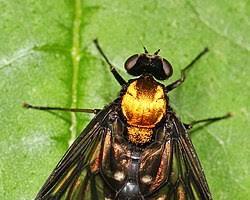
Golden-backed snipe flies are distinctive predatory insects belonging to the family Rhagionidae. Known for their metallic or golden sheen across the thorax or back, these flies are often observed resting on vegetation or actively hunting small insects. While they are not considered pests, they are frequently encountered in gardens, wooded areas, and natural landscapes where they play a beneficial ecological role.
Unlike nuisance flies that are associated with waste or decay, golden-backed snipe flies are predators both as larvae and adults. They help regulate populations of smaller insects, including soft-bodied pests that can damage plants. Their presence is typically an indicator of a healthy ecosystem with a balanced food web.
These flies are relatively inconspicuous unless closely observed. Their slender bodies, long legs, and subtle metallic coloring help them blend into their surroundings. They are often mistaken for other fly species, but their behavior and predatory habits set them apart.
Identification
Golden-backed snipe flies have elongated bodies and long legs, giving them a somewhat delicate appearance. Their coloration varies, but many species exhibit a metallic gold or bronze sheen on the thorax or upper body.
They have clear wings and relatively large eyes, typical of predatory flies. Their resting posture is often upright or slightly angled, allowing them to quickly launch into flight when pursuing prey.
Habitat
These flies are commonly found in moist environments such as forests, meadows, wetlands, and along streams or shaded garden areas. They prefer habitats where prey is abundant and where vegetation provides suitable perching and hunting locations.
Larvae are typically found in soil, leaf litter, or decaying organic matter, where they hunt other small invertebrates.
Behavior and Feeding
Golden-backed snipe flies are active predators. Adults hunt by perching on leaves or stems and quickly capturing passing insects. Their diet includes small flies, aphids, and other soft-bodied insects.
Larvae are also predatory and contribute to pest control within soil ecosystems. This dual-stage predation enhances their ecological importance.
They are generally active during the day and may be seen basking in sunlight or moving between vegetation in search of prey.
Impact
Golden-backed snipe flies are beneficial insects that help control pest populations. They do not damage plants or structures and are not harmful to humans.
Their role in maintaining ecological balance makes them valuable in both natural and managed environments.
Prevention and Conservation
No control is necessary for these insects. Encouraging natural habitats, maintaining plant diversity, and avoiding broad-spectrum pesticides can help support their populations.
Providing a healthy environment for beneficial insects contributes to natural pest management.
Taxonomy
- Kingdom: Animalia
- Phylum: Arthropoda
- Class: Insecta
- Order: Diptera
- Family: Rhagionidae