The Giant Desert Hairy Scorpion (Hadrurus arizonensis) is one of the largest scorpion species in North America and a well-known inhabitant of the arid deserts of the Southwestern United States. Despite its intimidating size and appearance, this species is generally less dangerous to humans than the Arizona bark scorpion. However, its presence in and around homes can still be alarming, making it an important species for homeowners, pest control professionals, and desert residents to understand.
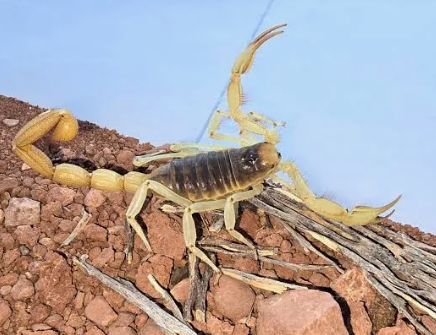
This scorpion is particularly common in desert regions of Arizona, California, Nevada, and parts of Utah. It thrives in dry, sandy environments where it can dig burrows to escape extreme heat during the day. Unlike climbing scorpions, the Giant Desert Hairy Scorpion is primarily ground-dwelling and is most often encountered outdoors, though it may occasionally wander into structures.
Identification
The Giant Desert Hairy Scorpion is easily recognized by its large size, often reaching 5 to 7 inches in length. It has a yellowish body with darker coloration on its back and a noticeably hairy appearance, especially on the legs and pedipalps (pincers). The hairs serve as sensory structures, allowing the scorpion to detect vibrations and locate prey.
Its pincers are relatively large and robust compared to its tail, which is moderately thick and ends in a venomous stinger. This physical build reflects its hunting strategy—relying more on physical strength than venom potency to subdue prey.
Like other scorpions, it fluoresces under ultraviolet (UV) light, making it easier to detect during nighttime inspections using a blacklight.
Distribution and Habitat
This species is native to the deserts of the southwestern United States and northern Mexico. It is especially prevalent in Arizona’s Sonoran Desert, where sandy soils allow for easy burrowing.
The Giant Desert Hairy Scorpion constructs deep burrows that provide protection from extreme daytime temperatures and predators. These burrows may be several inches deep and are often found under rocks, debris, or in open desert areas.
In residential areas, these scorpions may be found in yards, gardens, or along foundations. They are occasionally encountered in garages, sheds, or ground-level rooms, particularly when searching for food or shelter.
Behavior and Feeding
The Giant Desert Hairy Scorpion is a nocturnal predator that emerges at night to hunt. Its diet primarily consists of insects such as crickets, beetles, cockroaches, and other arthropods. It may also prey on smaller scorpions and even small vertebrates like lizards.
Unlike the Arizona bark scorpion, this species relies heavily on its powerful pincers to capture and subdue prey. Its venom is used primarily as a secondary defense or to assist in immobilizing prey rather than as its main hunting tool.
This scorpion is generally solitary and spends much of its life within its burrow. It emerges primarily for feeding and mating, making encounters with humans relatively infrequent compared to more mobile species.
Health Risks and Stings
The sting of the Giant Desert Hairy Scorpion is typically described as similar to a bee sting. While it can cause localized pain, swelling, and mild discomfort, it is not considered medically significant for most healthy individuals.
Severe reactions are rare but may occur in individuals with allergies or sensitivities. As with any venomous creature, caution should be exercised when handling or encountering these scorpions.
Because they are not aggressive and prefer to avoid confrontation, stings usually occur only when the scorpion is accidentally disturbed or threatened.
Prevention and Control
Preventing Giant Desert Hairy Scorpions from entering structures involves reducing access points and minimizing favorable conditions. Sealing cracks in foundations, installing door sweeps, and ensuring proper weather stripping can help prevent entry.
Outdoor management is equally important. Removing debris, rocks, and woodpiles eliminates potential hiding places. Reducing insect populations around the home also limits available food sources.
Because this species is primarily ground-dwelling, attention should be focused on ground-level entry points and landscaping practices. Regular inspections, especially at night using a blacklight, can help identify and remove individuals before they become a problem.
Integrated Pest Management (IPM) strategies provide the most effective approach, combining exclusion, habitat modification, and targeted pest control measures.